If your kitten is treating 3 AM like a social hour and 5 AM like an emergency meeting, you are not failing. You are living with a tiny predator who is still learning your household rhythms. The good news is that “sleeping through the night” is teachable, and it usually comes down to two things: meeting your kitten’s needs before bed and making nighttime boring.
I have fostered a lot of litters, and the pattern is consistent. When kittens cry in the morning, they are usually asking for one of four things: food, attention, play, or reassurance. This guide walks you through a realistic routine, how to handle the hard first week, and the most common mistakes that accidentally train early wake-ups.

First: what is normal kitten sleep?
Kittens sleep a lot, but not in one tidy block like we want. Many do short sleep bursts, then wake up ready to eat or pounce. Add in natural crepuscular instincts (cats are often most active at dawn and dusk), and it makes sense that mornings can get noisy.
- 8 to 12 weeks: night waking and some crying is common, especially the first 1 to 2 weeks in a new home.
- 3 to 6 months: many kittens can do a longer overnight stretch if the routine is consistent.
- 6+ months: you can often shift wake-up time later with habit changes, automated feeding, and enrichment.
These are common ranges, not promises. Age, health, whether your kitten is solo or has a bonded buddy, your feeding schedule, and your home setup all affect how quickly sleep improves. If your kitten is under 12 weeks, be gentle with expectations. You can build the routine now, but improvement may be gradual.
The goal: tire the body, calm the brain, then feed
The most effective rhythm I have used in foster homes is simple: play, then eat, then sleep. This matches a kitten’s natural cycle of hunt, catch, groom, nap.
A bedtime routine that works (30 to 60 minutes)
- Big play session (10 to 20 minutes). Wand toy, chase, pounce, kick. You want your kitten breathing a little faster, not frantic.
- Cool-down play (5 minutes). Slow the movement and end with a few “wins” where your kitten catches the toy.
- Small meal (wet food if possible). A full belly helps them settle. Keep portions within your kitten’s daily calories, and use a complete-and-balanced kitten diet. If your kitten eats too fast, use a lick mat or a shallow plate to slow them down.
- Litter box opportunity. Many kittens may use the box after eating, but not all do. Make sure it is easy to access.
- Lights low, voices soft. Put toys away and switch to calm affection if your kitten enjoys it.
Consistency matters more than perfection. Do this routine at roughly the same time every night so your kitten’s body learns the schedule.

Manage evening zoomies
Zoomies are not bad behavior. They are energy plus excitement plus developing coordination. Your job is to give that energy an appropriate outlet earlier in the evening so it is less likely to explode at bedtime.
Try an “energy budget” approach
- Two play blocks in the evening: one after work or dinner, and one right before bed.
- Short training moments (1 to 3 minutes): touch, come, sit (if your kitten likes it), and carrier games. Mental work is tiring in the best way.
- Vertical territory: a cat tree, window perch, or sturdy shelves. Climbing burns energy.
- Rotate toys: put half away for three days, then swap. “New” toys stay interesting longer.
My budget-friendly evening toy shortlist
- Wand toy with replaceable attachments
- Crinkle tunnel
- Ping-pong balls or plastic spring toys
- Kicker toy (especially helpful for bitey kittens)
- Cardboard scratcher or a basic sisal post
Laser pointers can be fun, and some cats do great with them. Others get frustrated without a “catch.” If you use one, always end with a tangible toy your kitten can grab, or a small treat scatter so the sequence feels complete.
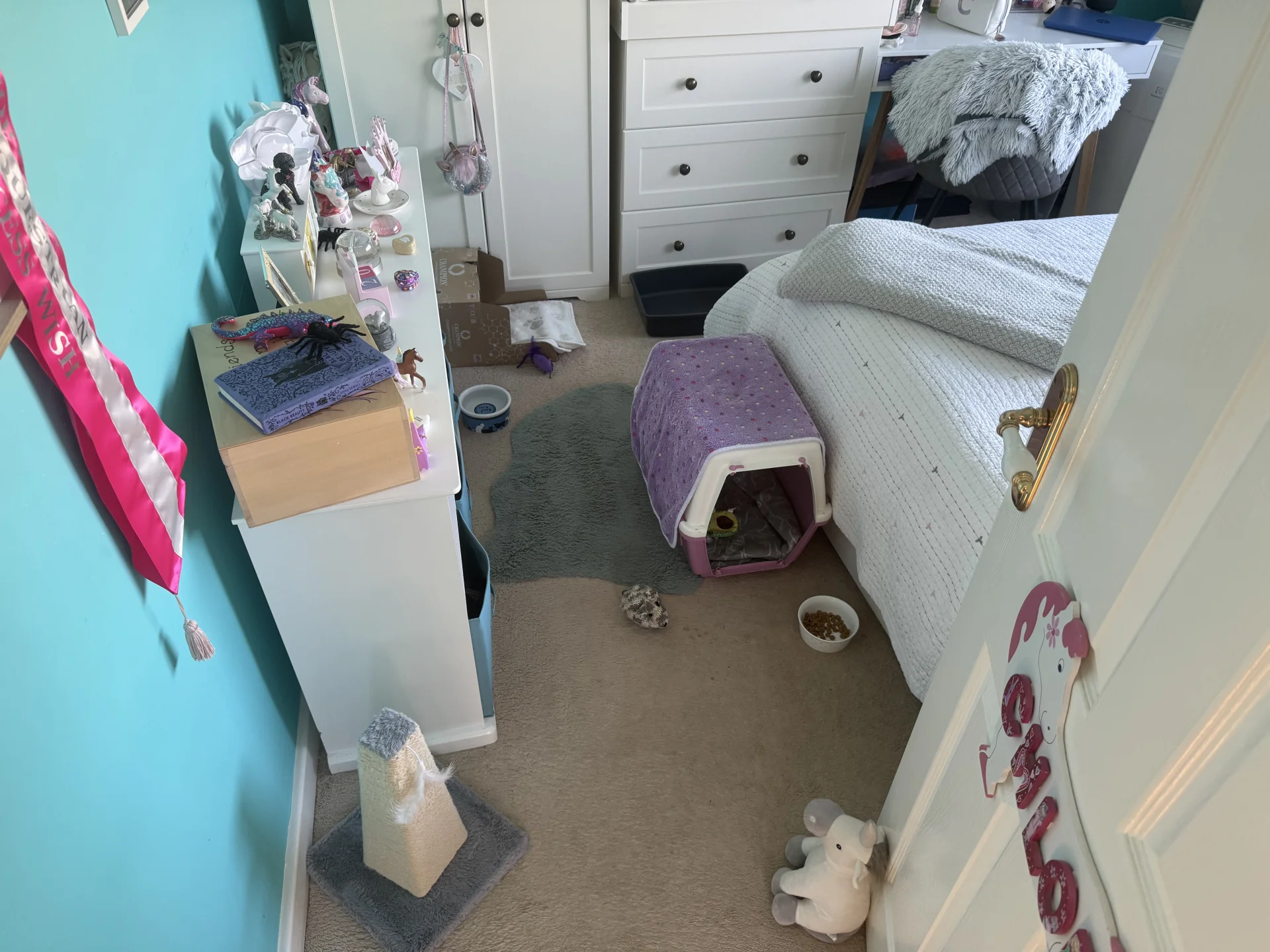
Set up a sleep-friendly space
Where your kitten sleeps affects how often they wake you. You are aiming for a safe, boring, cozy environment that meets basic needs without requiring you at 5 AM.
Night setup checklist
- Litter box nearby, uncovered for most kittens (easier access, less intimidating).
- Water in a sturdy bowl that cannot be tipped easily.
- A cozy bed plus a second option (many kittens switch spots).
- Safe chew and kick options (kicker, soft toy).
- Scratch surface within a few feet of the sleep area.
- White noise if your home is loud or your kitten startles easily.
If your kitten is very new or very clingy, a soft item that smells like you can help. Keep it simple and safe: an old T-shirt with no strings or loops.
Quick kitten-proofing sweep
- Cords and chargers: tuck or cover them so they cannot be chewed.
- Strings and elastics: hair ties, ribbon, yarn, and wand toy strings should be put away.
- Blind cords: secure them up and out of reach.
- Small swallowable items: coins, earplugs, bottle caps, and kids’ toys get picked up.
- Plants and chemicals: remove unsafe plants and keep cleaners and human meds locked up.
Stopping morning crying
This is the part that feels personal, especially when it sounds like your kitten is heartbroken. Often, it is not distress. It is communication, and kittens are very good at training humans.
The rule
Do not reward crying with food, play, or a big cuddle session. If crying leads to breakfast, your kitten learns a powerful pattern: make noise, human appears, good things happen.
A kinder plan that still works
- Pause. Wait 30 to 60 seconds. Many kittens stop if you do not react.
- If it continues, do a quiet wellness check. No chatting. No play. Confirm they are not tangled, stuck, or having litter box trouble.
- Reset and wait for quiet. Leave again. Then only “start the day” when there is a quiet moment, even if it is just a few seconds.
If you live in an apartment and cannot ignore crying for long, aim for minimal reinforcement. Do the quiet check, then disengage. Try not to feed immediately after noise.
Make wake-up time predictable
Pick a realistic morning time you can stick to most days. Your kitten will adjust faster to a consistent schedule than to random mornings where sometimes crying works and sometimes it does not.
Breakfast without you
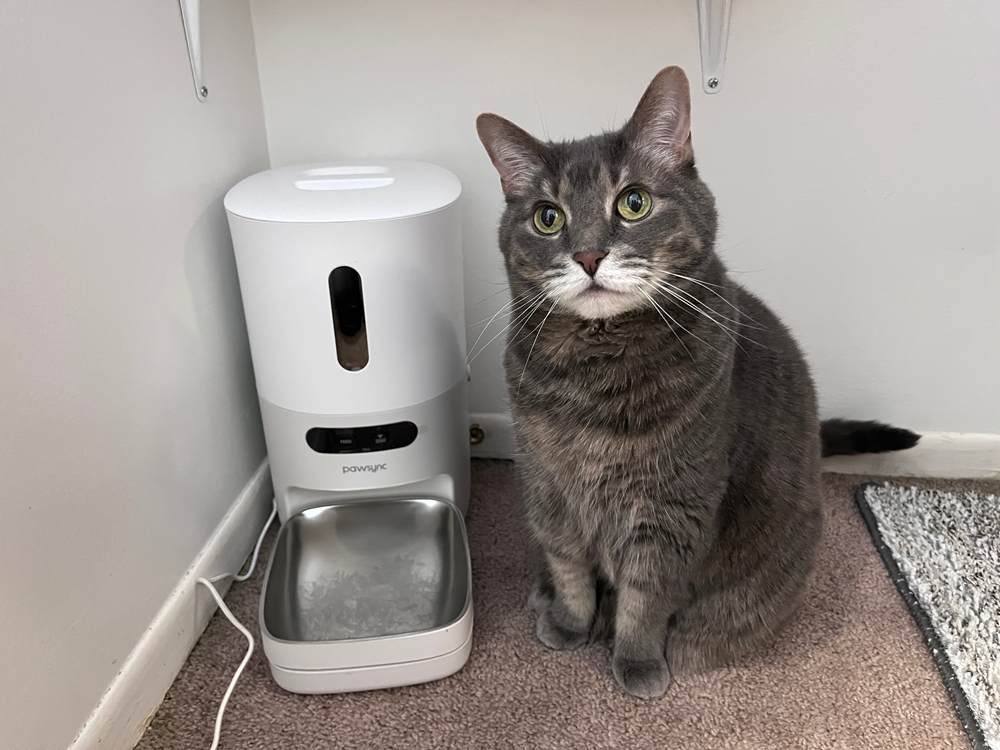
If your kitten is crying because they are hungry, you can remove yourself as the “food dispenser.” This reduces the habit of waking you specifically, and for many households it is the single most helpful change.
Options that help
- Timed feeder (best for early wakings): It can deliver a small portion at 5 or 6 AM without you getting up.
- Pre-portioned dry food: If you prefer not to use a feeder, set a measured portion in a puzzle feeder the night before, but only if your kitten will not eat it immediately.
- Last call snack: A small meal right before bed can extend their sleep window. Keep total daily calories in mind.
Important: If your kitten is very young, underweight, or has medical needs, follow your veterinarian’s feeding guidance. Some kittens truly need more frequent meals.
If your kitten sleeps in your room
I am not anti-bedroom. Plenty of kittens do great sleeping near their people. The trick is setting boundaries early so your bed does not become a wrestling ring at dawn.
Bedroom boundary tips
- Keep toys off the bed at night. If toys live on the bed, play will happen there.
- Provide an approved sleep spot near the bed: a cat bed or blanket on a chair, bench, or cat tree.
- Close the closet. Many kittens discover “nighttime playground” in a closet at 2 AM.
- If pawing your face starts, calmly relocate. No talking. No petting. Place them on their bed or on the floor.
What about feet-pouncing and nighttime biting?
If your kitten attacks toes under the blanket, treat it like play you did not approve. Do not wiggle, do not yelp, and do not wrestle back. Still your feet, then redirect the next evening with a stronger pre-bed play session and a kicker toy. If it keeps happening, consider closing the bedroom door and using a kitten-safe room overnight while the habit fades.
If you are losing sleep, it is okay to do a temporary separate sleep setup at night for a week or two while habits settle. That is not mean. It is management.
Confinement: crate vs room
Most kittens do best overnight in a kitten-proofed room or a sturdy playpen where they can move around and use a normal litter box. That setup is usually safer and calmer than a standard crate.
A crate can be useful for short-term management in some homes, but only if it is large enough for your kitten to stand, turn, and stretch, and if you can keep sleeping space separate from a small litter area with water. Many typical crates are simply too small for that. If your setup cannot comfortably fit all of it, choose a playpen or kitten-proofed room instead. Keep any confinement calm and positive, never as punishment.
Mistakes that train early wake-ups
- Feeding right after crying. It is one of the fastest ways to lock in 5 AM alarms.
- Free-feeding all day, then expecting nighttime calm. Some kittens graze fine, but others become bored and seek attention at night. Scheduled meals often help.
- Too little play, or play at the wrong time. If the biggest play session happens right before you try to sleep, your kitten may stay revved up.
- Using hands as toys. It creates a kitten who thinks attacking moving body parts is the game.
- Changing the plan every morning. Mixed messages slow everything down.
How long will it take?
With consistency, many kittens improve within 1 to 3 weeks. Some make noticeable progress in 7 to 14 days. Others take longer, especially if they are very young, newly adopted, solo, or adjusting after a shelter or foster environment.
I like to track progress in a simple way: note bedtime, first wake-up, and how long the crying lasted. You should see the first wake-up gradually move later, and the crying shorten.
When crying is medical or stress
Behavior training is great, but it is not the right tool for every situation. Contact your veterinarian if you notice:
- Sudden change in vocalization intensity or frequency
- Frequent litter box trips, straining, or crying in the litter box
- Not eating, vomiting, diarrhea, or weight loss
- Signs of pain (hiding, hunched posture, sensitivity to touch)
- Respiratory symptoms like sneezing fits, nasal discharge, or labored breathing
Also consider stress factors. A recent move, new pet, construction noise, or a change in feeding schedule can trigger night waking temporarily.
FAQ
Should I ignore my kitten crying at night?
Ignore the attention-seeking part, yes. But always rule out real needs first: safety, illness, hunger for very young kittens, and litter box access. I recommend a quick, quiet check with minimal interaction, then disengage until you get a quiet moment.
Is it better to get a second kitten?
Sometimes. A well-matched pair can entertain and comfort each other, which can reduce loneliness-based crying in some homes. It is not a universal fix, and it is still twice the food, vet care, and training. If you are already considering two, talk with your shelter or rescue about a bonded pair or a good personality match.
My kitten wakes up at 4 or 5 AM no matter what. What now?
Try (1) a timed feeder for an early small meal, (2) a later bedtime snack that stays within daily calories, and (3) making sure you only “start the day” after a quiet moment. Also check that bedtime is not too early for your household. Some kittens do better with a slightly later routine.
Will my kitten grow out of this?
Some do, but many do not without guidance. Habits form quickly. If you teach “night is boring and safe” now, you are setting yourself up for years of better sleep.
Can I sleep with my kitten if they are waking me up?
You can, but it is okay to take a break. A temporary separate sleep setup often fixes the habit faster, then you can reintroduce bedroom sleeping once mornings are calmer.
A simple 7-night reset
Night 1 to 3
- Do the play, eat, sleep routine every night.
- Set up water, litter, bed, scratcher.
- Do not feed or play in response to crying.
- Only greet and feed after a quiet moment.
Night 4 to 7
- Add a second evening play block if mornings are still early.
- Introduce a timed feeder if hunger seems to be the trigger.
- Begin nudging wake-up time later by 10 minutes every couple of days.
If you are in the thick of it right now, I want you to know this: the sleep deprivation stage is real, and it feels endless when you are in it. It is not endless. With consistency and a few smart tweaks, most kittens learn the routine, and you will get your mornings back.