Before you use the chart
If you have ever stared at a kitten, stared at the food label, then stared back at the kitten like, “How is this tiny creature supposed to eat that much,” you are not alone. Kittens grow ridiculously fast, and their feeding needs change in small but important steps as they grow.
This chart is built for healthy, weaning-age kittens through one year. It assumes you are feeding a complete and balanced kitten diet (not adult cat food) and that your kitten is bright, playful, and gaining weight steadily.
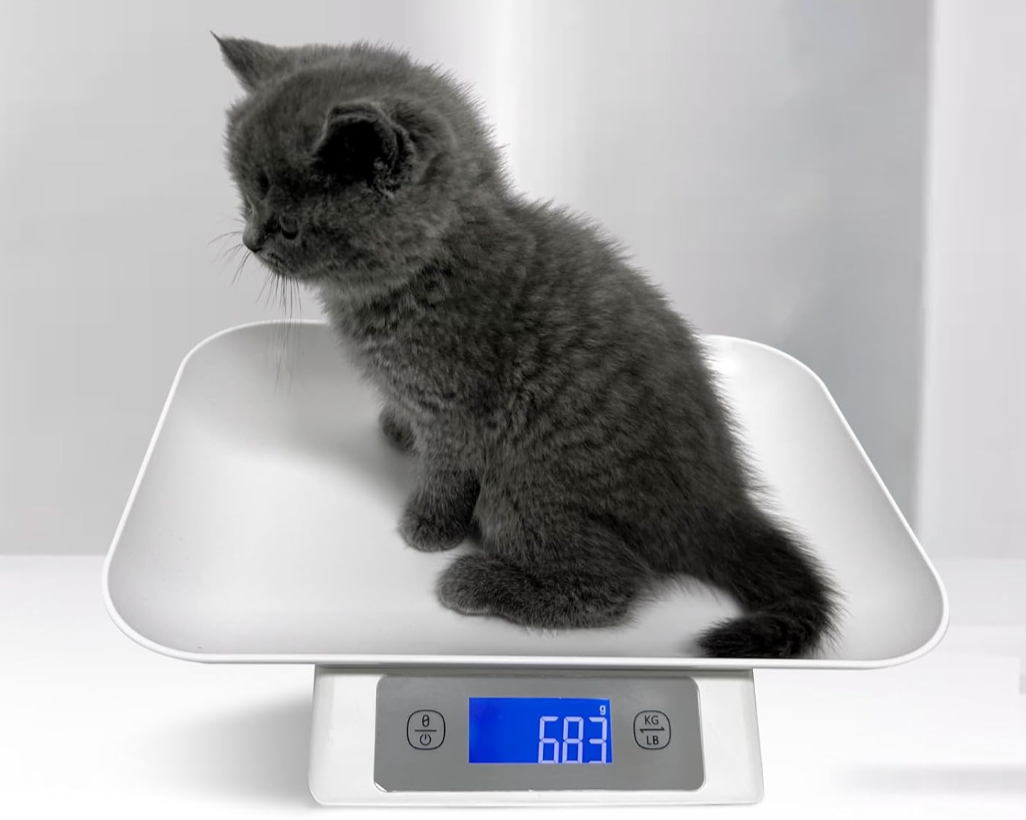
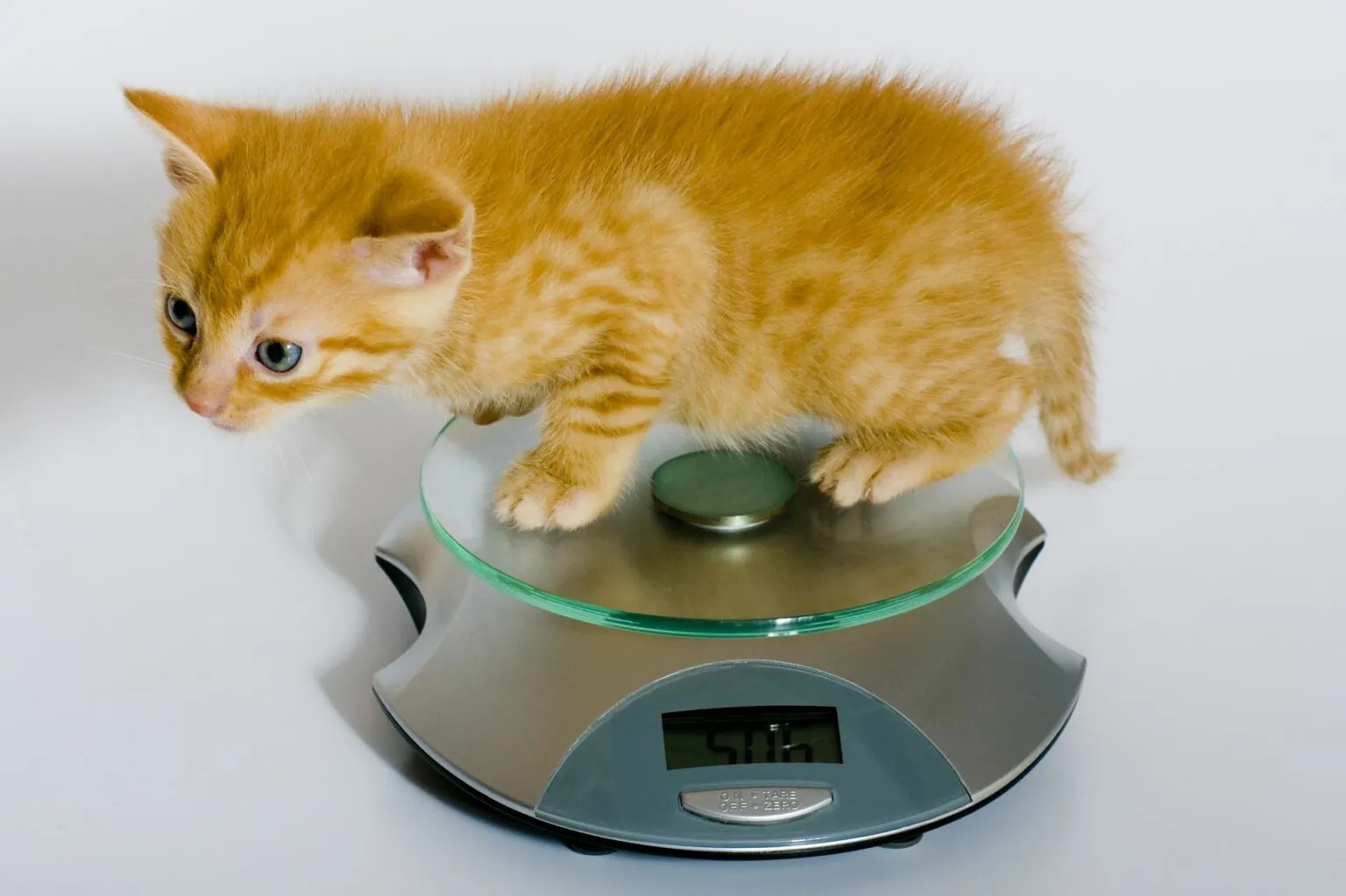
- Best tool you can own: a cheap kitchen scale (grams). Weight is the easiest way to sanity-check portions.
- Best habit: weigh your kitten 2 to 3 times per week at the same time of day.
- Golden rule: adjust portions based on body condition and growth, not just the label.
How much should a kitten eat per day?
Most kitten food labels give a range based on weight, and it is usually a pretty wide one. That is normal. Activity level, metabolism, parasite load, and even litter size can change intake.
As a starting point, kittens can eat roughly 2 to 4 times what an adult cat would eat for the same body weight, because they are building bone, muscle, and brain tissue. Treat that as a rule of thumb, not a strict rule. When in doubt, calories (kcal) on the label plus your kitten’s weight is the best reality check.
My simple portion math
- Pick a daily total from the chart (wet in ounces or grams, or dry in cups).
- Divide it by meals per day for your kitten’s age.
- Re-check weekly (or sooner during growth spurts).
If your kitten is leaving food behind every meal, drop the daily total slightly. If they inhale meals and are still hunting the baseboards for crumbs, increase the daily total slightly or add a small extra snack meal.
Kitten feeding chart by age
Important: Food varies wildly in calorie density. This chart uses common “middle of the road” kitten foods as a baseline. If your food is higher or lower calorie, you may need to feed a bit less or more.
Also important: calorie needs are driven mostly by weight and growth rate, not just age. These are typical ranges for average-size kittens. Always cross-check against your kitten’s weight and your food’s kcal guidance.
For wet food, I list approximate amounts as total per day. For dry food, I list a total per day that you can split into meals. If you are mixing wet and dry, you will use the combo guide later in this article.
| Age | Meals per day | Wet food total per day (approx.) | Dry food total per day (approx.) | Notes |
|---|---|---|---|---|
| 4 weeks | 5 to 6 | 3 to 5 oz (85 to 142 g) slurry | Not recommended alone | Start weaning with kitten gruel. Keep formula available if orphaned. |
| 5 weeks | 5 | 4 to 6 oz (115 to 170 g) | 1 to 2 tbsp (5 to 10 g) | Transition from slurry to thicker mash. Expect mess. |
| 6 weeks | 4 to 5 | 5 to 7 oz (140 to 200 g) | 2 to 3 tbsp (10 to 15 g) | Teeth and confidence improve. Offer a shallow water dish. |
| 7 weeks | 4 | 6 to 8 oz (170 to 225 g) | 3 to 4 tbsp (15 to 20 g) | Most kittens can eat canned kitten food without blending. |
| 8 weeks | 4 | 6 to 9 oz (170 to 255 g) | 1/8 to 1/4 cup (15 to 25 g) | Common adoption age. Keep meals frequent to prevent tummy upsets. |
| 9 to 10 weeks | 4 | 7 to 10 oz (200 to 285 g) | 1/4 cup (20 to 30 g) | Growth spurts happen. Slight increases are normal. |
| 11 to 12 weeks | 3 to 4 | 7 to 11 oz (200 to 310 g) | 1/4 to 1/3 cup (25 to 35 g) | You can begin moving toward 3 meals if weight gain is steady. |
| 13 to 16 weeks (3 to 4 months) | 3 | 8 to 12 oz (225 to 340 g) | 1/3 to 1/2 cup (35 to 50 g) | This is peak “hollow leg” season. Keep calories kitten-appropriate. |
| 17 to 24 weeks (4 to 6 months) | 3 | 8 to 12 oz (225 to 340 g) | 1/2 cup (45 to 60 g) | Many kittens start leveling out, but play is still intense. |
| 6 to 9 months | 2 to 3 | 7 to 11 oz (200 to 310 g) | 1/2 cup (45 to 60 g) | Start watching body condition. Some kittens chonk up here. |
| 9 to 12 months | 2 | 6 to 10 oz (170 to 285 g) | 1/3 to 1/2 cup (35 to 55 g) | Most can transition to adult food around 12 months (some later). |
Reality check: Your kitten may land above or below these numbers and still be perfectly healthy. The goal is a kitten who is growing, energetic, hydrated, and not getting pudgy.
What feeding looks like by stage
Weeks 4 to 6: Weaning boot camp
Weaning is less “flip a switch” and more “tiny learning curve with paws in the bowl.” If you are fostering or raising an orphan, you may still be using kitten milk replacer while introducing food.
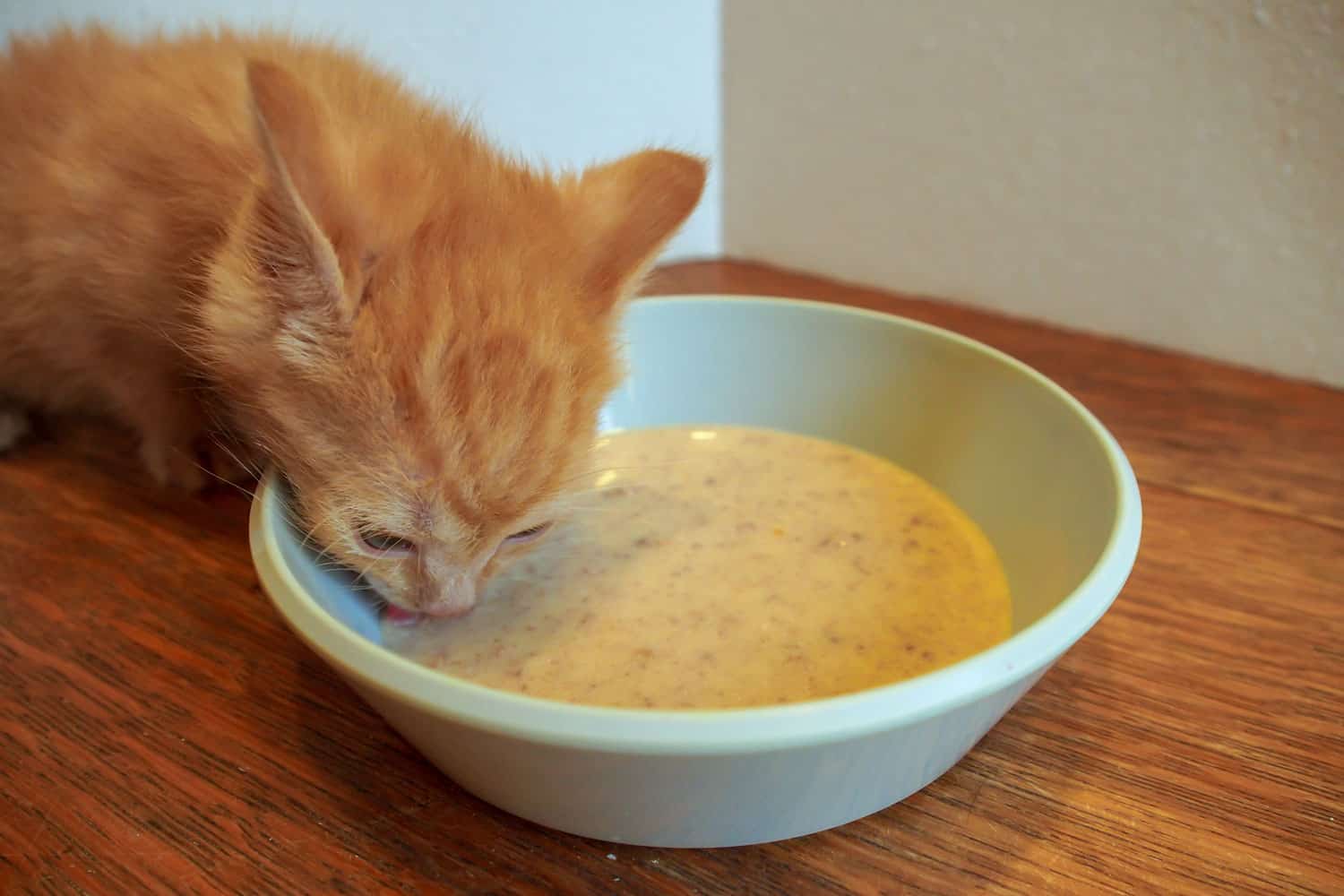
- Texture: start with slurry (warm water or kitten formula mixed into canned kitten food), then thicken gradually.
- Meal frequency: keep it high. Small stomachs empty fast.
- Hydration: wet food helps a lot, but always offer fresh water.
If your kitten is under 8 weeks and was separated from mom early, your vet may recommend supplemental bottle feeding. That depends on the kitten’s weight gain and overall condition.
Weeks 7 to 12: Solid food, fast growth
This is when many first-time owners get nervous because appetites can surge overnight. One day they nibble, the next day they are convinced you have never fed them in their life.
- Aim for: 4 meals a day at 7 to 10 weeks, then consider 3 to 4 meals by 12 weeks.
- Keep changes slow: if you switch brands or proteins, blend over 5 to 7 days.
- Watch stools: soft stool often means “too much too fast,” not “this kitten is broken.”
3 to 6 months: The bottomless pit era
In my house, this is when Barnaby (my tuxedo foster fail) learned to body-check the pantry door. Kittens at this age burn calories like tiny athletes.
- Stick with kitten food: the higher protein and fat support growth.
- Keep structure: 3 meals per day is a sweet spot for most families.
- Use enrichment: puzzle feeders and lick mats slow down speed-eaters.
6 to 12 months: Growing up, still a kid
Many kittens start to need a little less food per pound as growth slows, but they still need quality nutrition. This is also when some indoor kittens start gaining extra weight if the portion size never changes.
- Move toward: 2 meals per day by 9 to 12 months, unless your kitten does better with 3 smaller meals.
- Monitor body condition: you should feel ribs easily with a light fat covering, not see them sharply.
- Plan the adult-food transition: most cats switch around 12 months, but large breeds may benefit from kitten food longer. Ask your vet.
Wet vs dry
Both wet and dry can work. I am not here to shame anyone’s budget or schedule. What I care about is that your kitten gets enough calories, enough water, and a diet formulated for growth.
Wet food benefits
- Higher moisture, which supports hydration
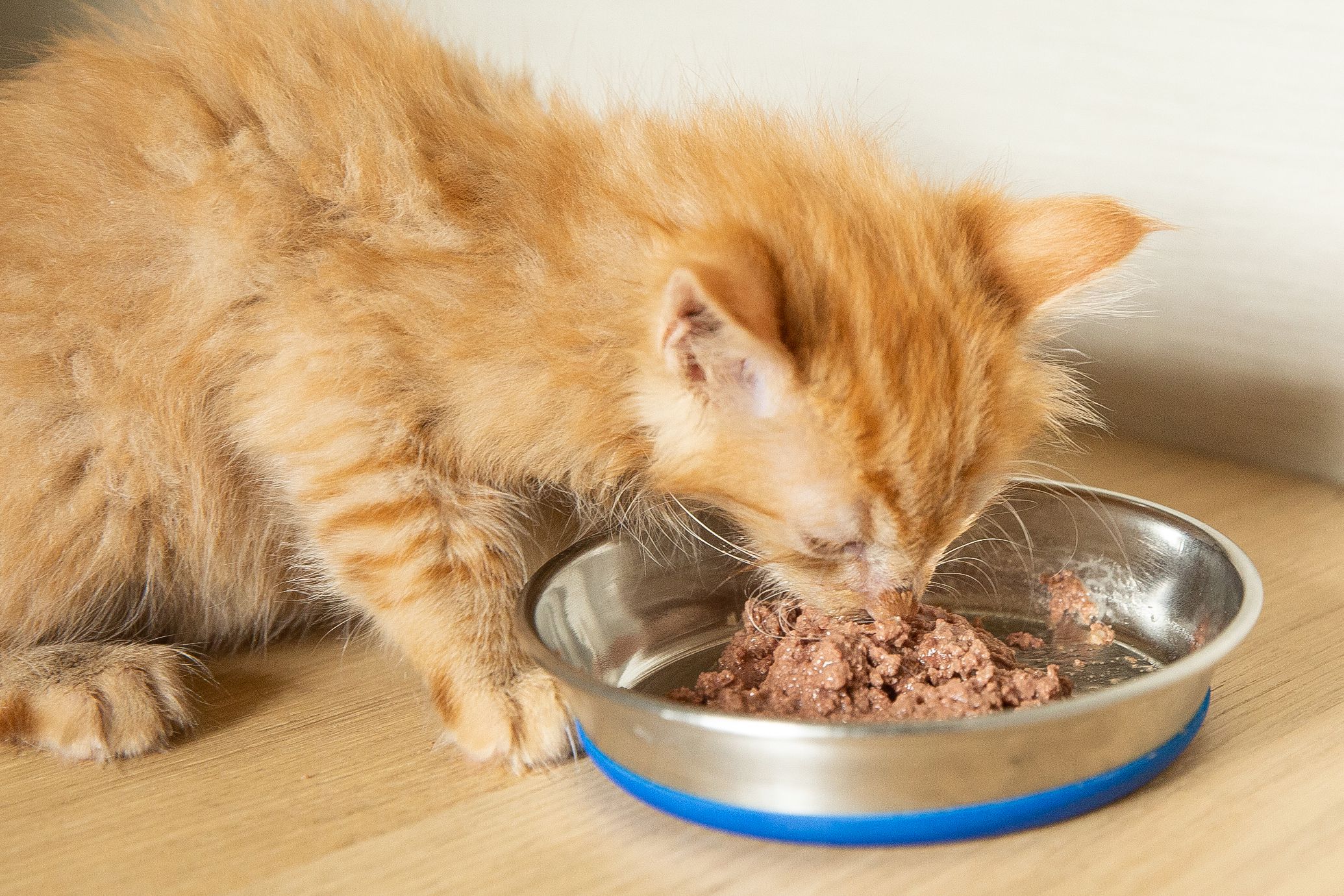
- Often easier for tiny mouths during weaning
- Helpful for kittens prone to constipation
Dry food benefits
- Convenient for multi-kitten households
- Can be left out briefly (still, I prefer timed meals for most kittens)
- Often more budget-friendly per calorie
How to mix wet and dry
Instead of guessing, use calories.
- Step 1: Find calories per can or per cup on the label (kcal).
- Step 2: Pick a daily calorie target from your vet or the food label’s weight-based range.
- Step 3: Decide what percentage you want from wet vs dry (example: 70% wet, 30% dry).
- Step 4: Do the math and measure.
Example: If your kitten needs 250 kcal/day, and your wet food is 90 kcal per 3 oz can, and your dry food is 400 kcal per cup:
- 70% wet = 175 kcal. At 90 kcal per can, that is 175/90 = 1.94 cans (so just under 2 cans, or “about 2 cans” in real life).
- 30% dry = 75 kcal. At 400 kcal per cup, that is 75/400 = 0.1875 cup (about 3 tablespoons, since 1 cup = 16 tablespoons). That is just under 1/4 cup.
If math makes your eyes cross, you can also choose one “main” food (wet or dry) and use the other as a small topper. Just keep the topper consistent.
Wet food handling tip: for safety (and because kittens love to “revisit” a bowl), do not leave wet food out for long. If it has been sitting at room temperature for more than 1 to 2 hours, toss it. Refrigerate leftovers promptly.
Feeding schedule to copy
8 to 12 weeks (4 meals/day)
- 7:00 AM breakfast
- 11:00 AM lunch
- 3:00 PM snack meal
- 7:00 PM dinner
3 to 6 months (3 meals/day)
- 7:00 AM breakfast
- 1:00 PM lunch
- 7:00 PM dinner
6 to 12 months (2 meals/day)
- 7:00 AM breakfast
- 7:00 PM dinner
If you work long shifts, an automatic feeder for dry food can bridge the gap. For wet food, I prefer feeding when you are home and using enrichment (like a lick mat) to make meals last longer.
Portion tips that prevent problems
1) Weigh your kitten, then adjust weekly
Healthy kittens generally gain weight steadily. If weight is flat for several days in a row, or dropping, that is a prompt to troubleshoot quickly.
2) Learn body condition in 10 seconds
- Too thin: ribs and spine feel sharp, little padding, low energy.
- Just right: ribs easy to feel but not pokey, waist visible from above, belly tuck from the side.
- Too heavy: ribs hard to feel, no waist, belly swings.
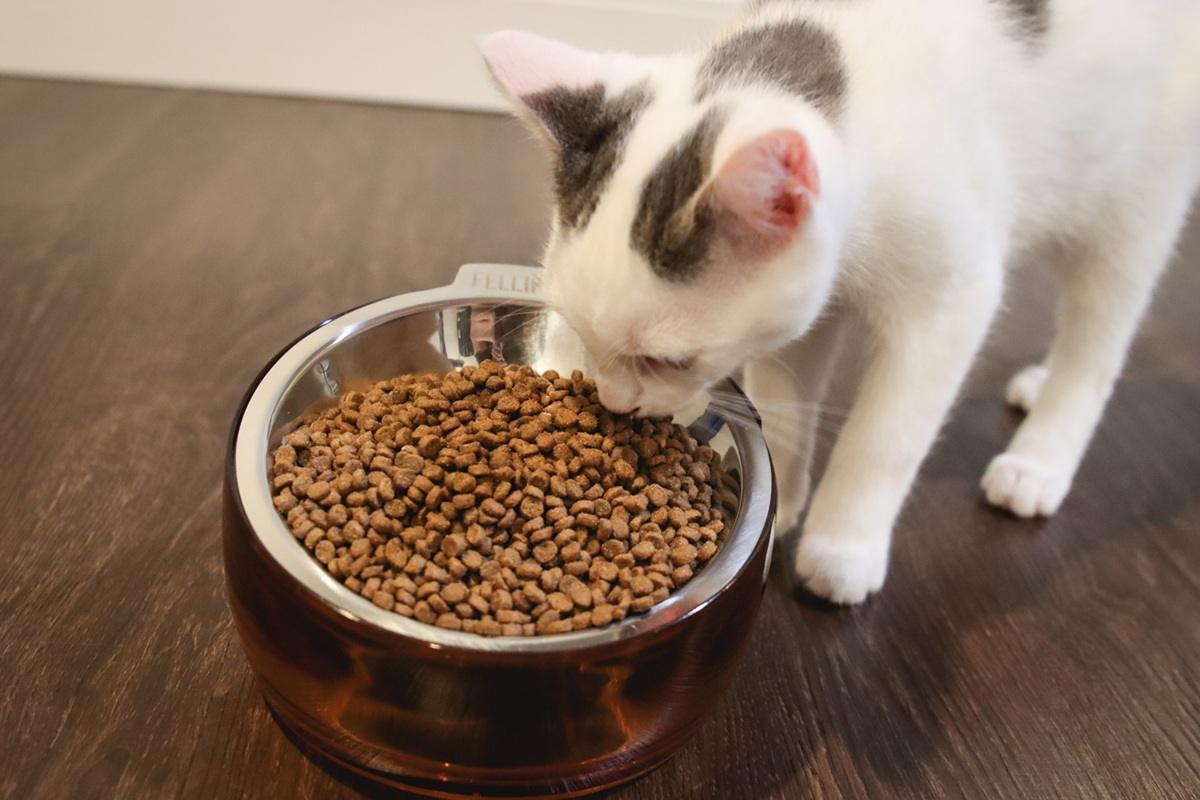
3) Measure dry food with a real measuring cup
Eyeballing is how “1/4 cup” becomes “a heaping mountain.” If your kitten is gaining too fast, dry food is often the sneaky culprit.
4) Keep treats tiny
Treats should be a small part of intake. For kittens, I use treats mainly for handling practice, carrier training, and nail trim peace negotiations.
Common questions
Should I free-feed my kitten?
Some kittens do fine with free-feeding dry food, especially in multi-kitten foster rooms where everyone is burning calories nonstop. In typical pet homes, I usually prefer scheduled meals. Meal structure helps you notice appetite changes quickly, and it reduces the risk of a kitten becoming a bored grazer who gains excess weight later.
My kitten acts hungry all the time. Am I underfeeding?
Maybe, but not always. Hunger can also mean:
- Food is too low-calorie for their growth spurt
- They are eating too fast and not feeling satisfied
- They have parasites (very common in kittens)
- They learned that meowing equals snacks
If appetite is intense plus there is diarrhea, a potbelly, vomiting, or poor weight gain, call your vet and bring a stool sample. Deworming is routine for a reason.
When do I switch from kitten food to adult food?
Most cats transition around 12 months. If your kitten is a large breed, underweight, or still clearly growing, your vet may suggest staying on kitten food longer. Transition slowly over 7 to 10 days to protect the gut.
Can kittens drink cow’s milk?
No. Many cats are lactose intolerant, and it can cause diarrhea fast. If you want a “milk” treat, use a cat-safe lactose-free product, but treats are optional. Water is the real daily need.
When to call the vet
Kittens can go from “fine” to “not fine” quickly. Contact your veterinarian promptly if you notice:
- Not eating for more than 12 hours (and for young kittens under 8 weeks, even 6 to 8 hours can be a reason to call)
- Repeated vomiting
- Diarrhea that lasts more than 24 hours, or diarrhea with lethargy
- Straining to poop, very hard stools, or no poop for 48 hours
- Rapid weight loss, failure to gain, or obvious dehydration (sticky gums, sunken eyes)
If your kitten is under 8 weeks, err on the side of calling sooner. Tiny bodies have tiny reserves.
Quick takeaways
- Kittens need more frequent meals than adult cats, especially from 4 to 12 weeks.
- Use the chart as a starting point, then adjust based on weekly weight gain and body condition.
- Wet, dry, or mixed can all work. The key is a kitten-formulated, complete and balanced diet.
- If something feels off, trust your instincts and loop in your vet. You are not overreacting. You are learning.
If you are unsure about portions, bring your kitten’s current weight and the food label (or a photo of it) to your next vet visit. A quick calorie check is often all it takes to dial in the right daily amount.