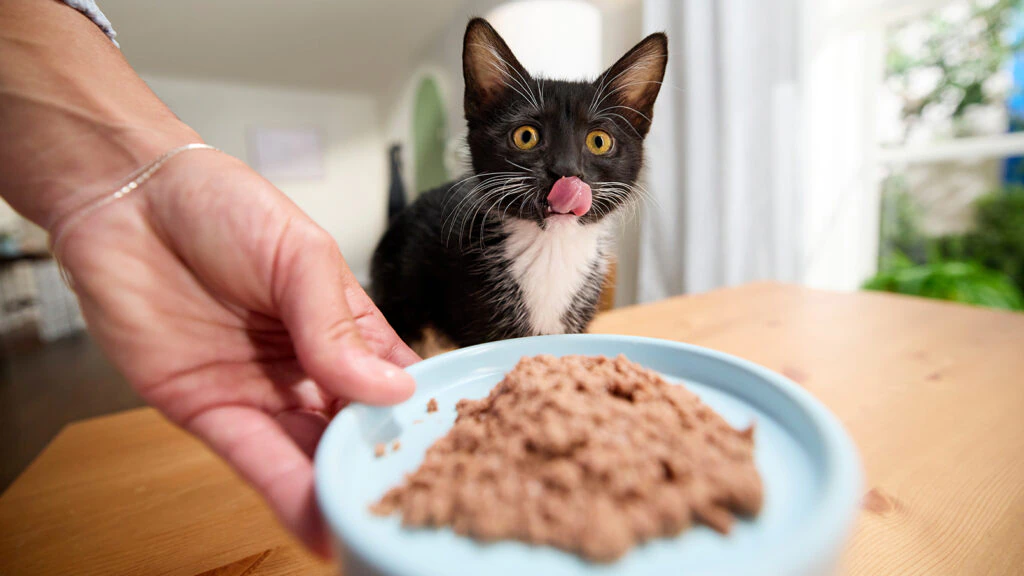
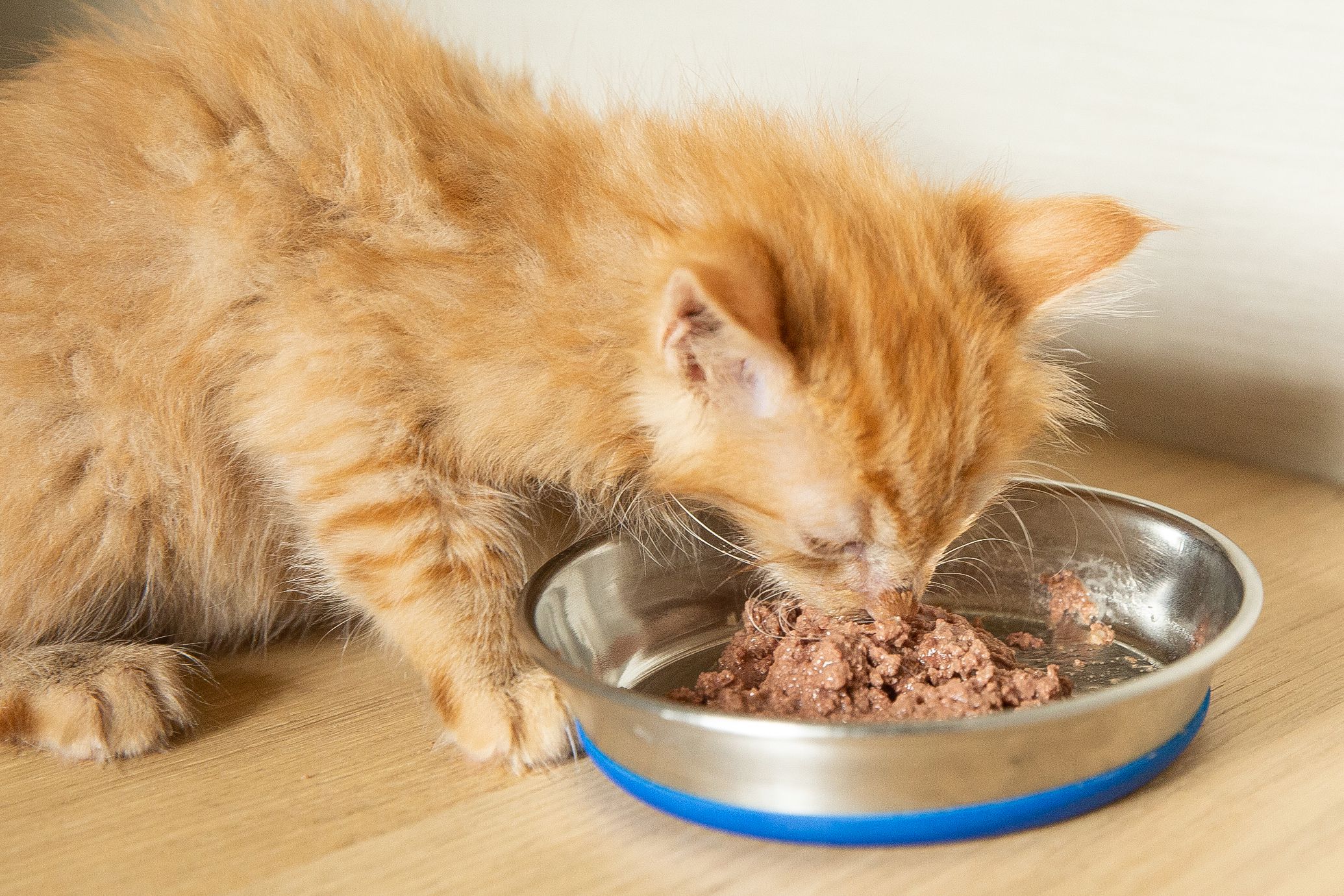
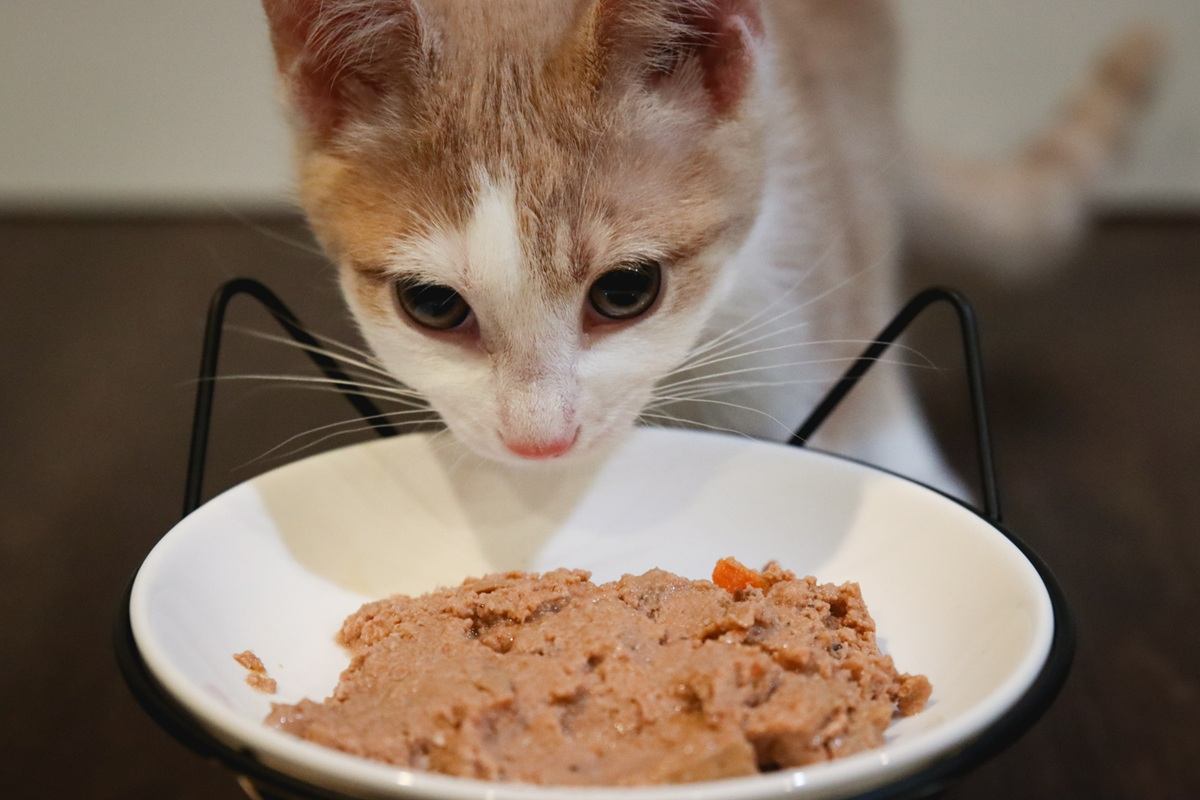
There is a moment every kitten parent hits where the bag in your pantry starts to feel like a question mark: Are we still doing kitten food, or is it time to “graduate”? I remember staring at labels with my tuxedo foster fail Barnaby weaving between my ankles like a tiny, hungry lawyer.
The good news is that the timeline is pretty consistent for most cats, and the actual switch is less scary when you treat it like a gentle, measured blend instead of an overnight flip.
When to switch: the age timeline (plus the exceptions)
In general, kittens need the extra calories, protein, and certain nutrients in kitten food because they are building everything at once: muscles, bones, organs, immune system, and a brain that seems determined to invent new chaos daily.
Most cats: transition around 12 months
- Start thinking about it: 10 to 11 months
- Typical transition window: 11 to 12 months
- Fully on adult food: by 12 months
If your kitten was spayed or neutered early (many rescues do this around 2 to 4 months), you may notice their growth rate slows a bit sooner. That does not automatically mean you should switch early. It just means you may need to watch portions more closely.
Large breeds: often closer to 15 months
Some larger, slower-maturing cats (Maine Coon is the classic example) can benefit from kitten or “all life stages” food longer, because they are still growing.
- Common range: 12 to 15 months
- Best move: ask your vet about your cat’s body condition and growth curve at the 12-month checkup
Underweight or recovering kittens: follow your vet’s plan
If your kitten had a rough start (parasites, respiratory infections, a long period of underfeeding), the “right” time is less about the calendar and more about stable weight and good body condition.
Overweight kittens: do not crash diet by switching too early
I know it is tempting to swap to adult food the moment your kitten starts looking a little round. Instead, talk to your vet about portions, feeding schedule, and whether an all life stages formula or a carefully portioned kitten diet is safer while they finish growing.
How to transition safely: the mixing method that prevents upset stomachs
Most tummy trouble during a food change is not because the new food is “bad.” It is because the switch happened too fast. A kitten’s gut bacteria needs time to adjust.
The 7 to 10 day transition plan
This is my go-to for foster kittens aging out of kitten food, and it works for most healthy cats.
| Days | Kitten food | Adult food |
|---|---|---|
| 1 to 2 | 75% | 25% |
| 3 to 4 | 50% | 50% |
| 5 to 7 | 25% | 75% |
| 8 to 10 | 0% | 100% |
If your cat has a sensitive stomach, stretch it to 14 days
If your kitten has a history of soft stools, stress diarrhea, or frequent vomiting, go slower. Stay on each step for 3 to 4 days. You are aiming for comfortable digestion, not speed.
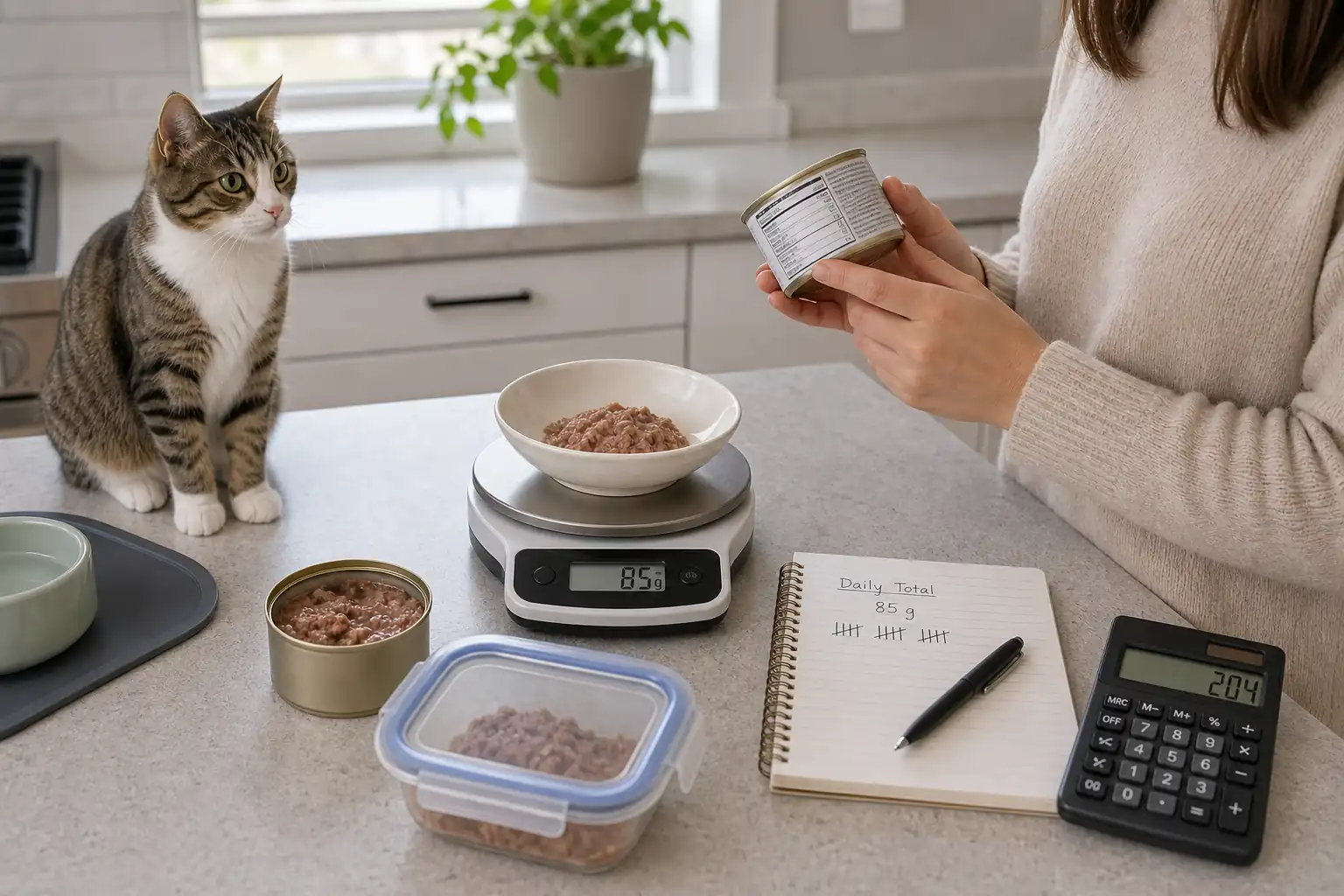
Pro tip: measure the mix once per day
Instead of guessing at each meal, I like to mix a day’s worth in a container (especially for kibble) so the ratio stays consistent. Consistency matters.
Choosing the right adult food (without getting overwhelmed)
Adult cat food is not automatically “lower quality.” It is just formulated for a cat who is no longer in full growth mode. The best choice is one your cat tolerates well and that keeps them at a healthy weight.
What to look for on the label
- Life stage: “Adult maintenance” (or “All life stages” if recommended by your vet)
- Complete and balanced statement: Look for an AAFCO adequacy statement for adult maintenance
- Protein-forward formula: Cats are obligate carnivores. Adult diets should still be meat-based.
- Calories matter: Compare kcal per cup (dry) or kcal per can (wet) so you do not accidentally overfeed
Wet, dry, or both?
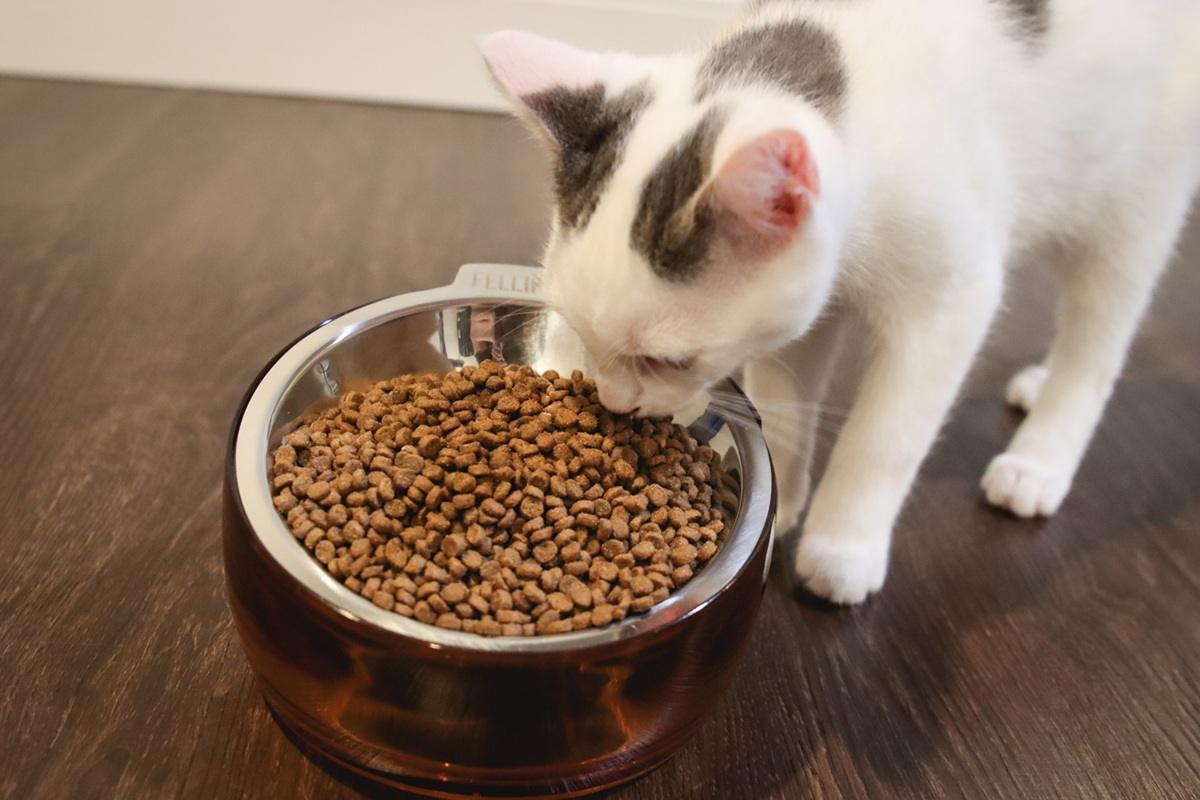
For many cats, a combination works beautifully: wet food helps with hydration and can be more filling, while dry can be convenient and budget-friendly. If your cat is prone to urinary issues or does not drink much water, ask your vet if increasing wet food would help.
Portions: why they beg
This is the part that trips people up. The switch to adult food often comes with smaller portions, not because adult food is always richer, but because your cat’s daily calorie needs usually drop as growth slows and they stop burning through energy like a tiny furnace.
Also, kitten food is typically more calorie-dense than adult food to support rapid growth. So even if the measuring scoop looks the same, what your cat needs from it is changing.
A simple way to adjust portions
- Check the calories of the kitten food and the adult food (kcal per cup for dry, kcal per can for wet).
- Calculate portions based on calories, not just volume. Depending on the formulas, you might feed more or less volume after the switch.
- Adjust slowly over 1 to 2 weeks while monitoring body condition, energy, and stool quality.
Use body condition, not just the bowl
A healthy young adult cat should have a visible waist from above, and you should be able to feel ribs with a light touch (not see them sharply, not have to press hard to find them). If you are unsure, your vet can score your cat’s body condition in minutes.
Troubleshooting common transition problems
“My cat refuses the new food.”
- Go back a step. If you jumped to 50/50 and they are boycotting, return to 75/25 for a few days.
- Warm wet food slightly. A little warmth boosts aroma. Think “cozy,” not hot.
- Keep mealtimes calm. Stress can look like pickiness.
- Avoid too many toppers. If you add something exciting, do it consistently and sparingly, or you may teach your cat to hold out for the good stuff.
Soft stool or gas during the switch
- Slow down the transition. Most mild stool changes resolve with more time at each ratio.
- Double-check treats. During transitions, keep treats minimal and consistent.
- Call your vet if diarrhea is watery, contains blood, or lasts more than 24 to 48 hours.
Vomiting
Occasional spit-up can happen if a cat eats too fast, but repeated vomiting is not something to “wait out.” Stop the transition, offer the previously tolerated diet, and contact your vet for guidance.
“My cat is scarfing the adult food and begging nonstop.”
- Split meals. Many young adults do better with 3 smaller meals rather than 2 larger ones.
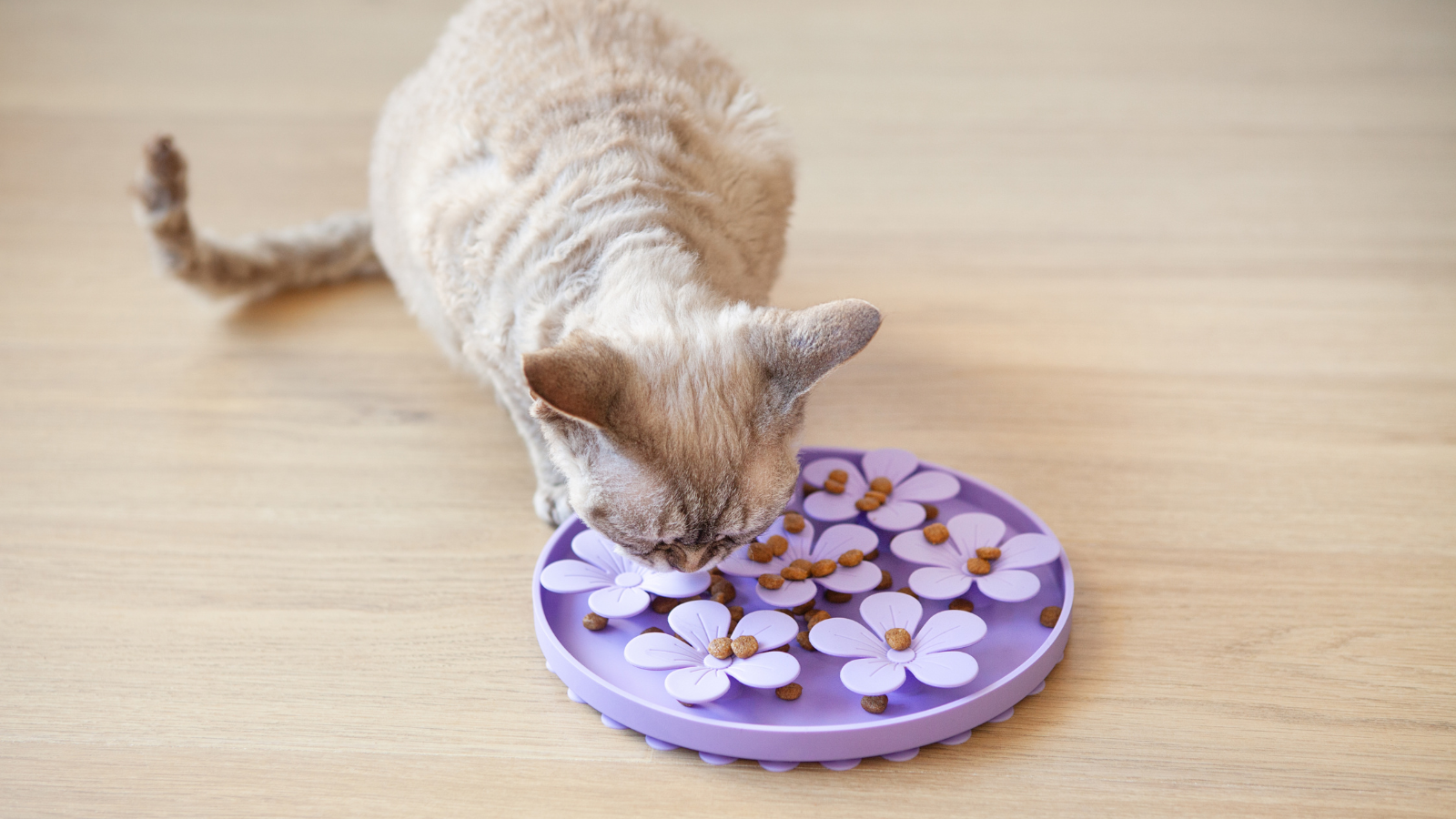
- Try a puzzle feeder. Slowing eating can improve satisfaction.
- Add a little more wet food if your budget allows. It can help them feel full.
Switching schedules for real life
If you are reading this with half a bag of kitten food left and a cat who acts offended by change, here are two low-stress approaches I use in foster homes.
Option A: Finish the bag while mixing in the new food
Buy the adult food, then start the 7 to 10 day ratios. You will naturally use up the kitten food without an abrupt end date.
Option B: Use an “all life stages” bridge
If your kitten is sensitive or you are switching brands and life stages at the same time, sometimes it is easier to transition first to an all life stages formula, then later to an adult formula from the same brand line. It is not required, but it can make things smoother for picky cats.
FAQ
Can I switch to adult food at 6 months?
For most cats, no. Six months is still heavy growth time. If you are worried about weight, portion control and a vet check are safer than switching early.
Do I have to transition if I am switching from kitten wet to adult wet?
Yes. Even within the same texture, ingredient changes can upset digestion. A gradual transition is still your friend.
What if my cat is 12 months but still seems kittenish?
Totally normal. Many cats stay goofy well into adulthood. Use body condition, energy level, and your vet’s guidance to decide timing, not personality.
Is it okay to feed kitten food and adult food together long-term?
It is fine temporarily during the transition. Long-term, it can make weight management harder because kitten food is typically more calorie-dense. If you have a multi-cat home with different ages, ask your vet about strategies like separate feeding stations or microchip feeders.
My simple rule of thumb
If your cat is healthy and average-sized, plan to transition around 11 to 12 months, and take 7 to 10 days to do it. Go slower if their stomach is sensitive, and do not be afraid to pause and back up a step. The goal is a comfortable, steady change, not a dramatic graduation day.