The fastest way to feel confident you are raising a healthy kitten is to track two things: weight and body condition (how your kitten looks and feels, not just the number on the scale). Kittens grow so quickly that small changes matter. Small week-to-week fluctuations can happen. What you want to catch early is a stall that continues or true weight loss.
I have fostered plenty of wiggly, “no thank you” kittens, and I promise you do not need fancy equipment or a veterinary degree to track growth at home. You just need a simple setup, a consistent routine, and a realistic milestone chart.
Why weight matters
In adult cats, weight changes can be slow and subtle. In kittens, weight is more like a daily report card on how well the basics are going:
- Calories and nutrients: Is your kitten eating enough for their age and activity level?
- Hydration: Mild dehydration can show up as stalled weight gain.
- Parasites or illness: Worms, coccidia, respiratory infections, and other common kitten issues often show up first as poor growth.
- Weaning progress: During the weaning stage, kittens can wobble a bit if solid-food intake is not keeping up.
The goal is not to chase a specific number. The goal is a steady upward trend plus a kitten who acts like a kitten: bright-eyed, curious, playful, and hungry. And if you ever feel unsure, your vet’s growth curve advice matters more than any chart online.
What you need
Keep it simple. Here is what I use in my foster room:
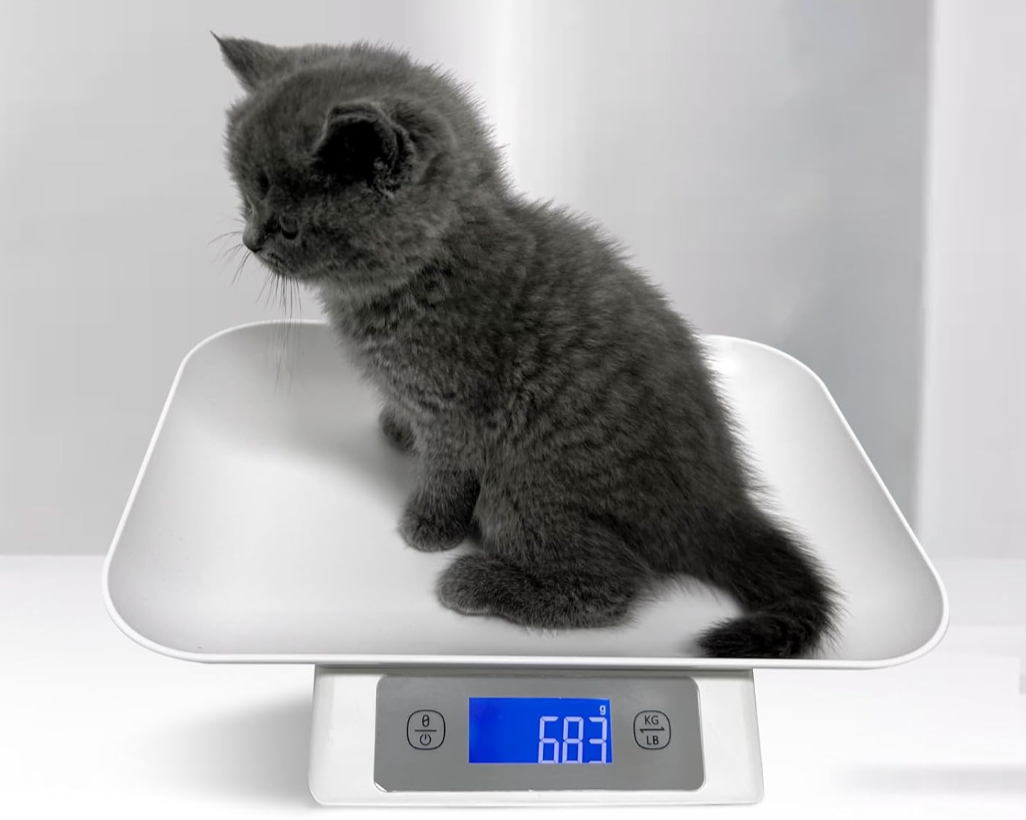
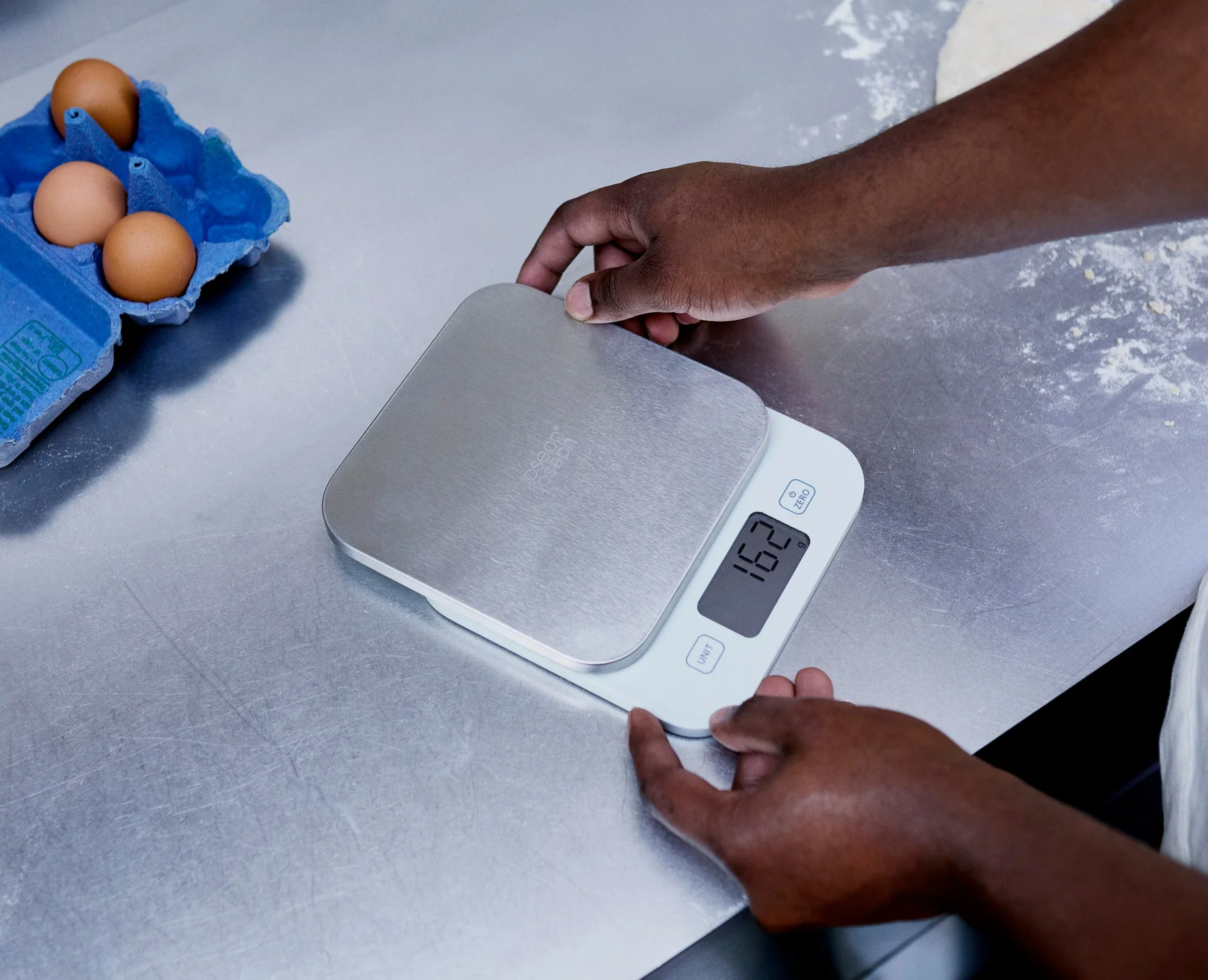
- Digital kitchen scale that measures in grams (g) and ounces (oz), ideally up to at least 11 lb (5 kg).
- A container or baby scale tray to prevent escape attempts. A shallow bowl, small box, or plastic bin works.
- A soft towel to line the container for grip and comfort.
- A notebook or phone note for logging.
If you already have a human bathroom scale, you can do the “weigh yourself, then weigh yourself holding the kitten” method, but it is much less accurate for tiny kittens. For kittens under about 4 lb, a kitchen scale is worth it.
How to weigh your kitten
1) Pick one time and stick with it
Consistency matters more than perfection. I like morning, before a big meal, because bellies vary. If you want to be extra consistent, try to weigh before a big meal and before a litter box visit, when possible.
2) Set up the scale
- Put the scale on a hard, flat surface.
- Place your container on top.
- Press tare (zero) so the scale only counts the kitten’s weight.
3) Place kitten in the container
Keep one hand nearby like a seatbelt, but try not to press down on the container. If your kitten is doing parkour, drop a few treats into the bowl, or let them lick a little bit of Churu-style puree from a spoon while you read the number.
4) Record the weight in grams
Grams are more precise than ounces for small kittens. Write down:
- Date
- Age (if known)
- Weight (g)
- Notes (appetite, stool, meds, big changes)
5) Set your schedule
For most healthy, weaned pet kittens, weekly weigh-ins are plenty. For younger kittens, kittens recovering from illness, or kittens with diarrhea or poor appetite, weigh more often. The next section breaks down timing by age.
Foster-style rule: if something feels “off,” daily weights can help you decide whether to call the vet today or monitor another day.
How often to weigh
- 0 to 4 weeks: daily if you are bottle-feeding or caring for a fragile kitten, otherwise every 2 to 3 days if thriving.
- 4 to 8 weeks: every 2 to 3 days during weaning, then weekly once eating well.
- 8 to 16 weeks: weekly.
- 4 to 12 months: every 2 to 4 weeks, or monthly if growth is steady.
If your kitten is very spicy about the scale, do less often but do it consistently. A weekly trend beats daily drama.
Once your cat is close to adult size (often around 10 to 12 months for many cats, longer for some large breeds), you can usually stop routine weigh-ins and just check weight at vet visits, unless you are monitoring a medical issue.
Growth milestones
Every kitten is an individual. Sex, breed, genetics, early nutrition, parasite history, and spay or neuter timing all play a role. Still, most healthy kittens follow a similar pattern: rapid growth early, then a gradual slowdown.
Use the milestone ranges below as a “does this seem reasonable?” tool, not a pass or fail test. If your kitten’s age estimate is fuzzy (common with rescues), the trend line matters more than matching a chart perfectly.
| Age | Typical weight range | What you want to see |
|---|---|---|
| 4 weeks | 400 to 600 g (0.9 to 1.3 lb) | Steady gains, starting to explore, interested in food smells |
| 6 weeks | 550 to 800 g (1.2 to 1.8 lb) | Weaning underway, playful bursts, good hydration |
| 8 weeks | 800 to 1,100 g (1.8 to 2.4 lb) | Eating mostly solids, using litter consistently |
| 10 weeks | 1.0 to 1.4 kg (2.2 to 3.1 lb) | Appetite strong, energy high, coat glossy |
| 12 weeks | 1.2 to 1.7 kg (2.6 to 3.7 lb) | Longer play sessions, steady weekly gain |
| 16 weeks | 1.6 to 2.3 kg (3.5 to 5.0 lb) | Growing but less “explosive” than early weeks |
| 6 months | 2.3 to 3.6 kg (5 to 8 lb) | Noticeable growth slowdown, still lanky |
| 9 to 12 months | 2.7 to 5.4 kg (6 to 12 lb) | Approaching adult size, filling out gradually |
Important: Those later ranges are especially variable. Many adult domestic cats settle well under 12 lb, and some large breeds grow longer and weigh more. Focus on body condition and your veterinarian’s guidance.
About the “1 pound per month” rule: Many kittens are roughly 1 lb at 1 month, 2 lb at 2 months, 3 lb at 3 months, and so on. It is a helpful shortcut, but it is not perfect, especially for petite cats, large breeds, and kittens with an uncertain age estimate.
A quick rate-of-gain reality check: In the early weeks, many kittens gain roughly 10 to 15 grams per day when thriving. Some gain more, some less. What matters is that the trend is up and the kitten is bright, warm, well-hydrated, and eating.
Healthy gain, not just fast gain
Weight is a number. Health is the bigger picture. Pair the scale with a quick weekly “hands-on check”:
Body condition check
- Ribs: You should be able to feel ribs with light pressure, like feeling the ridges under a thin blanket. You should not see ribs sharply in most kittens older than 10 to 12 weeks.
- Waist: Looking down from above, you should see a slight waist behind the ribs.
- Belly: A little kitten belly can be normal. A hard, round belly plus poor weight gain can suggest parasites or constipation.
- Muscle: Along the spine and hips, your kitten should feel padded, not bony.
If your kitten is gaining rapidly but feels squishy with no waist, ask your vet about portion sizing and treat calories. It is easier to prevent chonk than to fix it later.
What to log
If you only log the weight, you lose context. When I am raising a litter, my notes are what help me connect the dots.
My quick log fields
- Date
- Weight (g)
- Change from last weigh-in (up, down, flat)
- Food and appetite (normal, picky, ravenous, refused)
- Stool (normal, soft, diarrhea, constipation)
- Energy (normal play, sleepy, hiding)
- Notes (dewormer dose, vaccine day, stressful event)
You can do this in a notebook, a spreadsheet, or a notes app. The best system is the one you will actually keep using when your kitten steals the pen and runs away.
Slowdowns: normal vs not
Kittens do not gain in a perfectly straight line. Small fluctuations happen.
Often normal
- Weight is flat for a day or two, especially during weaning or after a big play day.
- Weight gain slows after 4 to 6 months as growth rate naturally tapers.
- A tiny dip after a stressful change like moving homes, if appetite returns quickly.
Red flags to call your vet
- Weight loss between weekly weigh-ins (or any loss in very young kittens).
- No gain for 5 to 7 days in a kitten under 4 months, especially if appetite is reduced.
- Diarrhea lasting more than 24 to 48 hours, or diarrhea plus lethargy. For kittens under about 8 weeks, call sooner if diarrhea is more than mild, frequent, or paired with low energy.
- Not eating for more than a meal or two, or refusing favorite foods. Younger kittens can become dehydrated or hypoglycemic quickly, so earlier help is better.
- Vomiting repeatedly or vomiting plus poor weight gain.
- Bloated or painful belly, straining, or no stool.
- Signs of dehydration like tacky gums, weakness, or sunken eyes.
Young kittens can go from “kind of off” to “needs help now” faster than people expect. If you are unsure, calling your vet is never overreacting.
Feeding and growth
If weight is not trending upward, food is the first place to look, assuming your kitten is not sick.
Feeding basics
- Feed kitten-formulated food (look for “growth” or “all life stages” on the label).
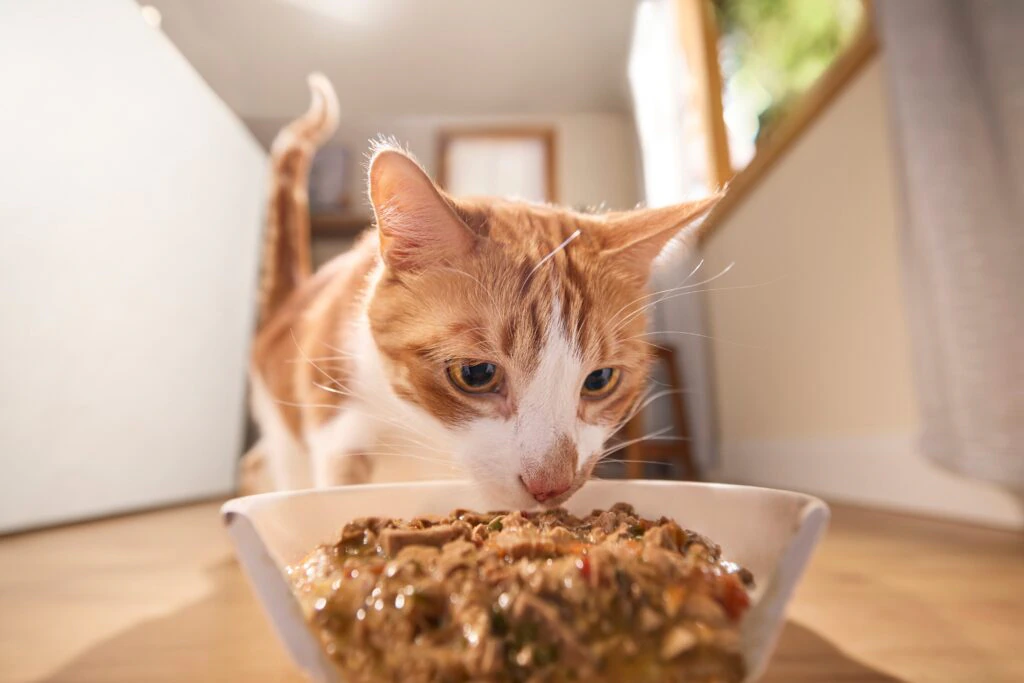
- Include wet food for hydration support, especially if your kitten does not drink much. Dry food can still fit into a healthy kitten diet.
- Small, frequent meals are often better than one or two big meals for kittens under 4 months.
- Measure for clarity. Even if you free-feed some kibble, measuring helps you notice appetite changes early.
If your kitten is consistently underweight or failing to gain, your vet may recommend a calorie-dense recovery food or a specific feeding schedule. Do not jump straight to supplements without guidance, especially with very young kittens.
Special situations
Smaller kittens and runts
Some kittens are simply petite. What matters is whether they are proportionate, energetic, and steadily gaining. A small kitten who gains reliably can be perfectly healthy.
Big breeds
Maine Coons and other large breeds can grow longer and end up heavier as adults. They may sit at the top of the milestone ranges or beyond, and that can be normal. Focus on body condition, not just the number.
First week after adoption
Many kittens eat a little less during the first few days home. Stress can temporarily affect appetite and the scale. Offer a quiet space, keep food consistent, and weigh weekly. If appetite is poor or weight drops, call your vet.
FAQ
My kitten gained a lot this week. Is that bad?
Usually, no. Early growth can be impressively fast. If your kitten is gaining quickly but still feels lean with a visible waist and lots of energy, that is typically fine. If your kitten is starting to lose their waistline, talk with your vet about portions and treat frequency.
My kitten’s belly is round but the weight gain is slow. Worms?
It could be, but it could also be constipation, gas, overeating, or just a normal kitten tummy. A potbelly plus slow growth, messy stool, or a dull coat is a good reason to ask your vet for a fecal test and a deworming plan.
Should I weigh before or after meals?
Either is fine as long as you do it the same way each time. If you want the cleanest trend, weigh at the same time of day, ideally before a big meal.
What if I do not know my kitten’s exact age?
That is common with rescues. Use your vet’s estimate, then watch the trend line. If the trend is up and your kitten looks and acts well, you are on the right track.
Consistency beats perfect numbers
If you take one thing from this, let it be this: consistency catches problems early. A weekly weigh-in, a quick body check, and a simple log can give you so much peace of mind.
And if your kitten turns the scale into a rodeo, you are not failing. You are raising a kitten. Take a breath, grab a towel, try again tomorrow, and celebrate the small wins. Growth is a journey, not a test.