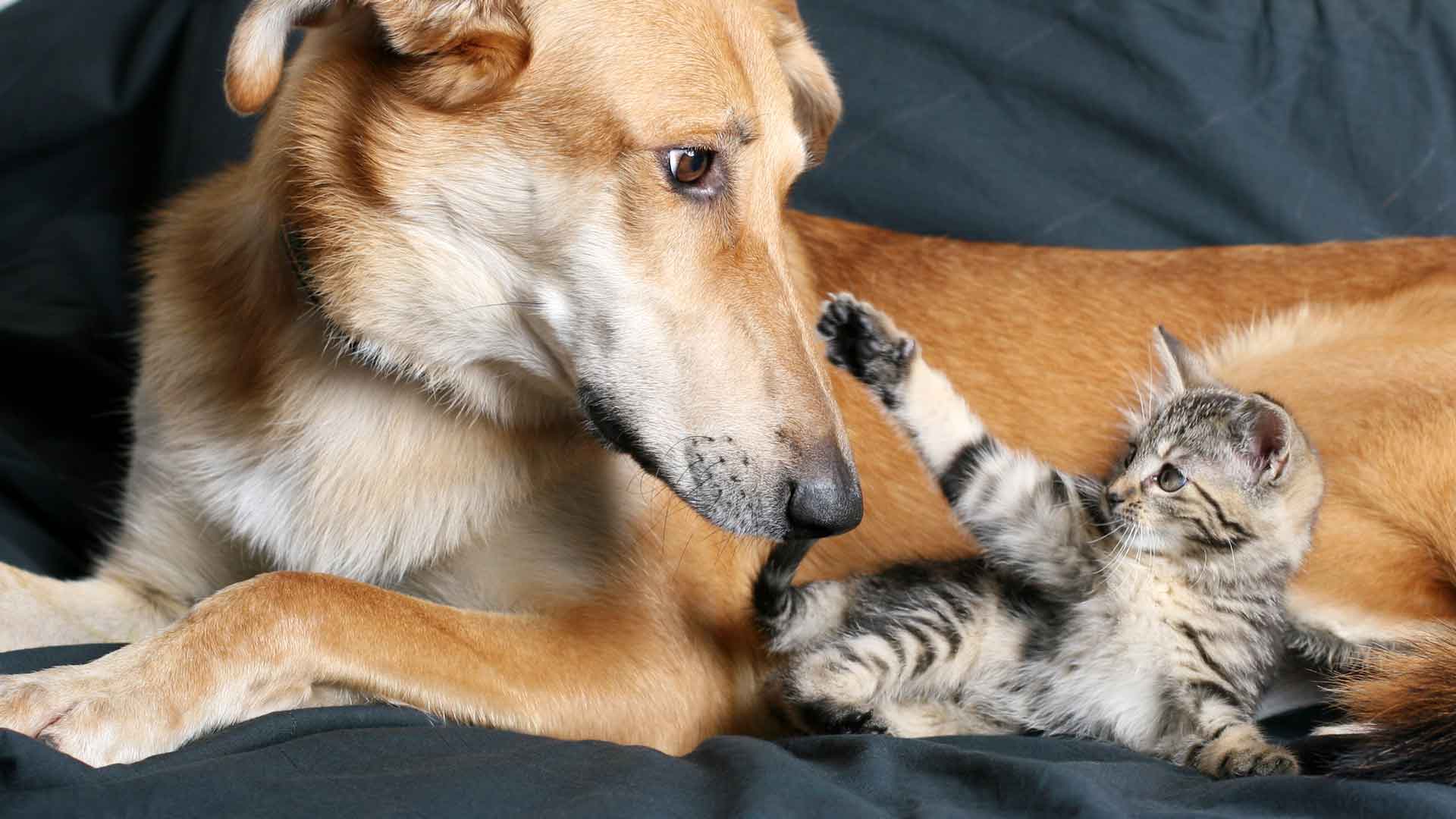
Bringing home a kitten when you already have a dog is equal parts adorable and nerve-wracking. I have fostered plenty of litters in dog homes, and the biggest “secret” is this: you are not aiming for instant friendship. You are aiming for safe, boring, predictable first interactions that teach both animals they can relax.
This guide walks you through a slow introduction that protects your kitten, keeps your dog under control, and sets you up for real harmony later.
Before you start: know what “safe” looks like
Even the sweetest dog can accidentally injure a kitten. Kittens are tiny, fast, squeaky, and unpredictable. That can trigger chase instincts or overexcited play. Your job is to create a setup where your dog cannot rush, corner, or mouth the kitten.
Health first
Before your kitten starts exploring shared spaces, make sure the basics are handled: a vet check, age-appropriate vaccines, deworming, and flea prevention. It is not just about your kitten. Parasites and contagious bugs can spread to resident pets fast, and sick kittens also act “spicy” because they do not feel good.
Good signs (green flags)
- Dog can look at the kitten, then look away when you ask.
- Loose body: soft eyes, relaxed mouth, wagging tail at mid-height (not stiff or high and vibrating).
- Sniffing the ground, sitting, or choosing to disengage.
- Dog shows mild stress signals (lip licking, yawning, turning the head away) but can still respond to you and take treats.
- Kitten is curious: ears neutral, tail not puffed, willing to eat or play after seeing the dog.
Stop and slow down (red flags)
- Staring and freezing at the kitten, especially with a closed mouth and stiff posture.
- Lunging, whining, barking, growling, teeth chattering, or intense trembling with fixation.
- Attempting to chase, pounce, paw hard, air snap, or mouth.
- “Whale eye” (showing a lot of white), hackles up with stiffness, or a low, stalking posture.
- Kitten hissing repeatedly, puffing up, flattened ears, very dilated pupils, hiding and refusing to come out, or eliminating outside the litter box due to stress.
If you’re seeing red flags, it does not mean your dog is “bad.” It means you need more distance, more management, and shorter sessions. In some homes, you also need a professional trainer with cat-dog experience.
Set up your home like a pro
A good introduction starts before anyone lays eyes on anyone. Your kitten needs a safe base camp, and your dog needs clear rules about where they can and cannot go.
1) Create a kitten safe room
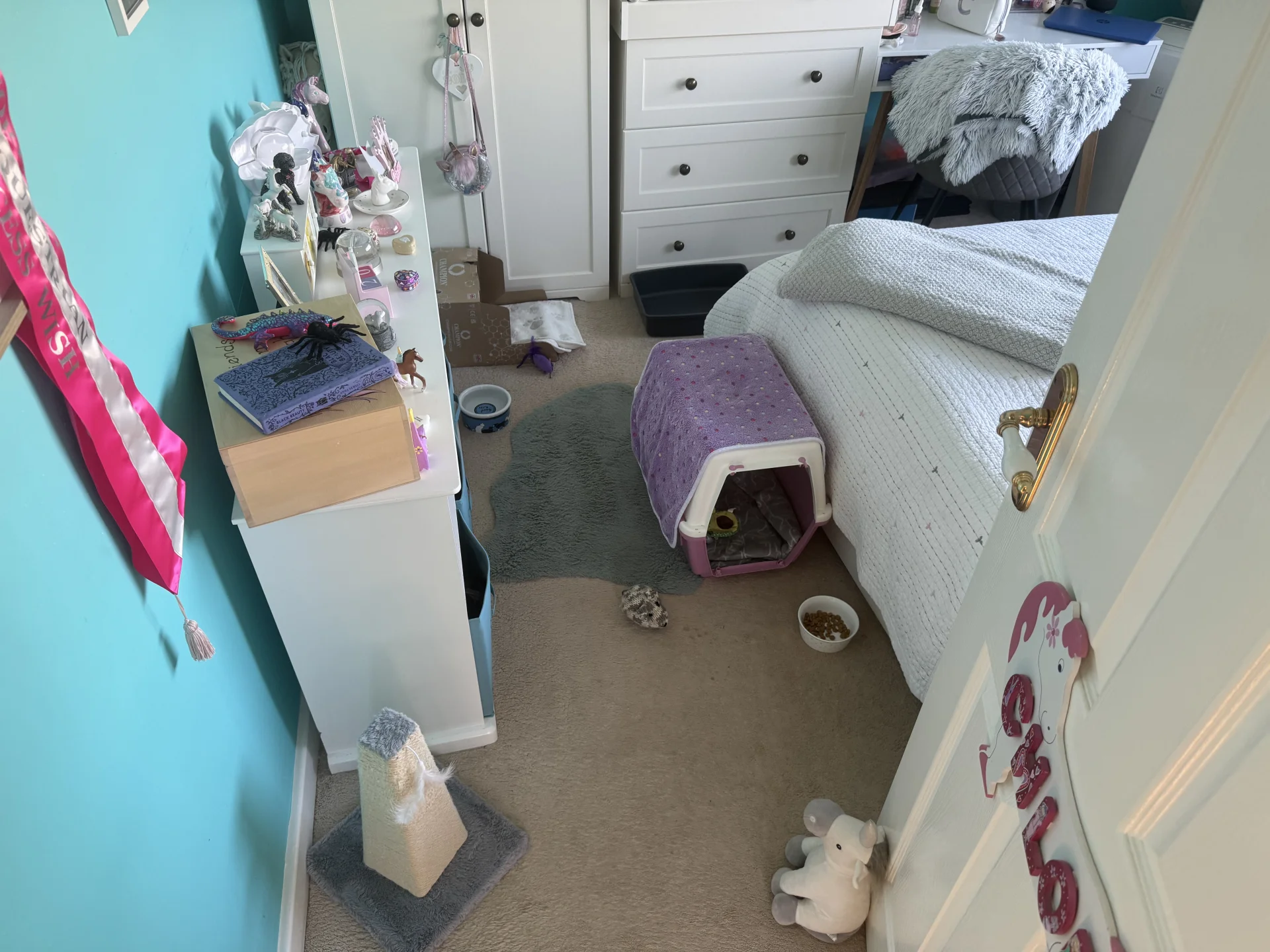
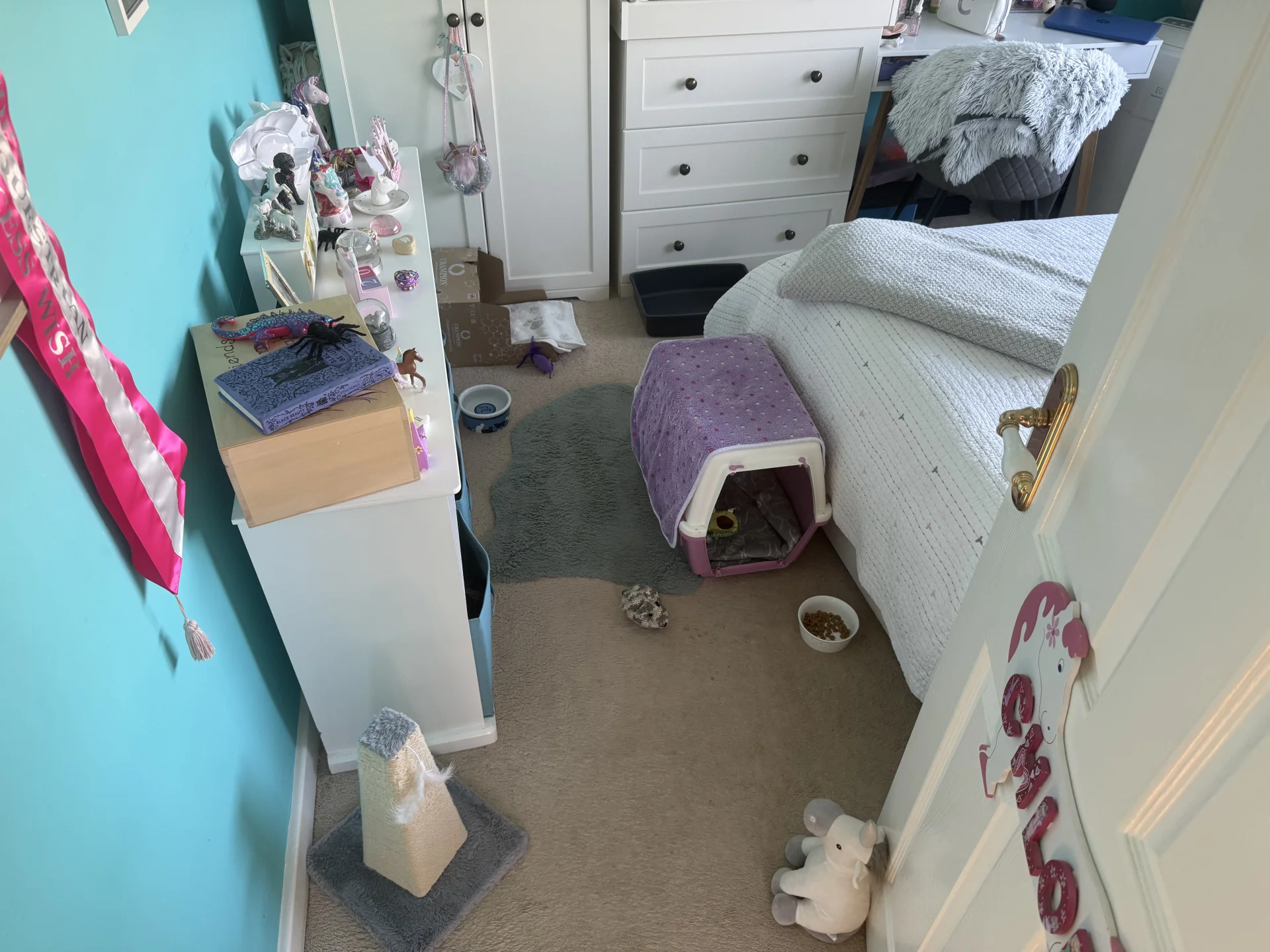
Pick a small room with a door: bedroom, office, or bathroom. This is your kitten’s “home within your home” for the first several days.
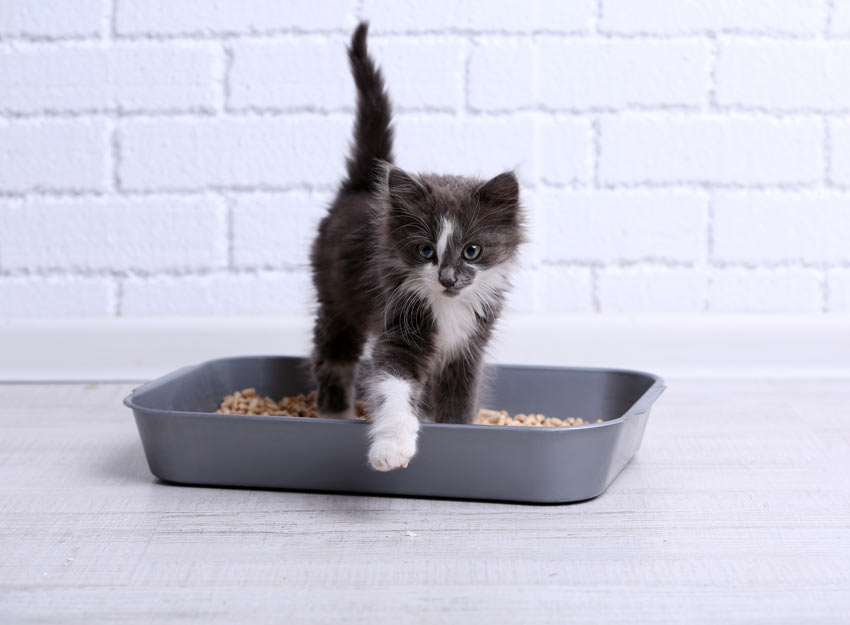
- Litter box (far from food and water)
- Food and water bowls
- A cozy covered bed or carrier with bedding
- Scratching post or cardboard scratcher
- Toys for solo play
- Feliway or similar cat calming diffuser if you have a nervous kitten (it may help some cats, and others seem to shrug it off)
2) Add vertical escapes
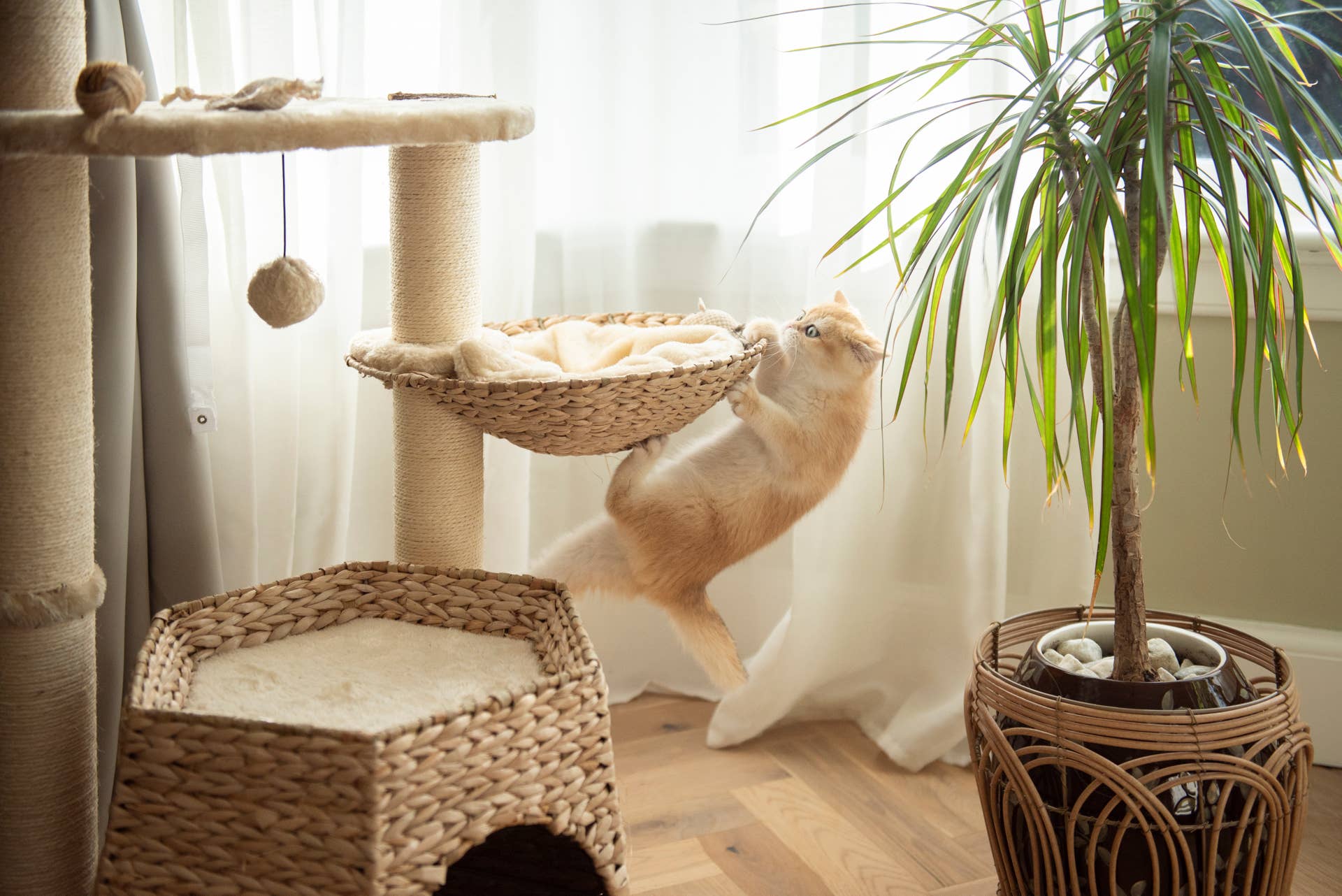
Kittens feel safer when they can get up off the ground. Before face-to-face meetings, set up “cat highways” in shared spaces.
- A cat tree near the living area
- A cleared shelf on a bookshelf or a sturdy window perch
- Baby gates with a small pet door or a gate the kitten can slip under (only if your dog cannot)
3) Prep dog management tools
You need control, not hope.
- A well-fitted harness (often offers better control and reduces neck pressure compared to a collar)
- A sturdy leash
- High-value treats (tiny pieces you can deliver fast)
- A baby gate or exercise pen to create distance
- A crate or dog bed for “place” training, if your dog already knows it
If your dog tends to grab things with their mouth when excited, talk to your vet or a qualified trainer about muzzle training before introductions. A properly introduced basket muzzle can add safety, but it is not a shortcut for supervision. Never leave a muzzled dog unsupervised, and make sure the muzzle allows full panting and drinking.
The step-by-step plan
Think of this as a ladder. Do not climb to the next rung until the current one feels calm and repeatable. Also, real life is messy: these stages often overlap.
Step 1: Decompression (Day 1 to 3)
Let your kitten settle into the safe room without the dog present. Your dog can smell the new roommate under the door, and that is enough for now.
- Spend calm time with the kitten in the safe room (play, gentle petting, meals).
- Keep your dog’s routine normal: walks, meals, training, rest.
- Do not allow the dog to camp at the kitten’s door.
Goal: kitten eats, uses the litter box, and plays normally. Dog is not obsessing over the door.
Step 2: Scent swapping (Day 2 to 5)
Animals learn a lot through smell. This step makes the “stranger” smell familiar without any pressure.
- Rub a soft cloth on the kitten’s cheeks and head, then let the dog sniff it while you feed treats.
- Swap bedding for an hour, then return it.
- Let the kitten explore a dog-free room while the dog is outside or behind a closed door, then switch.
Goal: dog sniffs kitten scent and stays relaxed. Kitten explores confidently.
Step 3: First visual contact (barrier)
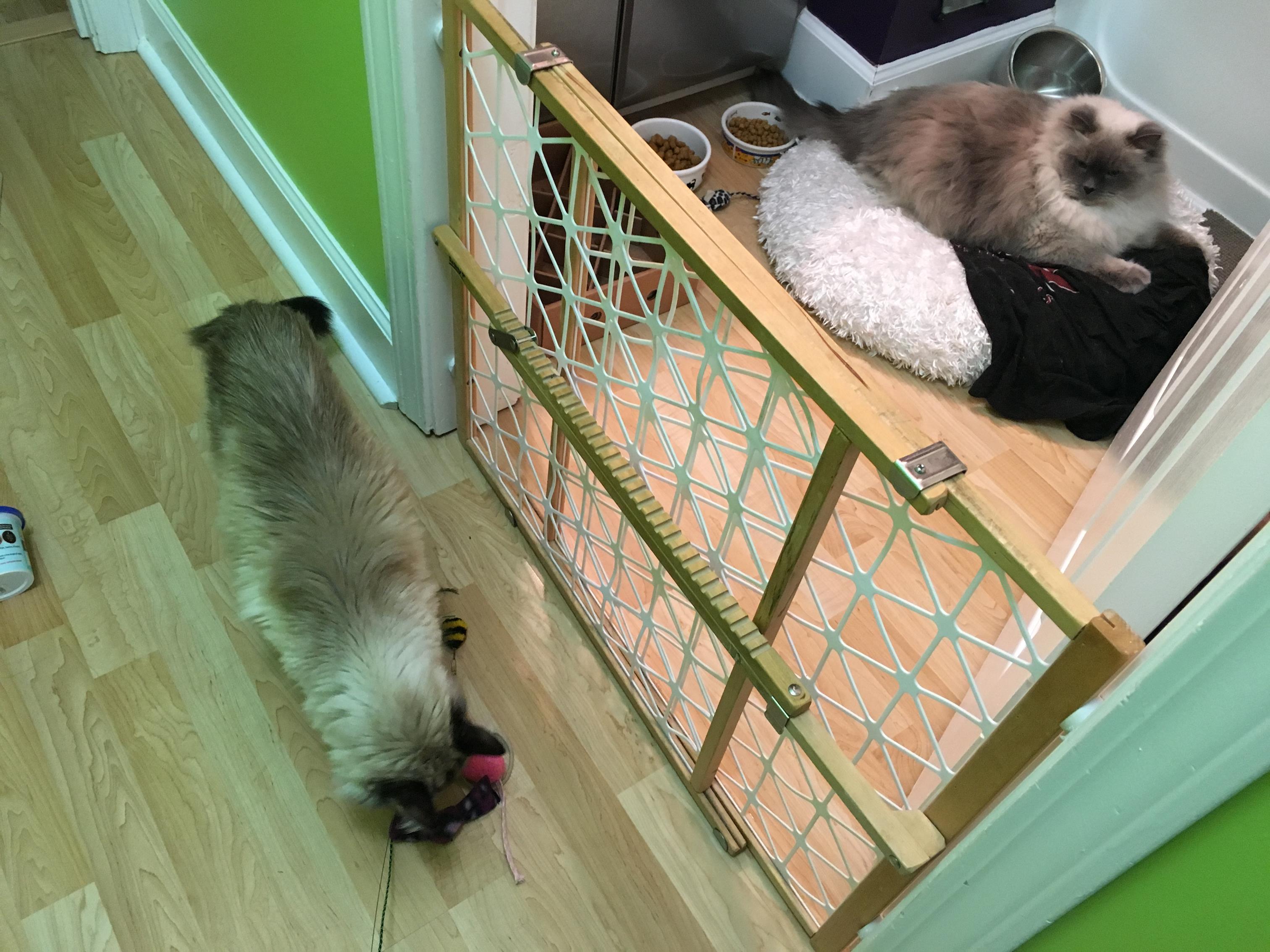
This is your first “meeting,” and it should be short. Use a baby gate or a cracked door with a doorstop so no one can burst through.
- Dog on leash, ideally after a calm walk or sniffy decompression time.
- Kitten has a high perch option or a place to retreat in the safe room.
- You stand between the dog and the barrier so you can block forward motion.
What to do: The moment your dog looks at the kitten, calmly say “yes” or “good,” then feed a treat. If your dog can look away and back to you, keep going for 30 to 60 seconds. End on success and separate.
Goal: dog learns: “seeing kitten makes treats happen, and I stay calm.” Kitten learns: “dog appears and nothing scary happens.”
Step 4: Same room (leashed and supervised)
When barrier sessions are calm for a couple days, move to a shared room. Choose a space with plenty of open floor and multiple kitten exits.
- Dog on leash and harness. Keep the leash short enough to prevent rushing, but loose enough to avoid tension.
- Kitten is free, never held in your arms for the first true meeting.
- Have treats ready and keep your voice quiet and upbeat.
A simple first-session script:
- Dog enters, sits, gets treats for calm.
- Kitten enters (or emerges) on their own timeline.
- Reward the dog for looking away from the kitten, sniffing the floor, or choosing calm behavior.
- If the dog pulls toward the kitten, calmly create distance and ask for an easy cue like “sit.” Reward.
- End after 2 to 5 minutes, even if it went well. Short sessions build confidence.
Step 5: Controlled sniffing
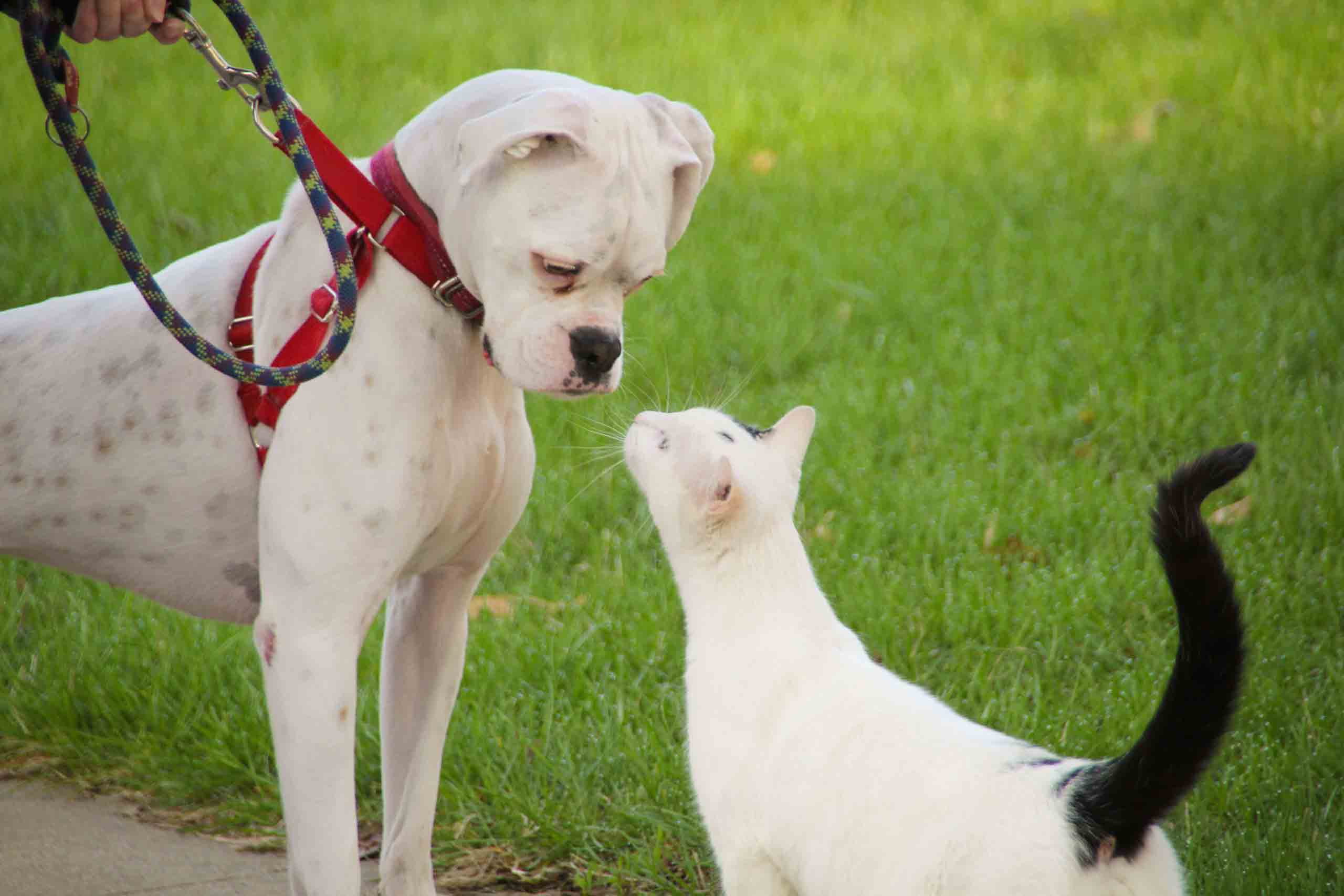
Sniffing can be okay, but it must be brief and voluntary. Many kittens prefer to observe from a perch at first, and that is fine.
- Let the kitten approach. Do not bring the dog’s nose to the kitten.
- Reward soft, slow sniffs and relaxed body language. If your dog gets stiff, interrupt and add distance.
- Count “one, two,” then gently call your dog back and reward.
Rule I live by: two seconds of sniffing, then a reset. Repeat if it stays calm. This prevents the dog from looming and the kitten from feeling trapped.
Step 6: Supervised coexisting (weeks, not hours)
Once your dog can reliably stay calm in the same room, your goal becomes normal life with supervision: the dog learns to ignore, the kitten learns the dog is background noise.
- Use a drag leash during early sessions. I like a lightweight house line with the handle cut off so it is less likely to snag. Use it only under supervision.
- Feed meals separately at first to avoid resource stress.
- Give the kitten daily “dog-free” time to play hard and nap deeply.
Most pairs do best when the kitten always has dog-free zones and high escape routes, even after they are friendly.
Common mistakes
Holding the kitten in your arms
It feels protective, but it often backfires. Your dog gets to stare at a captive kitten, and the kitten cannot leave. Instead, set up a perch, use a barrier, and let the kitten choose distance.
Letting the dog “just sniff” off leash
This is how accidents happen, even with friendly dogs. Use a leash and keep sessions short.
Going too long because it seems “fine”
Early on, stress builds quietly. End sessions while everyone is still calm. Think: five great minutes beats thirty shaky minutes.
Allowing chasing because the dog “wants to play”
Chasing is terrifying to a kitten and reinforcing to a dog. Interrupt immediately, create distance, and go back a step in the plan.
Train your dog for kitten success
You do not need a perfect obedience champion. You do need a few reliable skills that keep everyone safe.
- Name response: dog snaps attention to you when you say their name.
- Leave it: dog disengages from the kitten and looks back to you.
- Place or mat: dog relaxes on a bed while the kitten moves around.
- Gentle treat taking: helps keep arousal low during training.
If your dog struggles to disengage from movement, practice with a toy on the floor first, then graduate to seeing the kitten behind a gate from a distance.
Special situations
If your dog has a strong prey drive
Herding breeds, terriers, sighthounds, and many mixed breeds can have intense chase instincts. Management matters more than optimism here.
- Use barriers and leash control longer than you think you need.
- Increase distance until your dog can take treats and respond to cues.
- Consider professional support from a trainer who has real cat-dog case experience.
If your dog has ever seriously injured or killed small animals, or you are seeing predatory stalking and fixation that does not improve even with distance and training, take that seriously. Pause introductions and contact a qualified behavior professional. In some cases, cohabitation may not be safe.
If your kitten is bold
Confident kittens are wonderful, but they can accidentally trigger a chase game. Keep the dog leashed and reward calm ignoring. Give your kitten a wand toy session beforehand to take the edge off their zoomies.
If your dog is scared of the kitten
This happens more than people expect, especially if your kitten swats. Give the dog distance and escape routes too. Reward curiosity and calm, never force closeness.
Unsupervised time
In foster homes, my benchmark is not “they seem okay.” It is:
- Your dog has shown weeks of calm behavior around the kitten with minimal management.
- Your dog reliably responds to “leave it” even when the kitten runs.
- Your kitten is not being pinned, chased, or stressed out of using the litter box.
- You have safe cat-only zones the dog cannot access.
Make those cat-only zones practical: a baby gate with a cat pass-through, a tall gate the dog cannot clear, or a microchip cat door. Your kitten should be able to reach the litter box, food, and water without having to pass the dog.
For many homes, unsupervised time starts small. A quick shower while the dog is gated and the kitten is on a cat tree is very different from leaving the house for two hours.
Session safety checklist
- Dog has had a chance to decompress (walk, sniff time, or calm play) and is on leash.
- Kitten has a perch and a clear escape route.
- No food bowls or high-value chews on the floor.
- Adults are calm, quiet, and focused on the animals.
- Session is short and ends on a win.
FAQ
How long does it take?
Some pairs relax within a week, but many take several weeks to a few months to truly coexist calmly. Progress depends on your dog’s arousal level and your kitten’s confidence. Slow intros usually look “boring,” and that is a good thing.
Should I let my dog lick my kitten?
Occasional gentle licking is not automatically dangerous, but it can escalate into mouthing, and many kittens find it overwhelming. Early on, I prefer to prevent licking and reward calm sniffing and looking away instead.
My dog is obsessed with the kitten
Go back to barrier work at a greater distance. Reward your dog for disengaging from the kitten and focusing on you. If your dog cannot take treats, is fixated, or tries to lunge, pause introductions and contact a qualified trainer.
What if my kitten swats my dog?
A swat is a normal boundary. The danger is the dog reacting with a snap or chase. Increase distance, keep sessions shorter, and give the kitten more elevated options so they do not feel the need to defend themselves.
A final reminder
You are not trying to force a friendship. You are teaching two different species that they can feel safe in the same home. If you move at the pace of the more nervous animal and you keep the dog managed, you will be amazed how often “tolerant roommates” turns into real affection.