Alone time is a skill
If you have a kitten who follows you like a fuzzy shadow, you are not doing anything wrong. Kittens are built to seek safety in their social group. The goal is not to make your kitten indifferent to you. The goal is to teach them that you leaving is predictable, temporary, and honestly kind of boring.
Separation-related distress seems to be diagnosed or recognized less often in cats than in dogs, but kittens can still struggle when alone. It is more likely if they were orphaned, bottle-fed, moved homes early, or just got attached very fast. The good news: with the right setup and a little practice, most kittens learn to settle.
How long is too long?
The answer depends on age, health, temperament, and your home setup. A confident, healthy kitten in a kitten-proofed space can handle short alone stretches, but they still need frequent meals, play, and supervision while they are learning the rules of your home.
- 8 to 10 weeks: Aim for shorter stretches whenever possible. Many kittens this age still do best with check-ins every few hours for meals and social time.
- 10 to 16 weeks: Gradually build up alone time as they become more reliable with litter box habits and safer with chewing and climbing.
- 4 to 6 months: Some kittens can manage a workday-length stretch if the environment is safe and enriched and their feeding needs are covered. Many still do better with a midday check-in, timed feeder, or sitter visit, especially high-energy kittens.
If your kitten has medical needs (recent spay or neuter, diarrhea, upper respiratory symptoms, poor appetite), treat this as a special case and ask your vet when it is safe to leave them unattended.
Feeding and water logistics
Longer absences usually fail or succeed on logistics, not willpower. Plan food and water like you would for a tiny athlete with a short attention span.
- Meal frequency: Many young kittens need multiple meals a day. If your schedule forces a long stretch, ask your veterinarian about an age-appropriate feeding plan.
- Timed feeders: A timed feeder can bridge the gap for kittens who still need a midday meal. Test it while you are home first so you know it opens reliably and your kitten understands it.
- Wet food limits: Wet food should not sit out for long periods. If you want to offer wet food while you are gone, use a feeder designed for it and follow food safety guidance from your vet or the manufacturer.
- Water: Fresh water always. A heavy bowl works well; a fountain can be great too, as long as it is stable, cleaned regularly, and your kitten cannot tip it or chew the cord.
Set up a safe room
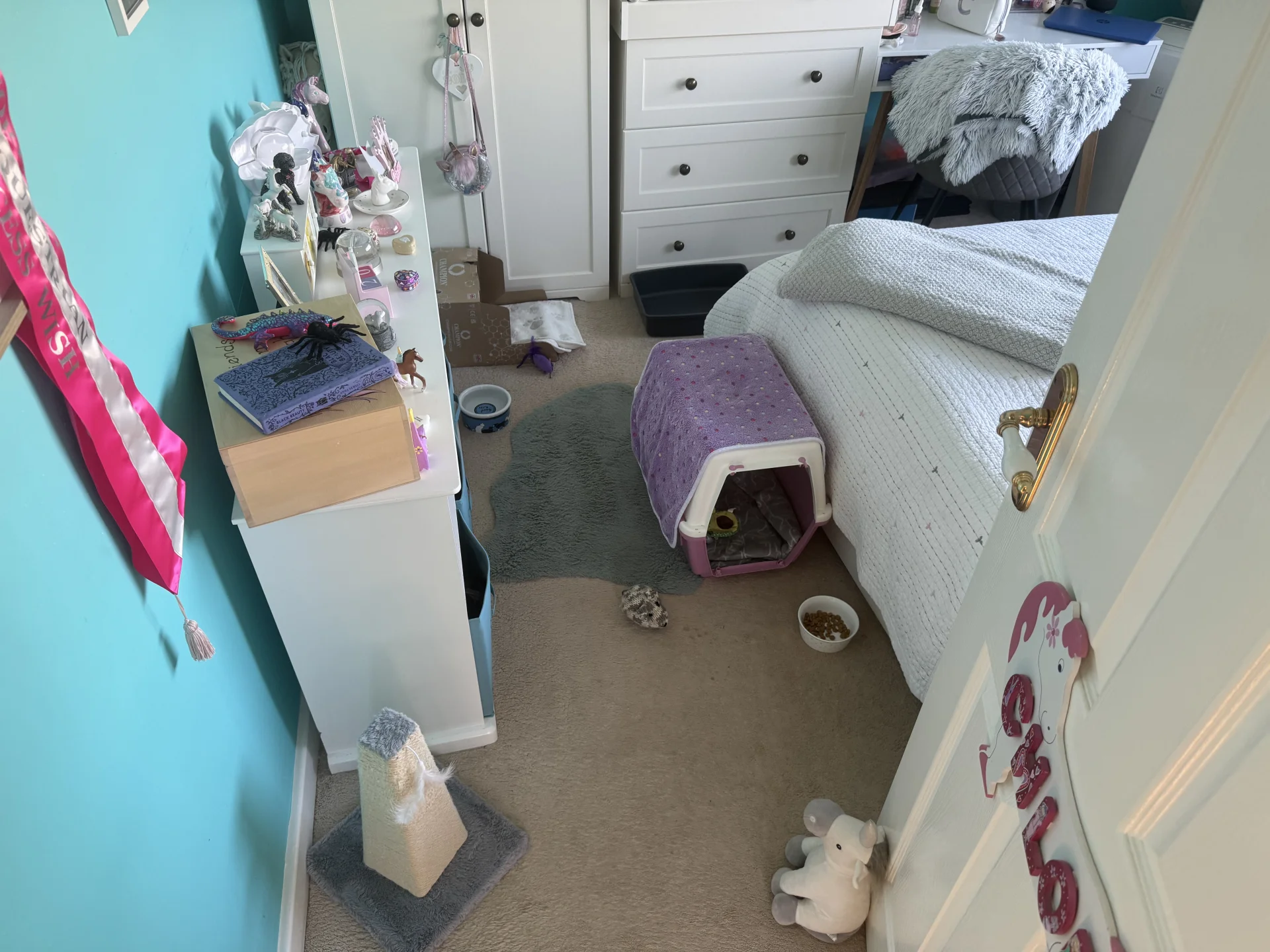
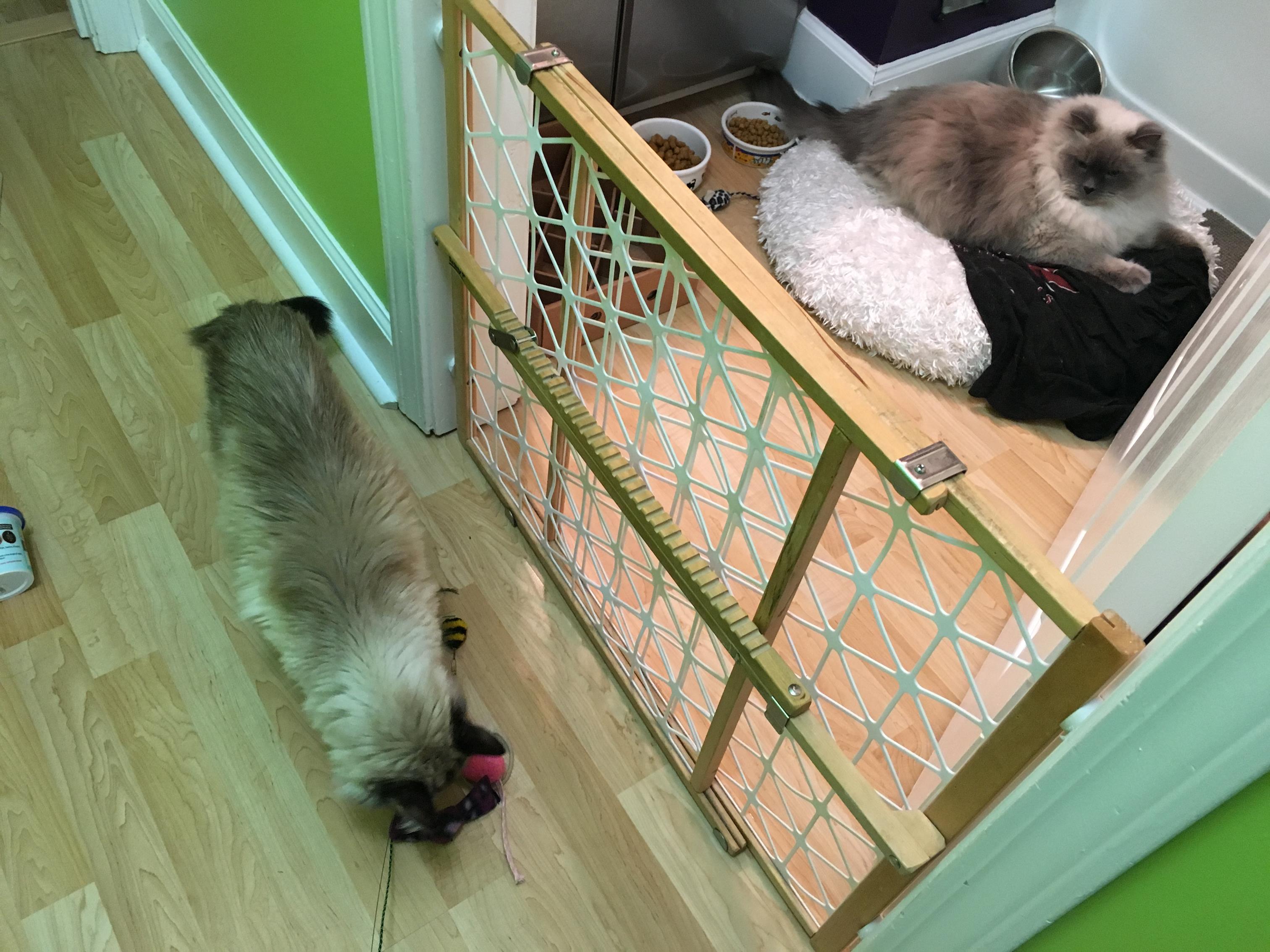
For most first-time kitten parents, the biggest mistake is giving a tiny animal the run of the whole house too soon. A smaller home base reduces risk and can reduce stress because the environment is predictable.
Pick the right room
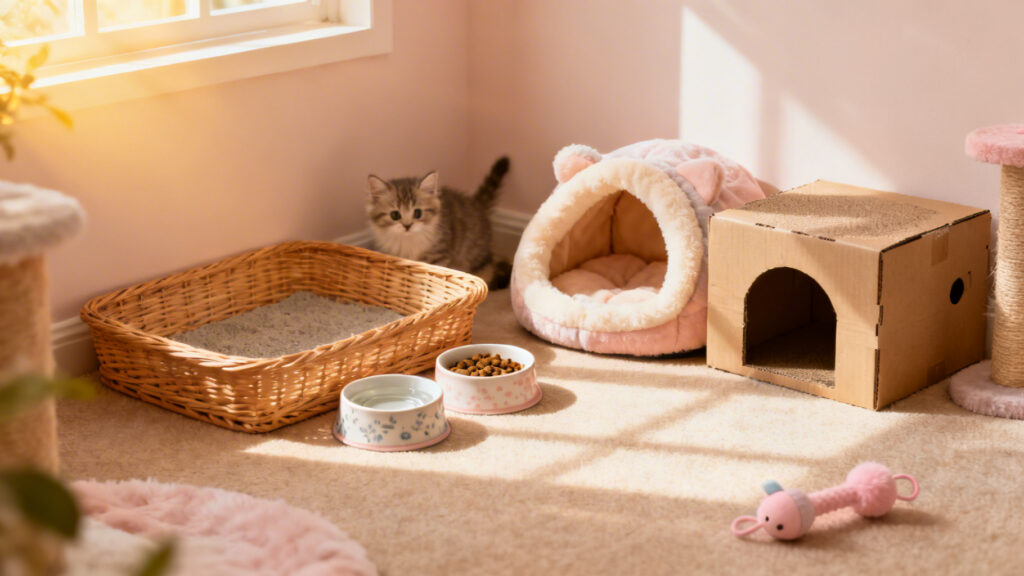
- Best choices: bedroom, office, large bathroom, laundry room (only if the machines are fully off and inaccessible).
- Avoid: kitchens (too many hazards), garages, rooms with recliners, rocking chairs, exposed cords, or lots of clutter.
Essentials checklist
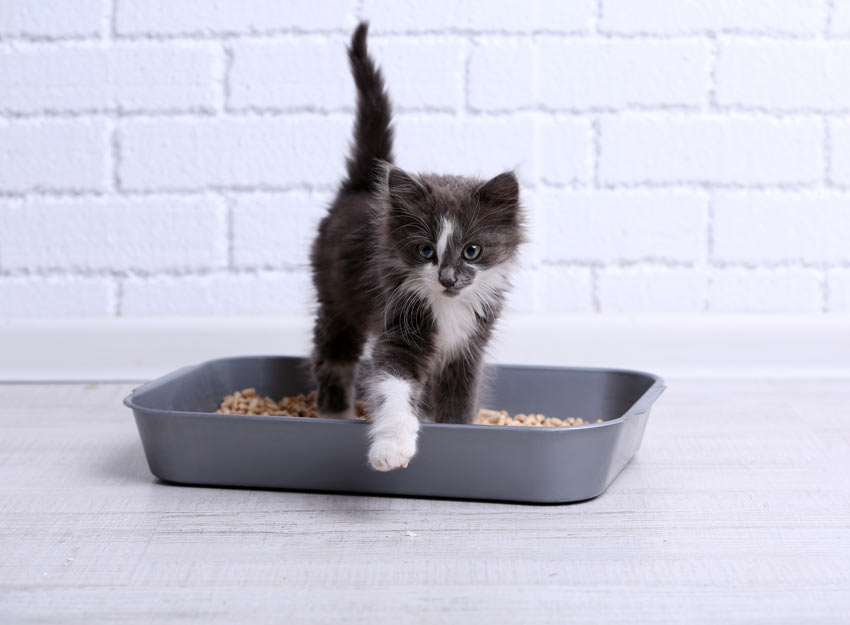
- Litter box: Easy to step into. Keep it away from food and water.
- Food and water: Heavy bowls that will not tip easily. Fresh water always.
- Cozy sleep spot: A covered bed, carrier with the door removed, or a box with a soft blanket.
- Scratching surface: One horizontal scratcher and, if possible, one vertical option.
- Climbing and hiding: A small cat tree or sturdy chair plus a hidey spot.
- Approved toys only: Think sturdy wand toys used with you, and solo-safe toys left behind.
Kitten-proofing quick wins
- Pick up string, hair ties, rubber bands, and small chewable items.
- Secure cords with cord covers or route them behind furniture.
- Block access behind appliances and under recliners.
- Close toilet lids and remove standing water sources.
- Check plants. Many common houseplants are toxic to cats.
Enrichment that helps
A bored kitten is an anxious kitten’s best friend. Enrichment helps in two ways: it burns energy and it gives your kitten a predictable routine to focus on instead of your absence.
Food enrichment
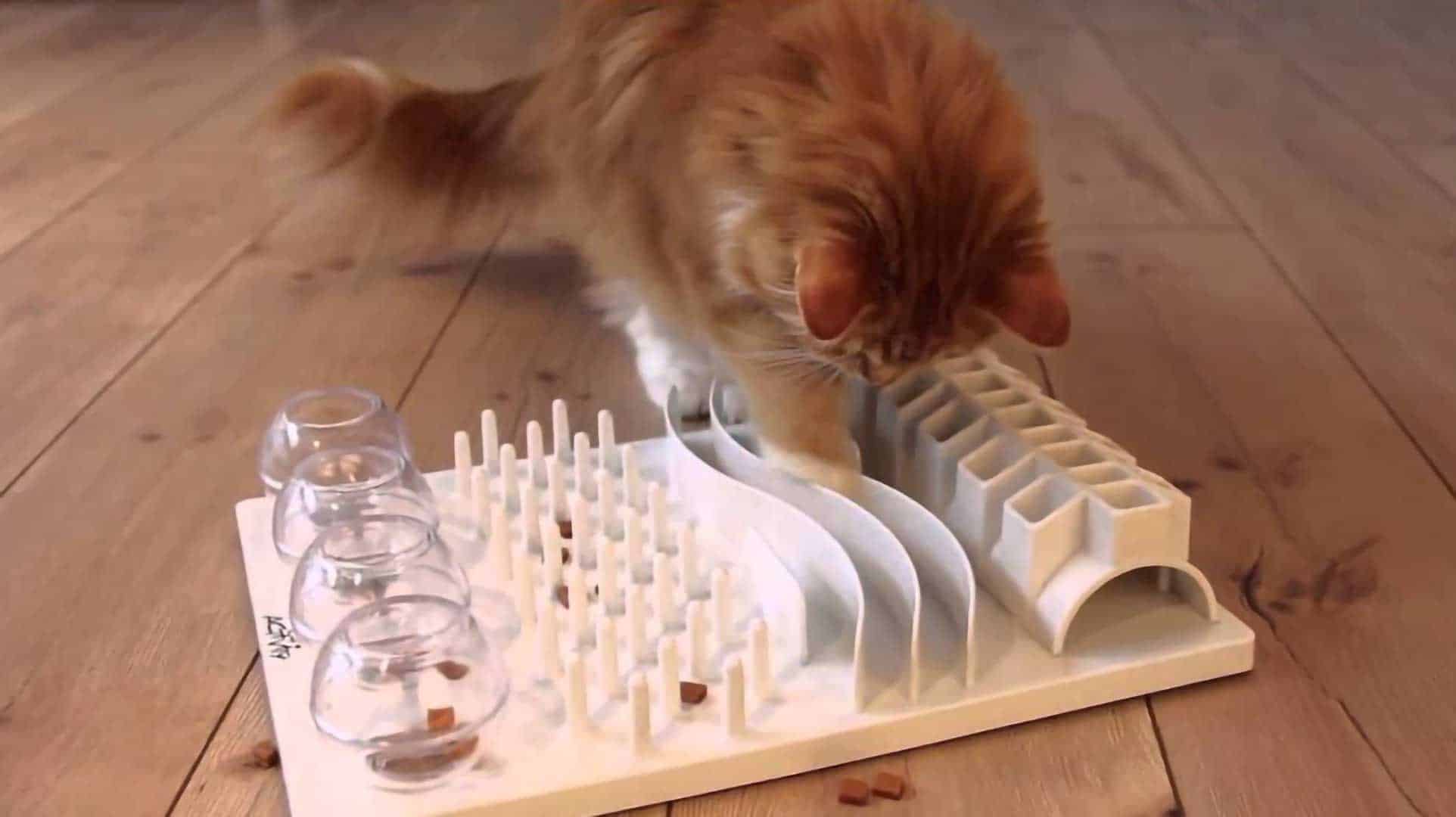
- Puzzle feeders: Start easy. If your kitten gives up, it is too hard.
- Scatter feeding: Toss kibble in a small area of the room for a mini hunt.
- Snack station rotation: Hide a few treats in different spots, low and safe. Rotate spots so it stays interesting.
Solo-safe toys
- Sturdy crinkle balls or plastic ball track toys that cannot break apart easily.
- Hard cat-safe kickers (no ribbons, no long strings).
- Cat tunnels that are stable and not collapsing easily.
Important: Any toy can become unsafe if your kitten is a power chewer. Inspect toys daily, and toss anything that is cracking, shredding, or missing pieces.
Skip unattended: string toys, yarn, ribbon, tinsel, thin feathers that shed, toys with easily pulled-off eyes, and anything your kitten can chew into pieces. If you would not feel comfortable leaving it in a toddler’s room unsupervised, do not leave it with a kitten.
Comfort cues
- Background sound: A calm radio station or white noise can soften sudden outdoor sounds.
- Scent: Leave a worn T-shirt (no loose strings) in their bed area.
- Window perch: If it is safe and secure, a view can be cat TV. Use a stable perch and ensure blind cords are inaccessible.
Practice calm departures
This part is simple, but it matters. You are teaching your kitten: I leave, you relax, I come back.
Step-by-step plan
- Make leaving boring. Put on shoes, pick up keys, then sit back down. Repeat until those cues stop meaning panic is coming.
- Start with seconds. Step out of the room for 10 to 30 seconds, return calmly, and go about your business.
- Build gradually. Increase to 2 minutes, 5 minutes, 10 minutes, then 20. Only increase if your kitten is settling.
- Pair alone time with a job. Give a small food puzzle or scattered kibble right before you go.
- Keep arrivals low-key. You can absolutely cuddle, just avoid the big excited reunion routine that teaches the moment you return is the best moment ever.
If you only practice long absences, your kitten never gets the chance to succeed. Short, easy wins stack up fast.
Use a pet cam
If you can swing it, a basic pet camera can be a game-changer. It helps you tell the difference between a minute of protest and real panic, and it keeps you from guessing.
- What you want to see: a bit of exploring, a snack, grooming, then sleep.
- If you see distress: shorten the next absence, increase enrichment, and go back a step in your training plan. If it is intense or getting worse, loop in your veterinarian or a qualified feline behavior pro.
A camera should not tempt you into talking through it all day. For some kittens, that can wind them up instead of settling them down.
Signs of distress
Some kittens yell a bit at first and then settle. Others spiral into real stress. Knowing the difference helps you respond early.
Normal adjustment
- Brief meowing that stops once you are gone
- Exploring, then napping
- Eating and using the litter box normally
Possible separation-related distress
- Persistent vocalizing that continues for a long time after you leave
- Destructive behavior focused on exits: scratching door frames, pawing under doors, biting bars of a crate
- House soiling outside the litter box that is new or situational
- Overgrooming or frantic pacing
- Not eating while alone, especially if they normally love food
If these signs are intense, sudden, or paired with vomiting, diarrhea, or weight loss, contact your veterinarian. Medical issues can look like behavioral issues and vice versa.
Should you get a second kitten?
I say this as someone who has fostered a lot of litters: many kittens do better with a buddy. Another kitten can provide play, grooming, and comfort when you are away. But it is not a magic fix. Two kittens still need safe spaces, enough resources, and human attention.
A second kitten may help if: your kitten is extremely playful, bites hands out of frustration, or seems unsettled when left alone despite enrichment.
Hold off if: your current kitten is sick, underweight, not fully vaccinated yet, or you are not ready for doubled vet bills and food costs.
If you do adopt a friend, match energy levels and choose a similar age when possible. Plan for a short quarantine and slow introductions so you do not trade loneliness for stress.
Mistakes to avoid
- Sudden long absences: Going from constant company to a full workday overnight can overwhelm a kitten.
- Too much space too soon: Free-roaming a whole house invites trouble and can increase insecurity.
- Punishing clingy behavior: Scolding a kitten for following you teaches nothing useful and can add stress.
- Unsupervised hazardous toys: If a toy becomes a choking risk, your kitten cannot self-manage that.
- Inconsistent routine: Kittens thrive on predictable meal, play, and sleep cycles.
A simple leaving routine
Here is a rhythm I used for many fosters, including my tuxedo foster fail, Barnaby, who considered my ankles his personal escort service.
- 10 minutes of play: Wand toy, gentle chase, then let your kitten catch the toy a few times.
- Small meal or puzzle: Feed breakfast or offer a simple food puzzle right after play.
- Settle cue: Place them in their home base with a cozy bed and scratcher. Turn on soft background sound if you want.
- Calm exit: No big goodbye speech. Just leave.
This combo often helps because it follows a natural cat rhythm: hunt, eat, groom, sleep. Some kittens need extra reps, a shorter step, or a midday break, and that is normal.
FAQ
Should I ignore my kitten when I get home?
No. You can absolutely greet your kitten. Just keep it calm for the first minute so you are not accidentally rewarding frantic behavior. Then scoop them up and enjoy the love.
Is it okay to leave the TV on?
It can be, as long as cords are secured and the volume is low. Some kittens relax with steady sound. Others get overstimulated. Try it on a day you can observe the results.
My kitten cries when I shower or close a door. Is that separation anxiety?
Not always. Many kittens simply hate closed doors and have serious opinions about being excluded. Treat it as training anyway: practice short separations, reward calm, and make sure their needs are met first.
Can I crate my kitten while I am gone?
For most kittens, a dedicated room is better than a crate for longer absences. Crates can be useful briefly (travel, post-surgery per vet guidance), but daily long crating often increases stress and limits normal movement and litter box access.
When to get help
If you have tried a safe room, enrichment, and gradual departures for a couple of weeks and your kitten is still panicking, talk to your veterinarian. They can rule out medical contributors and may refer you to a qualified feline behavior professional. The earlier you intervene, the easier it usually is to resolve.
Your kitten is not giving you a hard time. They are having a hard time. With a little structure, they can learn that being alone is safe, predictable, and temporary.