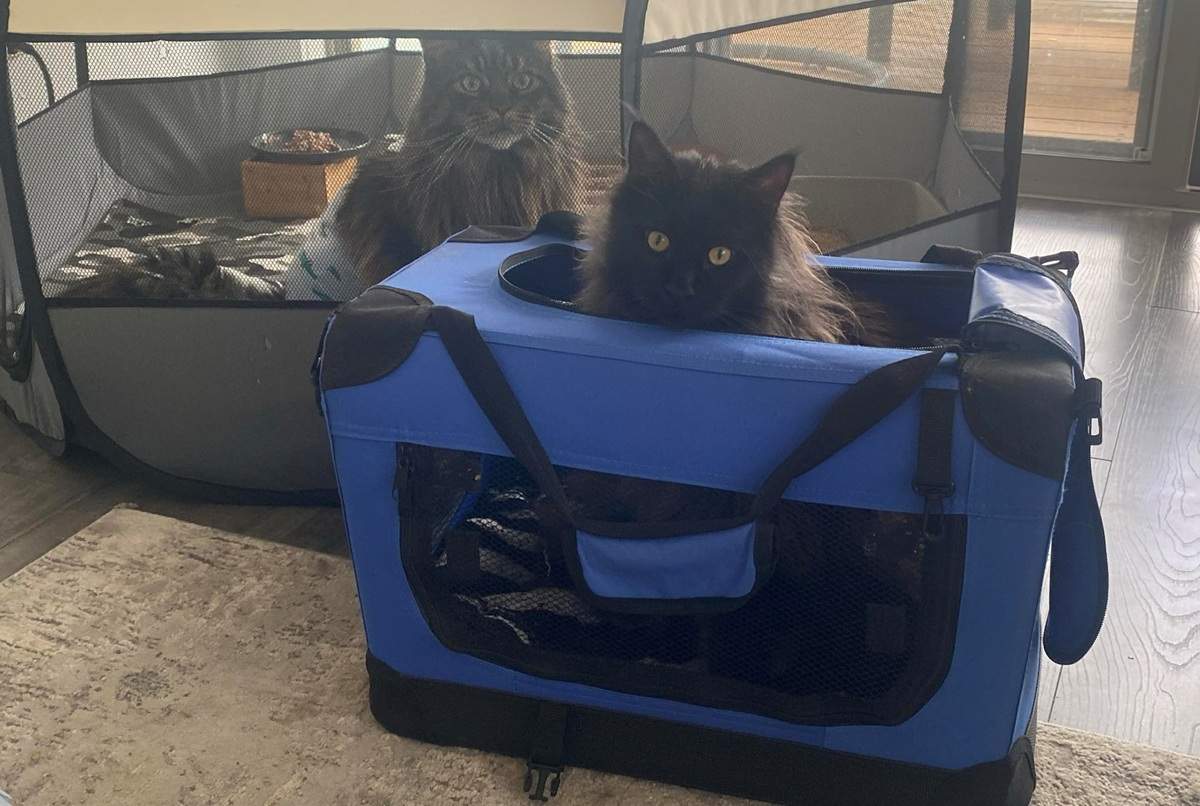
If you have ever tried to gently place a kitten into a carrier while they turn into a furry little escape artist, you are not alone. I have fostered dozens of kittens, and I can tell you the difference between a stressful carrier battle and a smooth vet day is usually training, not luck.
The goal of carrier training is simple: help your kitten believe the carrier is a safe, cozy hangout that sometimes goes on adventures. No wrestling, no chasing, no “only comes out when something scary happens” vibes.
Start with the right carrier setup
Before you do any training, set your kitten up for success. A carrier that is uncomfortable, tippy, or hard to access makes training harder than it needs to be.
What to look for in a kitten-friendly carrier
- Sturdy and stable: Hard-sided carriers tend to feel more secure and do not collapse or sway when you lift them.
- Easy entry: A front door is fine, but I strongly prefer carriers with a top-loading door too. Top entry is a lifesaver at the vet and reduces “stuffing” stress.
- Good ventilation: Plenty of airflow on multiple sides.
- Right size: Your kitten should be able to stand up, turn around, and lie down comfortably. Too small feels like a trap, and some cats feel less secure in an oversized carrier.
- Removable top is a bonus: Two-piece carriers that open from the top can make exams easier, since some vets can do checks with the kitten sitting in the bottom half.
Make it feel like home
- Add a familiar blanket or towel: Something that smells like your home. For tiny kittens, a fleece blanket also helps them feel snug.
- Skip strong scents: Avoid scented detergents, air fresheners, or essential oils around the carrier.
- Stabilize it: Put the carrier on the floor in a quiet corner with the door open. If it rocks, wedge it gently so it does not shift.
The golden rule: leave it out
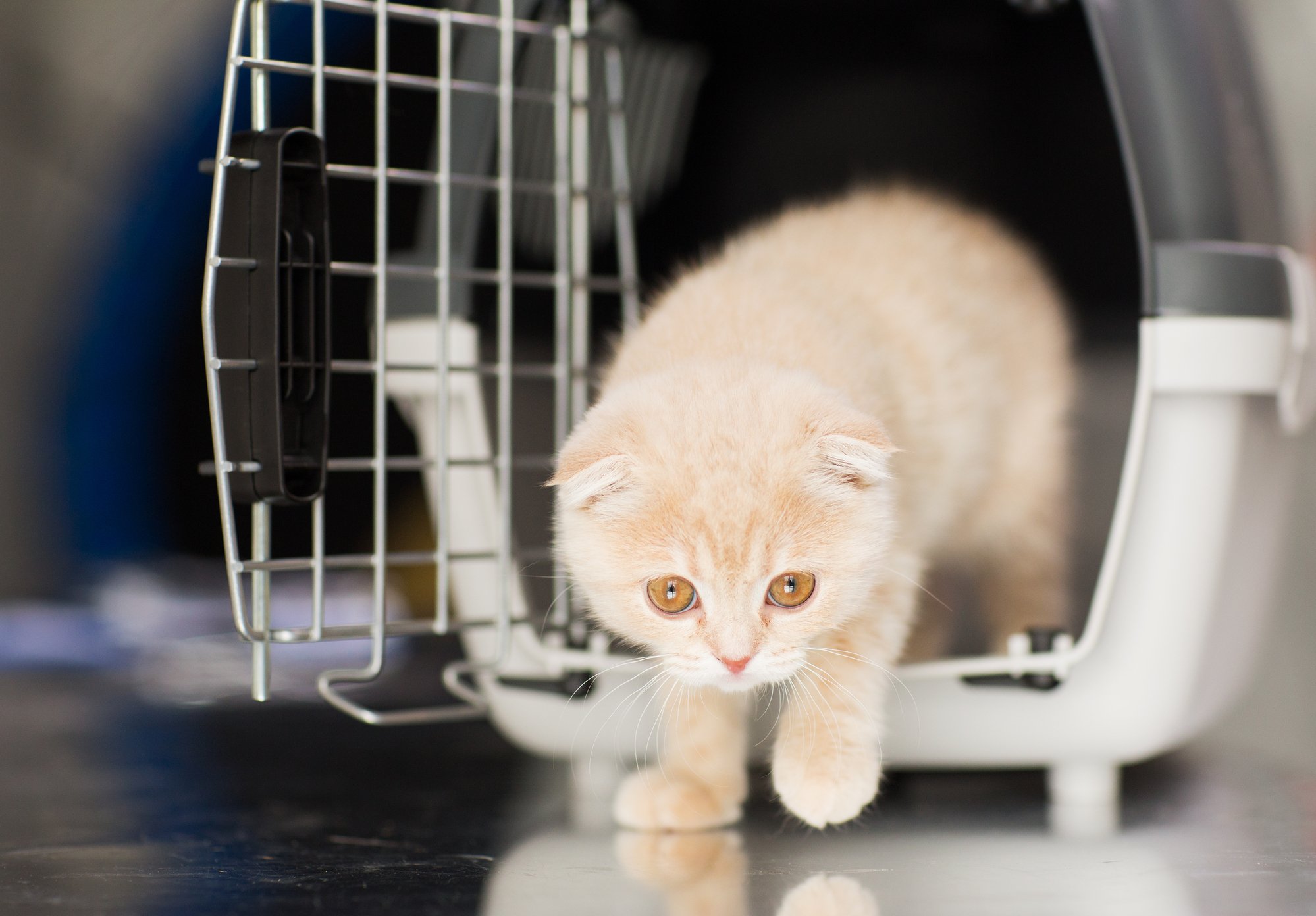
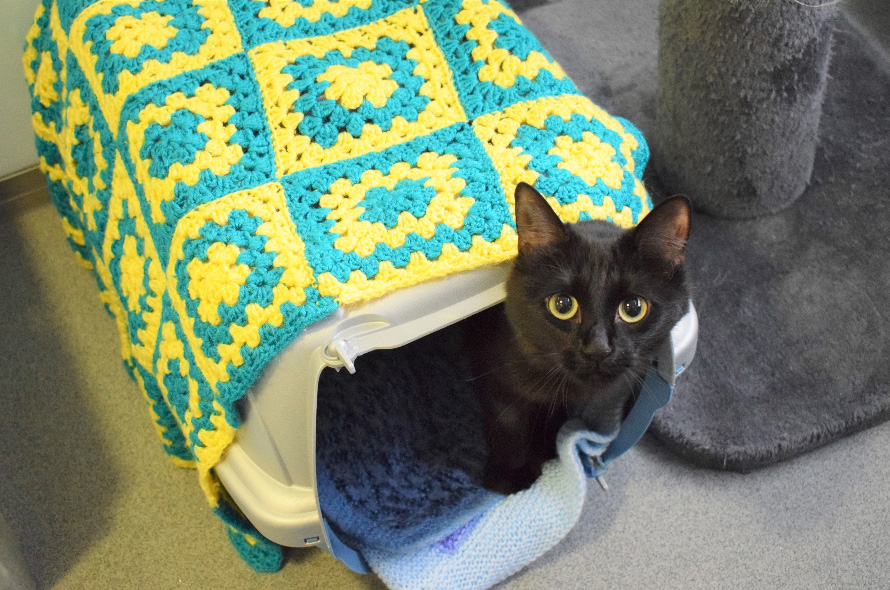
The fastest way to teach “carrier equals scary” is to keep it in a closet and only bring it out for vet visits. Instead, keep the carrier out like a normal piece of furniture for at least the first few months, and ideally long-term, with the door open.
If your kitten is naturally curious, they will investigate on their own. Your job is to make investigating pay off with comfort and good things.
Carrier training in 5 gentle stages
Go at your kitten’s pace. Some kittens breeze through this in a weekend, others need a couple of weeks. Slow is still fast if it prevents fear.
Stage 1: Treats near the carrier
For 1 to 2 days, toss a few treats just outside the carrier door. Let your kitten eat and walk away. No closing, no pushing, no grabbing.
- Do 3 to 5 mini sessions a day.
- Keep it under 30 seconds if your kitten is shy.
Stage 2: Treats just inside the doorway
Move treats slightly inside the carrier so your kitten has to step in with their front paws. If they hesitate, move the treat closer to the edge again. Confidence first.
Stage 3: Meals in the carrier
This is my favorite “cheat code.” Put a small plate of wet food just inside the carrier. Over a few meals, slide the plate farther back until your kitten walks fully inside to eat.
Tip from my foster room: Wet food is often more motivating than dry treats, especially for young kittens who are still figuring out crunchy snacks.
Stage 4: Add a cue and short door moments
Once your kitten is walking in comfortably, add a simple cue like “carrier” right before they enter.
Then, while they are eating or happily licking a treat, gently swing the door toward closed for one second, then open it. Work up gradually:
- Close for 1 second, open, treat.
- Close for 3 seconds, open, treat.
- Close for 10 seconds, open, treat.
If your kitten startles or backs out, you went a little too fast. Drop back to the last easy step.
Stage 5: Lift, carry, and boring trips
When your kitten can relax in a closed carrier for 30 to 60 seconds, start adding real-life motion in tiny doses:
- Lift the carrier one inch off the floor, set it down, treat.
- Carry across the room, set down, treat.
- Walk around the home for 30 seconds, set down, treat.
- Do a “nothing happens” car session: Place the carrier in the car, sit for 1 minute, then go back inside.
- Do a short drive around the block, then come home and offer a high-value snack.
Make it extra inviting
Some kittens need a little more persuasion. That is completely normal.
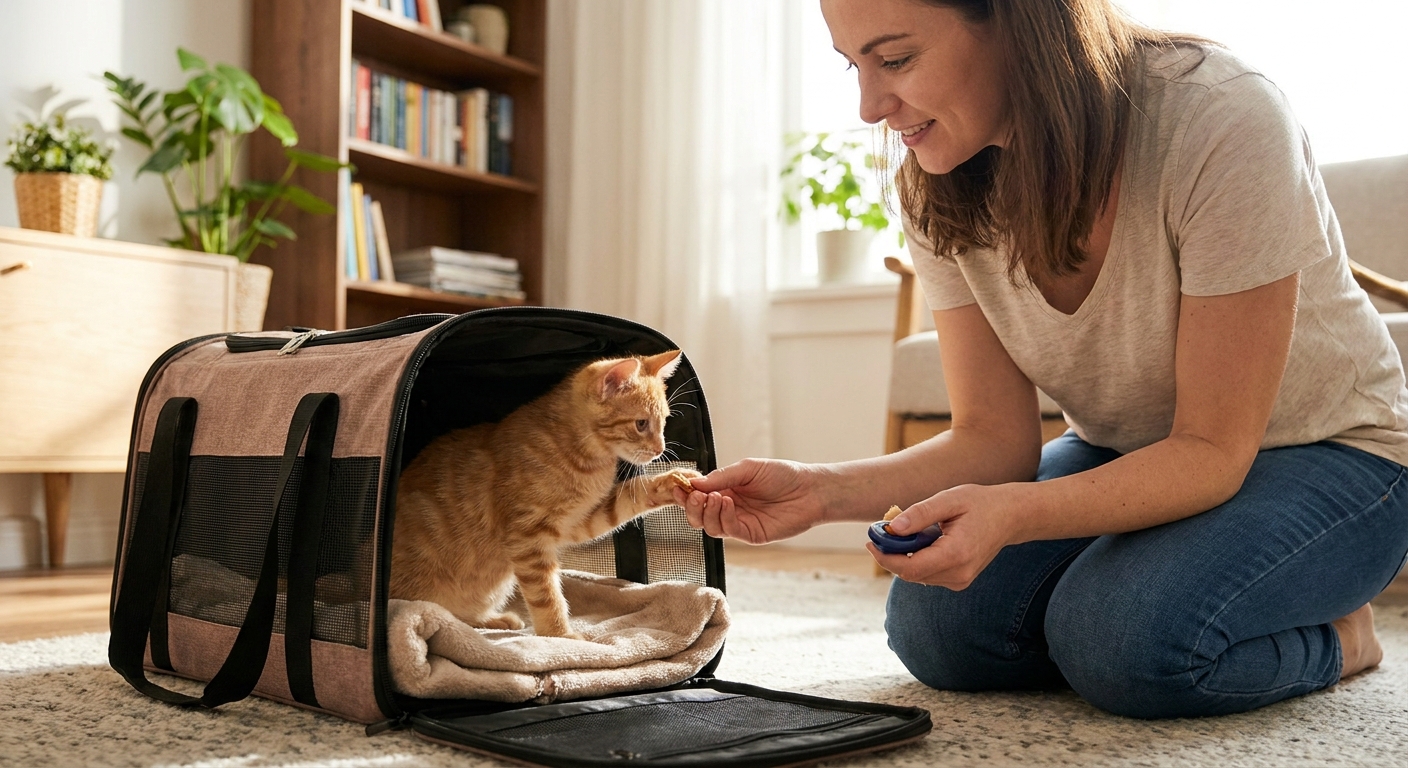
- Use a soft, washable liner: A towel plus a fleece layer is cozy and easy to launder.
- Add a safe “sniff item”: A worn T-shirt that smells like you can help shy kittens. Make sure there are no strings or holes that could snag claws.
- Try a pheromone spray: A synthetic feline facial pheromone spray can help some kittens relax. Follow label directions, spray the carrier (not the kitten), and let it dry fully before your kitten goes in so the alcohol smell does not hit them first.
- Reserve a special treat: Churu-style lickable treats or tiny bits of cooked chicken (plain, no seasoning) can be “carrier-only” rewards.
Safety note: If you offer human food, keep portions tiny and avoid onion, garlic, salt, and sauces.
Safe handling basics
A few small handling habits make a big difference, especially for kittens who get motion sick or spooked by swinging.
- Keep it level: Carry the carrier like a tray, not like a swinging shopping bag.
- Support the bottom: Use two hands when you can, one on the handle and one under the base.
- Collar and harness check: For travel, many vets prefer no harness in the carrier to reduce snag risks. If your kitten wears a collar, a properly fitted breakaway collar is the safest option. When in doubt, remove snag-prone gear before the trip.
What not to do
I get it. Vet appointments run on a clock. Still, these common habits can undo your training fast.
- Do not chase your kitten around the house with the carrier. It turns into a predator game.
- Do not dump them in head-first through the front door if you can avoid it. If you must place them in quickly, top-loading is gentler.
- Do not slam the door the moment they step inside. Build a pause where good things still happen.
- Do not only use the carrier for “bad” events like vet visits, nail trims, or moving day.
- Do not punish carrier fear with scolding. Fear is information, not misbehavior.
Vet day: protect the progress
Even with great training, vet days have weird smells, strange sounds, and other animals. A few small choices protect the positive association you have built.
Before you leave
- Pre-load the carrier: Put the cozy blanket inside and toss in a few treats 10 minutes before you plan to go.
- Stay calm and quiet: Your kitten reads your energy.
- Cover the carrier: A light towel over the carrier can reduce visual stress. Keep airflow open.
In the car
- Buckle it in: Use a seat belt to stabilize the carrier so it does not slide.
- Warm, not hot: Kittens overheat easily. Keep the car comfortable.
- Skip loud music: Soft is better.
At the clinic
- Keep the cover on while waiting, especially if dogs are nearby.
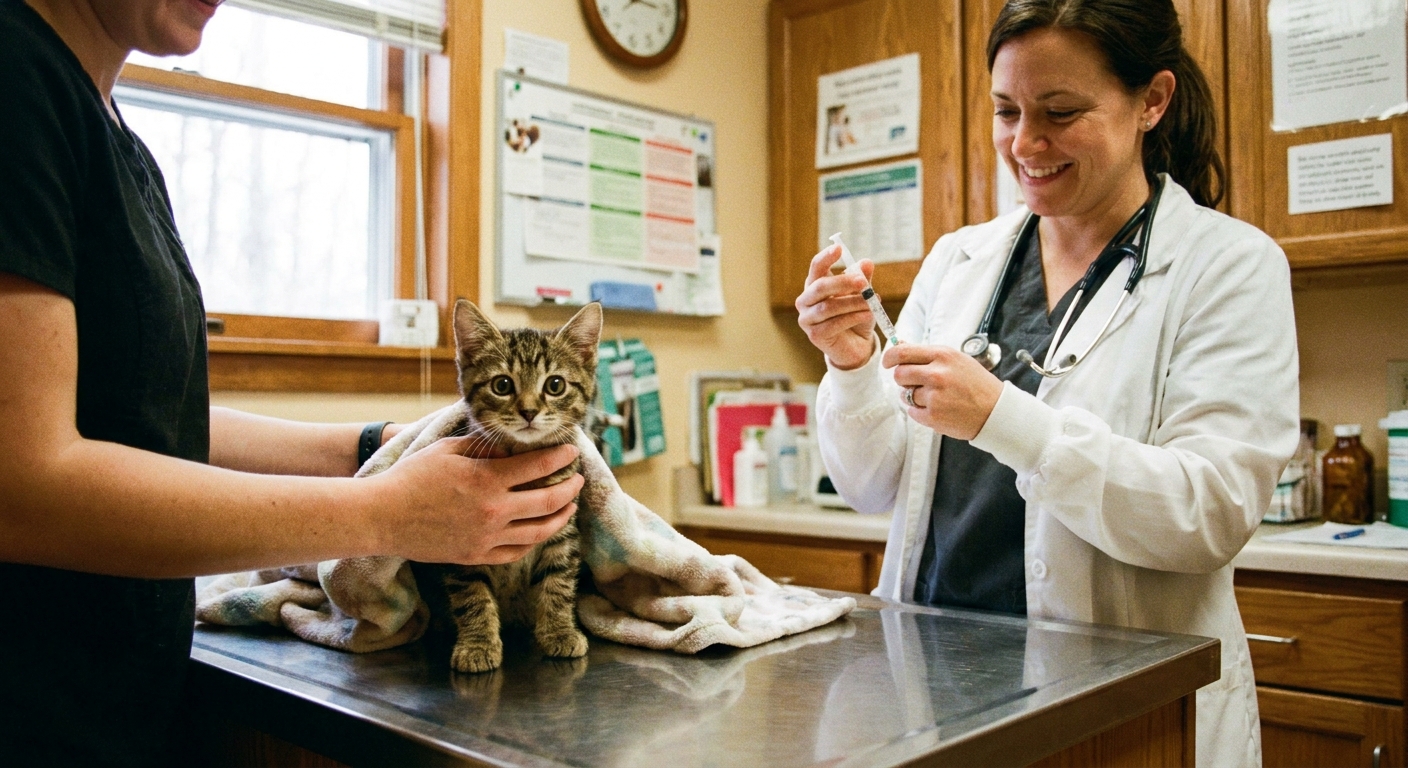
- Ask for fear-free handling if your clinic offers it. Many do, and it helps.
Troubleshooting common problems
“My kitten will not go near the carrier.”
Start farther away. Put treats 3 to 6 feet from the carrier and slowly move them closer over a few days. Also check location. A busy hallway can feel unsafe. Try a quieter corner.
“They go in, but panic when I close the door.”
You are at Stage 4, and you need smaller steps. Close the door for one second while they are actively eating something irresistible, then open immediately. The goal is “door movement predicts snacks.”
“My kitten cries nonstop in the car.”
Do more boring car practice. Short, non-vet drives help. Some kittens also feel better when the carrier is covered and stabilized. If crying is intense or paired with drooling, vomiting, open-mouth breathing, or fast breathing that does not settle, talk to your veterinarian right away. Illness, pain, overheating, respiratory issues, or motion sickness can look like “just stress.”
“My kitten pees in the carrier.”
Stress peeing can happen. Clean with an enzyme cleaner and consider lining the carrier with an absorbent pee pad under the blanket for travel days. If it happens repeatedly, ask your vet to rule out urinary issues.
“I can only catch my kitten by grabbing them.”
For semi-feral or extremely fearful kittens, use a slower approach: feed near the carrier, then inside it, then gently close the door while they are eating. If you are fostering a very spicy kitten (hissy, hand-shy, and ready to argue), your rescue or vet can also advise on safer handling tools and techniques.
Extra tips for very young kittens
If your kitten is extremely young and still wobbly, keep sessions tiny and focus on comfort first.
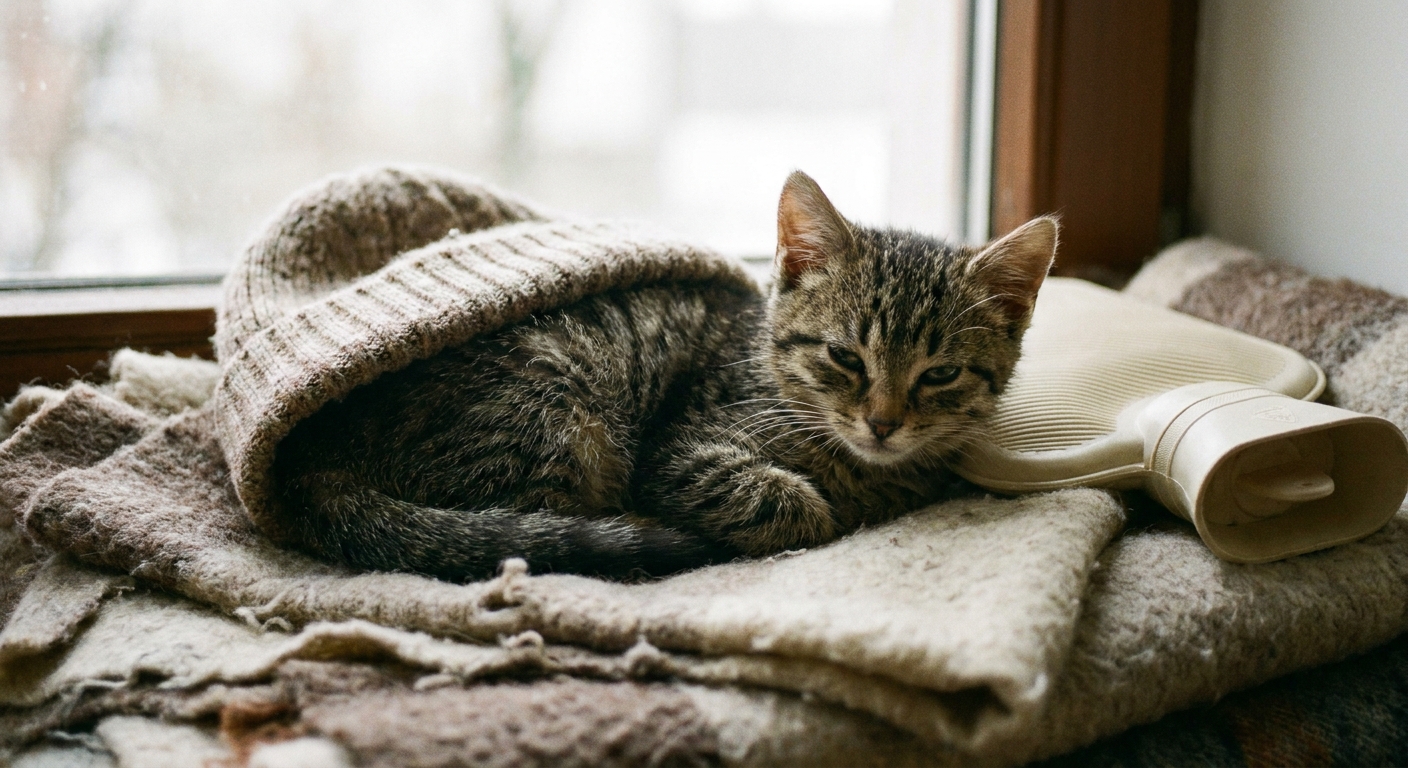
- Prioritize warmth: A soft fleece and a warm room go a long way. Skip anything that could overheat them, like hot water bottles.
- Keep practice short: A few seconds of “in and out” counts as success.
- Avoid unnecessary car trips: If they are not fully vaccinated yet, keep car practice minimal unless you need to travel for care.
A simple 7-day plan
If you like a checklist, here is a low-stress week you can repeat as needed.
| Day | Goal | What to do |
|---|---|---|
| 1 | Carrier is normal | Leave it out, door open, cozy blanket inside. Toss treats near the entrance. |
| 2 | Approach confidence | Treats at the doorway, then just inside. Keep sessions short. |
| 3 | Full-body entry | Feed a small wet food snack inside the carrier. |
| 4 | Happy lounging | Play near the carrier, toss a toy in, reward calm sitting inside. |
| 5 | Door practice | Close the door for 1 to 10 seconds during treats, then open. |
| 6 | Motion practice | Lift, set down, carry across the room, treat. Keep it calm and level. |
| 7 | Boring car session | One minute in the car, then back inside for a reward. No vet visit. |
FAQ
When should I start carrier training?
As soon as your kitten comes home. Young kittens are typically more flexible learners, and early carrier comfort prevents a lot of stress later.
What if I adopted an older kitten who already hates the carrier?
You can still absolutely retrain. Expect a slower timeline and use higher-value rewards. Keeping the carrier out full-time is especially important for older kittens with a history of scary trips.
Should I carrier-train with the door off?
If your carrier allows safe removal, taking the door off at the beginning can help nervous kittens explore more confidently. Add it back once your kitten is happily going in and out.
Is it okay if my kitten naps in the carrier?
Yes, that is the dream. If your kitten chooses the carrier for naps, your training is working beautifully.
The big picture
Carrier training is not about forcing bravery. It is about building trust through tiny, repeatable wins. If you keep the carrier accessible, pair it with good things, and move at your kitten’s pace, you will end up with a cat who walks into their carrier like it is no big deal.
Future you, sitting calmly in the vet waiting room with a relaxed kitten, will be so grateful you started today.