Kitten play is not just cute. It is how your tiny hunter learns coordination, confidence, bite control, and how to settle afterward. The trick is choosing toys that satisfy that busy kitten energy without introducing choking hazards, loose strings, or breakable bits that end up in someone’s stomach at 2 AM.
I have raised a lot of rescue litters, and the “best” toy is usually the one that matches your kitten’s age, energy level, and how much you can supervise. Below are my go-to picks for safe solo and interactive play, plus exactly what I look for before I hand any toy to a kitten.
Quick toy safety checklist (my foster-room rules)
- Bigger is safer: Choose toys that are too large to fit fully in your kitten’s mouth. If something could be swallowed, plan as if it might be.
- Skip glued-on eyes and tiny add-ons: Buttons, sequins, and plastic eyes can pop off after a few good chomps.
- Inspect weekly: Tug on feathers, seams, ribbons, and any knotted ends. If it sheds parts, it is done.
- No loose string for solo play: Wand cords, yarn, ribbon, hair ties, and tinsel are supervised-only in my house, if they are used at all.
- Match the toy to the kitten: High-drive kittens need toys that move. Shy kittens do better with gentle, predictable motion and hide-and-pounce games.
- When in doubt, swap it out: Toys are cheaper than an emergency vet visit.
10 kitten-safe toys I actually recommend
Each pick includes: why it is stimulating, what to look for, and how to use it safely in real life.
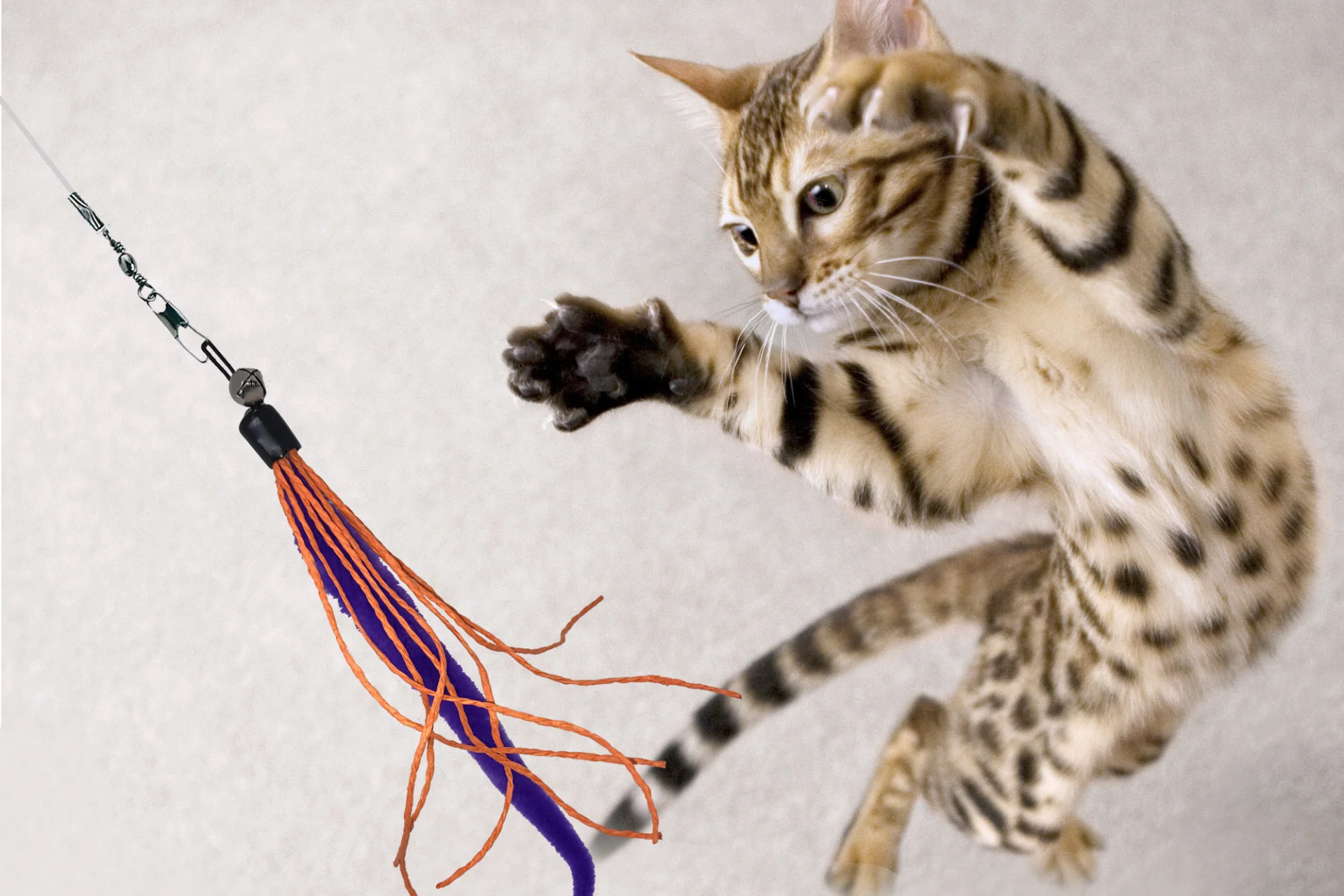
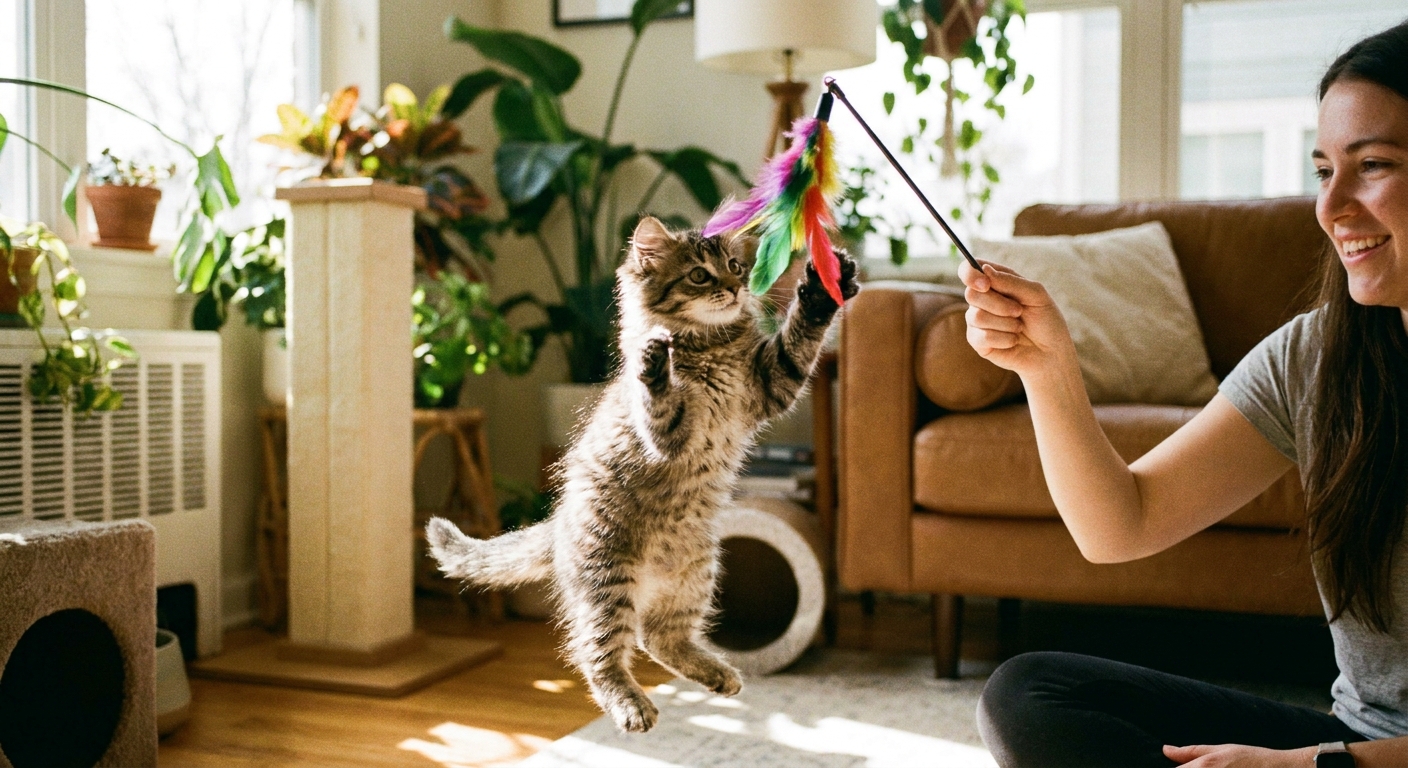
1) A sturdy wand toy with a short, durable attachment
Why it’s great: Wand play mimics hunting and builds athletic skills fast. It is also the easiest way to help a single kitten burn energy without using your hands as prey.
Look for: A thick cord (not thin string), a solid handle, and an attachment that is firmly stitched (not just glued). I prefer attachments that are one piece or have minimal dangly bits.
Use it safely: Put it away afterward. In my experience, dangling cords are a frequent “this was fine until it wasn’t” problem when kittens get unsupervised access.
2) A refillable lure wand (so you can rotate prey types)
Why it’s great: Rotation keeps play fresh. One day your kitten wants feathers, the next day they want something that skitters.
Look for: Quick-connect attachments that are hard to chew off, plus replacements you can easily find again. A little swivel helps prevent the cord from twisting into knots.
Use it safely: Keep attachments in a container and retire any lure that starts shedding fibers or has loose threads.
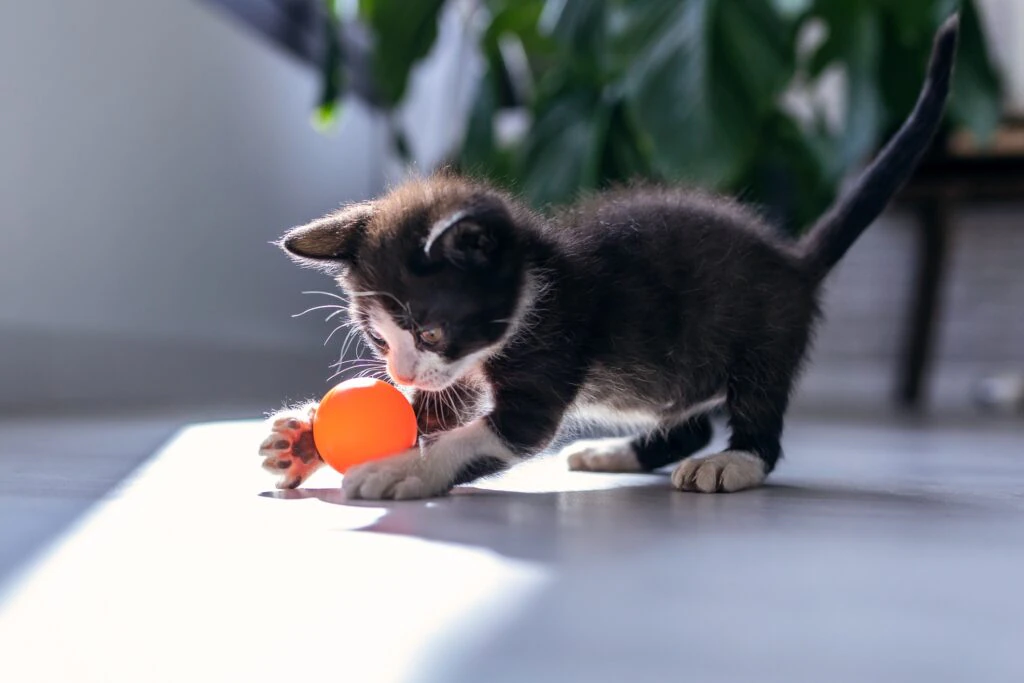
3) Ping-pong balls or lightweight practice balls
Why it’s great: These are budget-friendly chase toys. They roll unpredictably, which keeps kittens engaged and encourages solo play.
Look for: Smooth, intact balls with no cracks. Avoid anything with a removable cap or inner bead.
Use it safely: Use on hard floors or in a bathtub for extra pinball fun. If your kitten starts chewing chunks off, switch to a harder ball.
4) A ball track (the kind with a captured ball)
Why it’s great: The ball stays inside the track, which reduces the chance of lost toys under appliances and keeps play going for longer.
Look for: A track with a ball that cannot pop out easily, openings wide enough for paws but not wide enough for a kitten to wedge their head into, and a stable base for enthusiastic pouncers. Kittens can squeeze, so size up if you are between two options.
Use it safely: Check the track for cracks and make sure any add-on teasers are sturdy. If a top piece loosens, tape is not a fix. Replace it.
5) A soft kicker toy (long and rabbit-kick friendly)
Why it’s great: Kickers give kittens a safe outlet for wrestling and bunny-kicking, which helps redirect rough play away from ankles and hands.
Look for: A longer shape (so your kitten can grab with front paws while kicking with back feet), tight stitching, and minimal loose ribbons.
Use it safely: If it contains catnip, treat it as optional. Many kittens do not respond much until around 3 to 6 months (or later). Store it between sessions so it stays exciting.
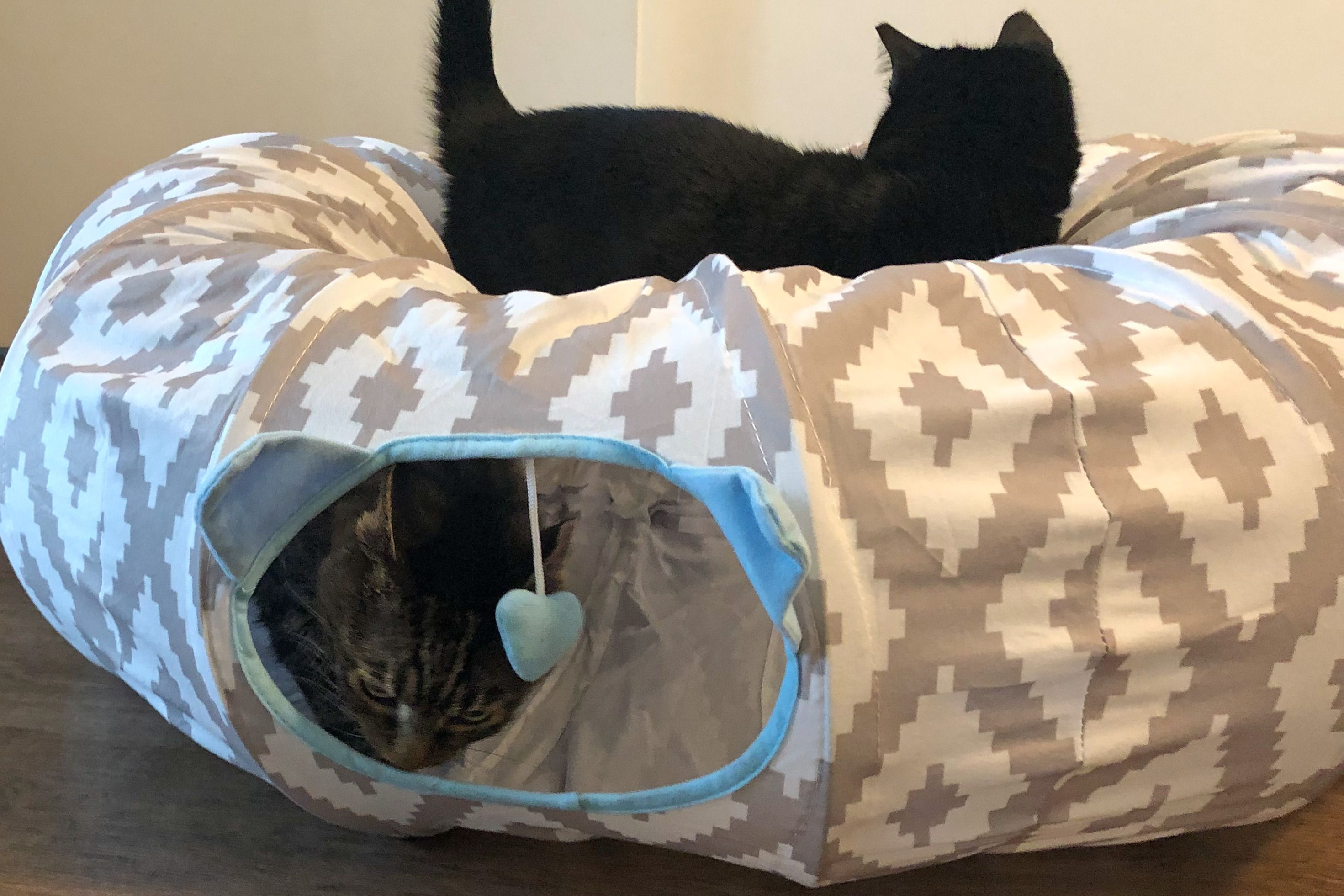
6) A crinkle tunnel (short, sturdy, and easy to supervise)
Why it’s great: Tunnels satisfy the hide-and-ambush instinct and are wonderful confidence builders for shy kittens.
Look for: Strong fabric, reinforced seams, and no long hanging ties. A shorter tunnel is easier in small apartments and less likely to become a chaotic obstacle course you trip over.
Use it safely: Avoid tunnels with weak frames or exposed wire, and inspect the ends regularly so nothing starts poking through. If your kitten is a determined chewer, supervise tunnel time until you know how they play.
7) A puzzle feeder (beginner level, wide openings)
Why it’s great: Food puzzles turn mealtime into enrichment. They slow fast eaters, work the brain, and can reduce boredom behaviors like climbing curtains.
Look for: A puzzle that is easy to wash, has no tiny removable parts, and allows kibble to fall out without intense frustration. For kittens, simple is better.
Use it safely: Start with a few pieces of kibble in the easiest setting. If your kitten gives up, make it easier and gradually increase challenge over days.
8) A treat ball with adjustable difficulty
Why it’s great: It encourages chasing plus problem-solving. It is also a nice solo activity when you are on a work call.
Look for: Thick plastic, an adjustment that cannot be easily chewed off, and holes sized for kitten kibble or small treats.
Use it safely: Use measured portions from your kitten’s daily food so you do not accidentally overfeed. If it gets slobbery or sticky, wash it right away.
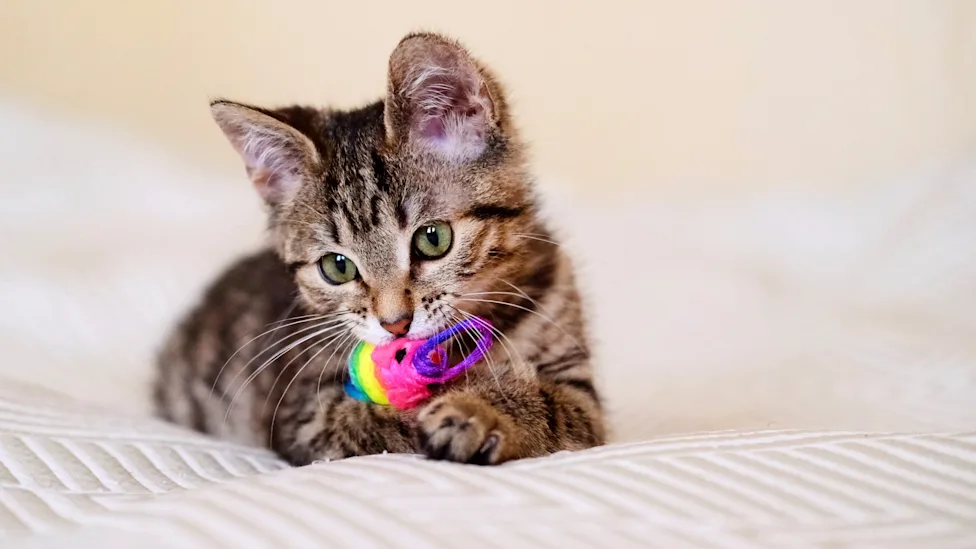
9) A cat-safe plush with no hard parts
Why it’s great: Some kittens are comfort chewers or “carriers” and love dragging a small plush around. It can be soothing in a new home.
Look for: Embroidered features instead of plastic eyes, no beads, and tight seams. Size should be big enough that it cannot be swallowed.
Use it safely: If your kitten starts ripping it open, retire it. Stuffing is not something you want in a digestive tract.
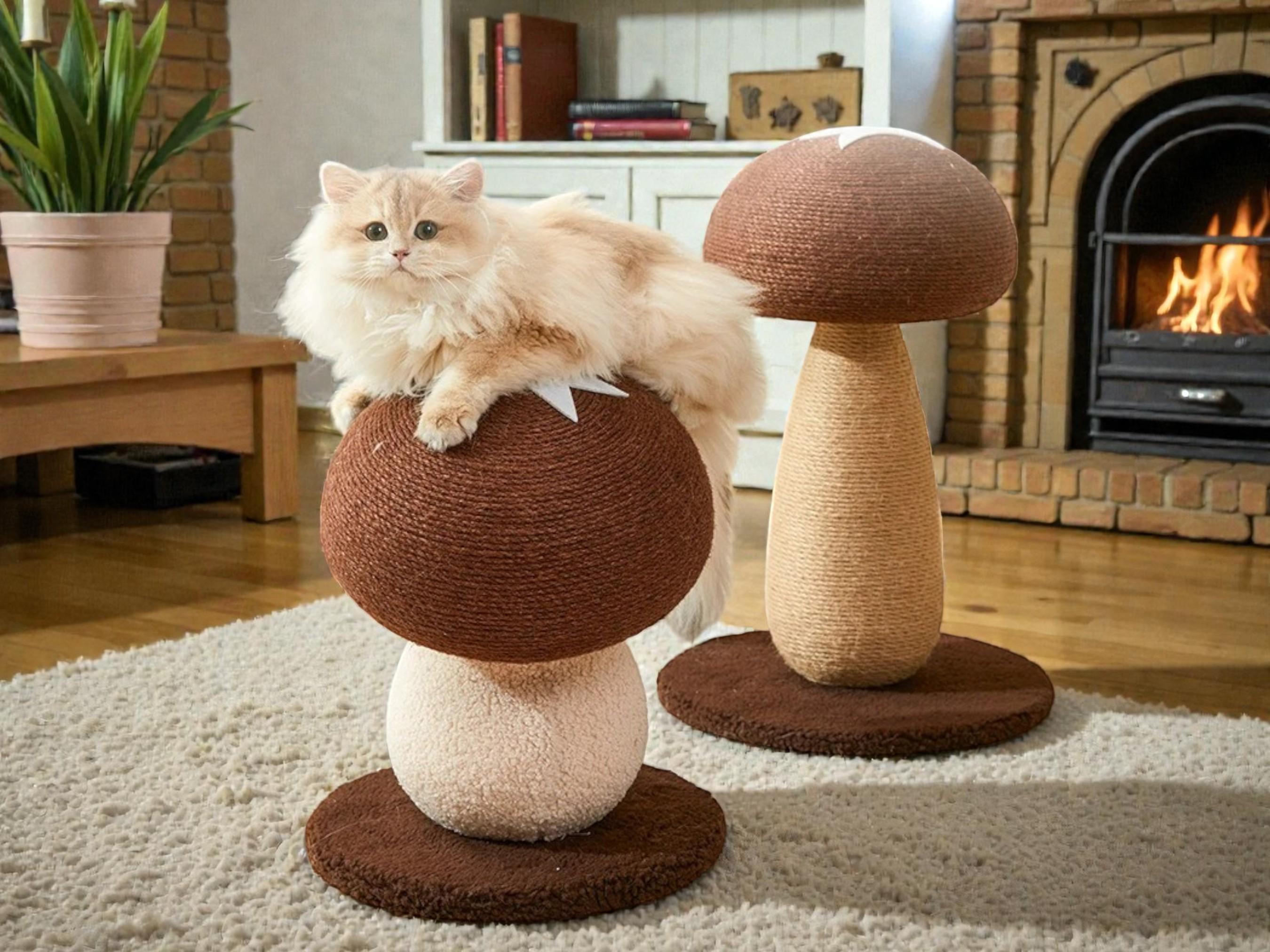
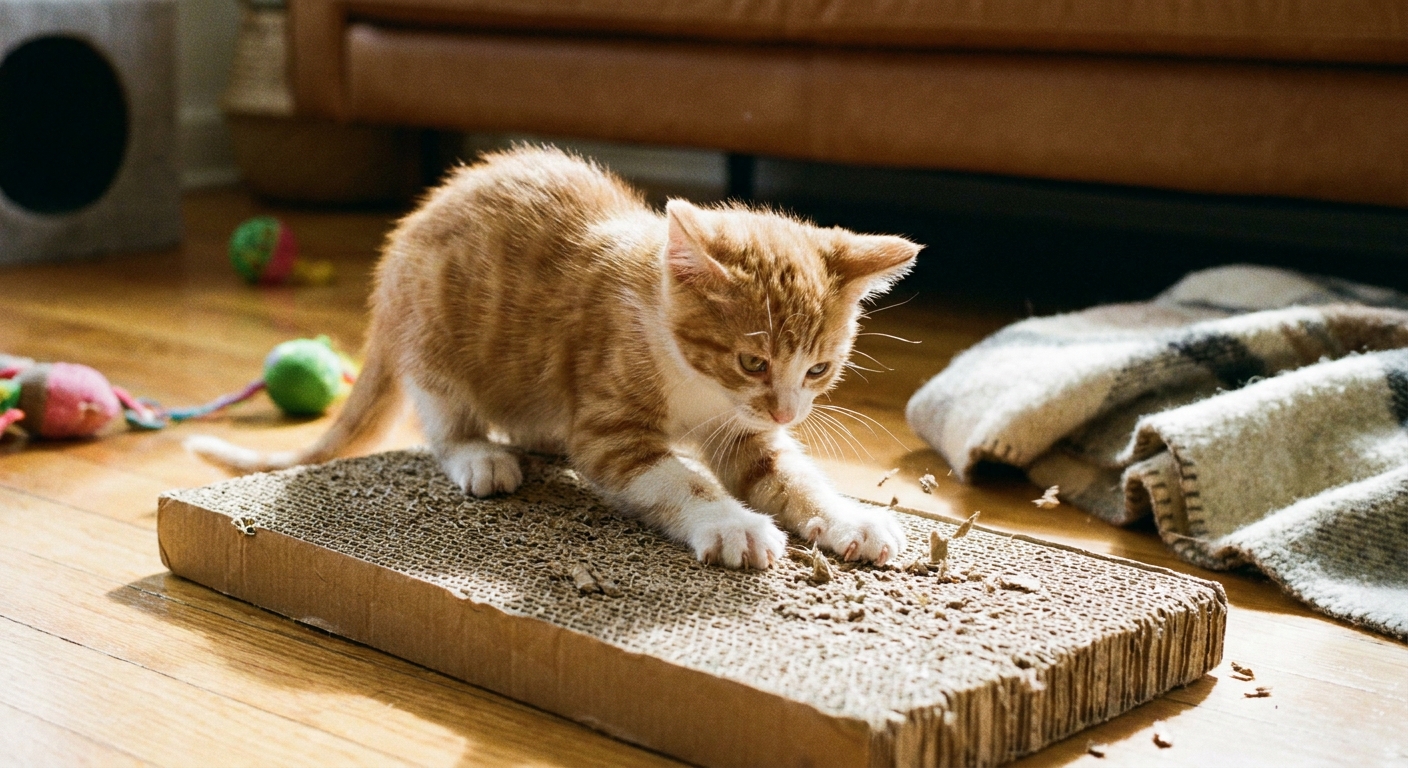
10) A cardboard scratcher that doubles as a lounge
Why it’s great: Scratching is enrichment. It also protects your furniture and helps your kitten stretch, shed nail sheaths, and burn stress.
Look for: Dense cardboard, a stable base, and non-toxic adhesive. Many scratchers also come with a little catnip packet, which you can skip if your kitten is very young.
Use it safely: Place it near sleeping areas and in the room where your kitten gets the zoomies. Praise and treat when they use it so it becomes the obvious choice.
Toys I avoid for kittens (even if the packaging says “cat toy”)
- Loose string toys for unsupervised play: Yarn, ribbon, tinsel, and elastic cords can be swallowed. If they get stuck in the digestive tract, it can turn into a true emergency.
- Hair ties and rubber bands: They are irresistible and risky.
- Cheap feather toys that shed: Feathers and fuzz can be swallowed, and the toy falls apart fast.
- Tiny jingle balls with big openings: If a kitten can get their jaw around it, it can crack or break. Choose sturdier versions or captured-ball tracks.
- Laser pointers as the only toy: They can be fun in moderation, but kittens need the satisfaction of “catching” something. If you use a laser, end with a physical toy or a tossed treat.
Teething tips (3 to 6 months is a chewy phase)
Most kittens hit a peak teething window around 3 to 6 months. That is when I see the most random chewing: chair legs, phone chargers, corners of rugs, you name it.
- Offer legal chew targets: Add an extra kicker toy, a tough plush with no hard parts, and a sturdy track toy so they have something appropriate to gnaw and wrestle.
- Increase inspections: Teething kittens can shred seams faster than you expect.
- Redirect, do not wrestle with hands: If your kitten is extra bitey during teething, it is even more important that hands stay boring and toys do the biting.
Kitten-proof the play zone
Toy safety and room safety overlap. Before a kitten gets the zoomies, I do a quick sweep:
- Pick up small swallowables: Earplugs, coins, twist ties, craft bits, and anything that skitters under furniture.
- Secure cords and strings: Chargers, blind cords, and loose shoelaces are basically kitten invitations.
- Block dangerous gaps: Recliners, rocking chairs, and tight appliance gaps are not places you want a kitten exploring at full speed.
- Have a “toy basket” rule: Anything stringy or elastic goes away between sessions, every time.
How to set up a simple play routine (that prevents bitey chaos)
If I could give every new kitten parent one habit, it would be this three-step loop:
- Hunt: 5 to 10 minutes with a wand toy. Let your kitten stalk, chase, and pounce.
- Catch: Allow a few successful captures. A kitten who never “wins” can get frustrated and may redirect to hands.
- Finish with food: Offer a small meal or a few pieces of kibble in a puzzle. The hunt-eat-groom-sleep cycle is real, and it helps kittens settle.
Most kittens do best with multiple short sessions per day rather than one marathon playtime.
If you have two kittens, you will still want daily interactive wand time. Littermates can wrestle for hours, but they do not replace the confidence building and training that comes from playing with you.
FAQ
How do I know if a toy is a choking hazard?
If a piece can fit fully in your kitten’s mouth, treat it like a potential swallow risk. Pay special attention to plastic eyes, bells, loose ribbons, and any toy that starts to fray or crack.
My kitten only wants to bite my hands. What toy helps?
Start with a wand toy to create distance, then add a kicker for wrestling. Consistently redirect hands to toys. In my foster room, hands do petting and feeding, toys do hunting and biting.
Are battery-operated moving toys safe?
Some are, but I only use ones with a fully enclosed battery compartment that requires a screwdriver. Supervise the first few sessions to make sure your kitten is not chewing seams or plastic edges.
How many toys does a kitten actually need?
You can do a great starter setup with 4 to 6 items: one wand, one kicker, two chase toys (balls), one scratcher, and one puzzle feeder. Rotation matters more than volume.
My final reminder
The safest toy is the one that is the right size, built to survive kitten teeth, and matched to the type of play you can supervise. If you are building your first kitten toy box, start with a wand, a kicker, a scratcher, and one food puzzle. Those four cover most kitten needs and can save your ankles in the process.