If you have a kitten, you will eventually have a “tiny chaos” moment. A missed jump, a nail snag, an unexpected hair tie, a curious lick of something gross on the floor. A good first aid kit will not replace your veterinarian, but it will help you stay calm, protect your kitten from further harm, and buy you time while you get professional help.
I like to think of a kitten first aid kit as two things in one: supplies for minor boo-boos and supplies for safe emergency stabilization on the way to the vet.
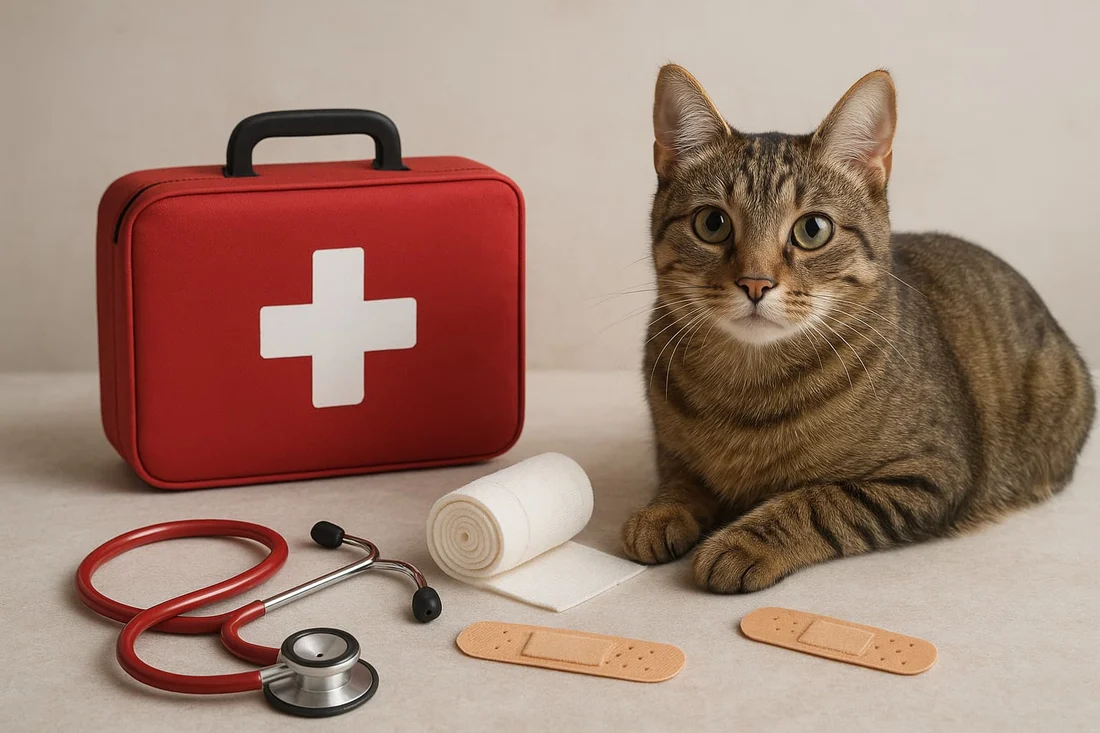
Before you start: what it can and cannot do
Your goal is to prevent things from getting worse. For kittens, that usually means controlling bleeding, protecting a wound, preventing shock, and keeping them warm and quiet until they are seen.
- First aid kit can: clean and cover a minor wound, control mild bleeding, flush an eye, stabilize a torn nail, keep a kitten warm, safely transport to the vet.
- First aid kit cannot: treat poisoning at home, fix a broken bone, stop heavy bleeding you cannot control, replace X-rays, replace emergency care.
If you are ever unsure, call your vet or an emergency clinic. Keep the number taped to the kit.
Quick note on broken bones: I do not try to splint kittens at home. Keep them as still as possible and use a carrier like a little “stretcher” while you head in.
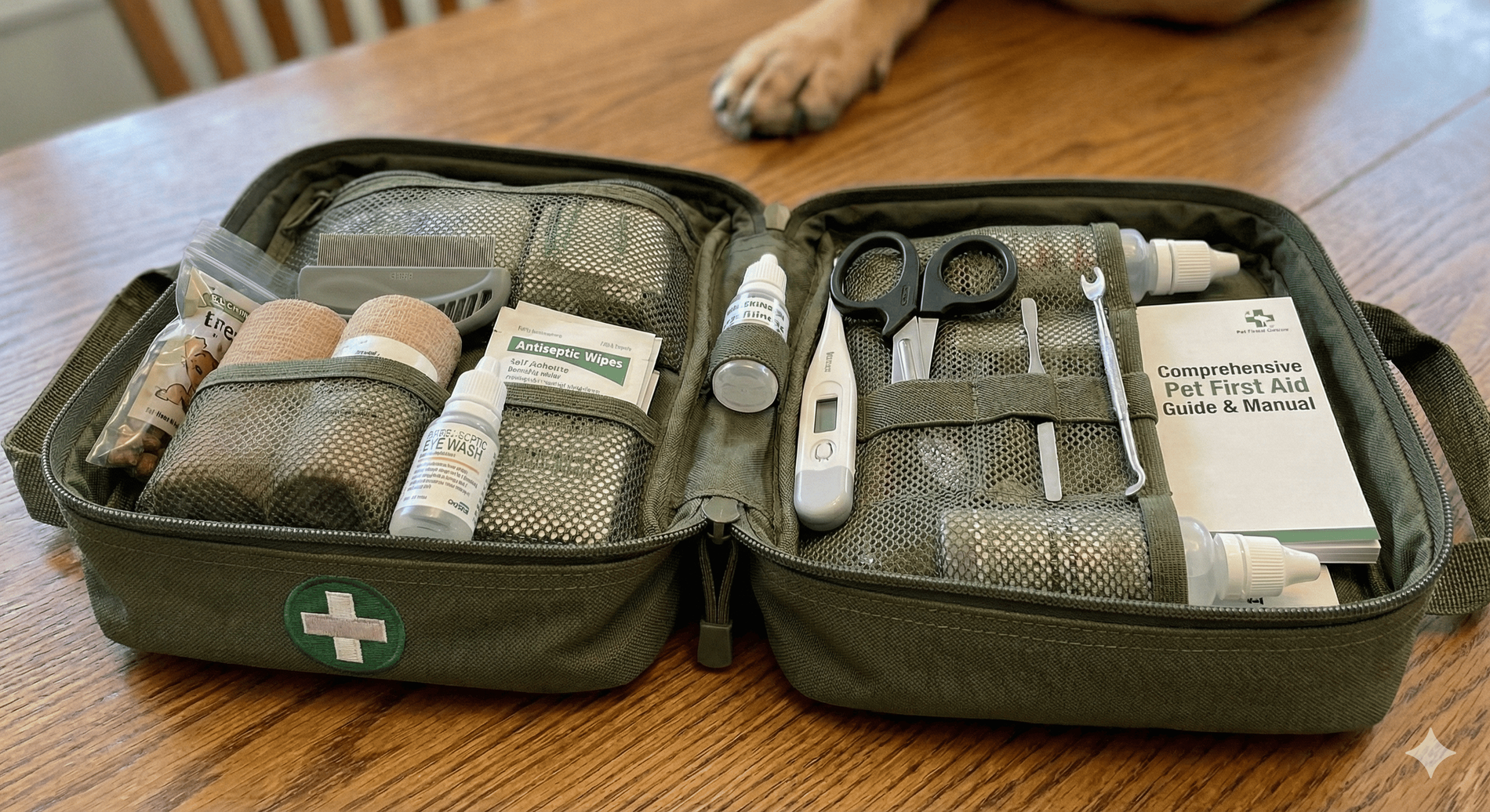
My core kit checklist (kitten-safe essentials)
These are the items I reach for most often in foster care. If you build nothing else, build this.
1) Gloves and hygiene basics
- Nitrile gloves (multiple pairs): Protects you and the kitten, and keeps wounds cleaner.
- Hand sanitizer (for you): Use on your hands only, not on kittens.
- Disposable pee pads: A clean surface for quick exams or car rides.
2) Wound care and bandaging
- Sterile gauze pads (2x2 and 4x4): For gentle pressure on bleeding and covering wounds.
- Non-stick wound pads (Telfa-style): Best for scrapes so bandages do not rip healing tissue.
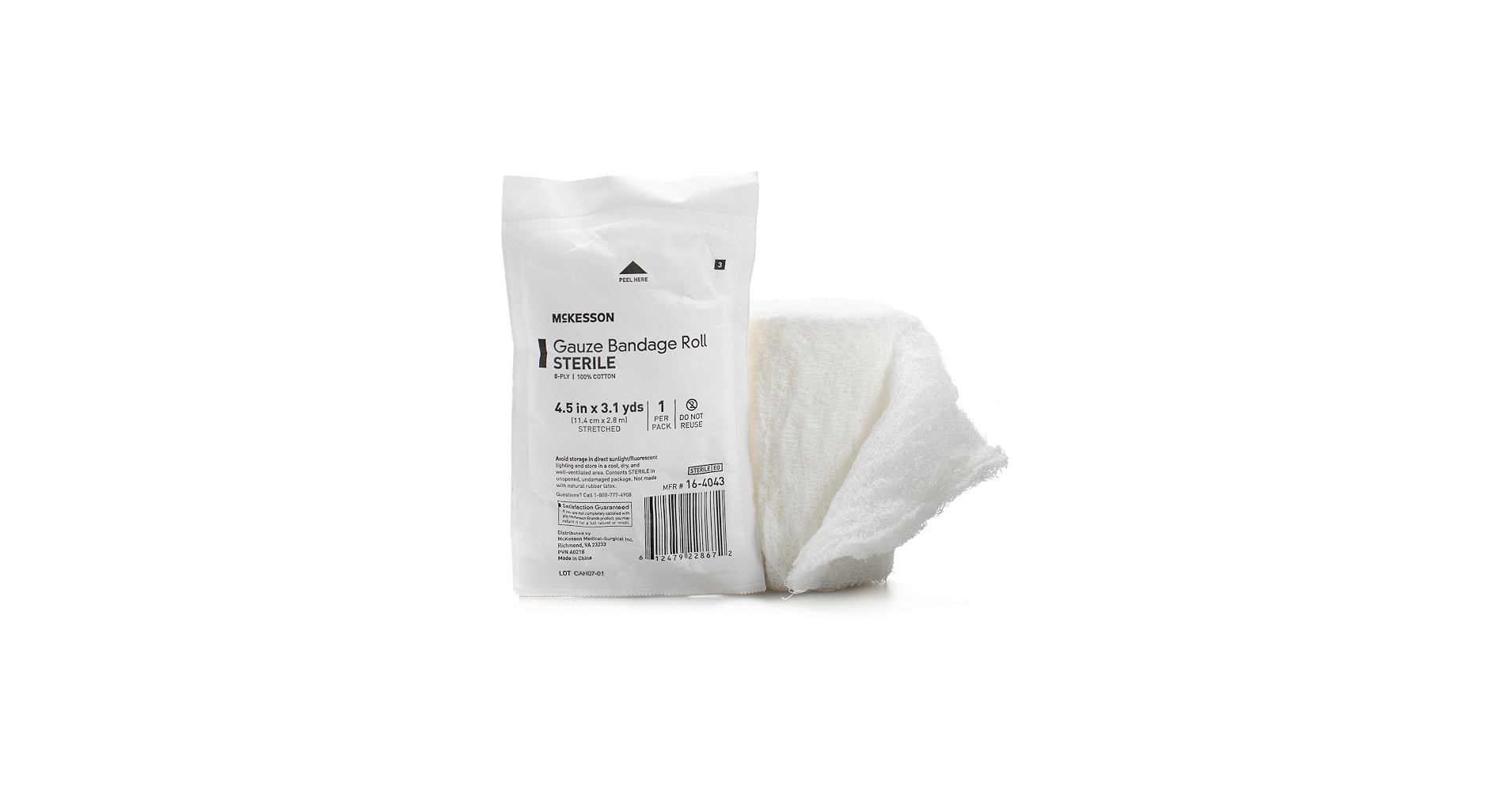
- Rolled gauze: Helps secure pads without being too sticky on fur.
- Self-adherent wrap (VetWrap-style): Sticks to itself, not hair. Great for holding dressings in place.
- Medical tape (paper tape is gentler): Use sparingly on fur.
- Blunt-tip bandage scissors: For safe trimming of wrap and gauze.
- Saline wound wash (sterile): For flushing debris. Look for plain saline, not medicated.
- Chlorhexidine (only if you know the right dilution): Many vets use a very dilute solution for wound cleansing (often around 0.05%), but concentrates must be diluted correctly. If you are not sure, skip it and use sterile saline, then see your vet.
- Oral syringe (no needle): Helpful for gentle flushing with saline, or for giving fluids or medications only if your vet tells you exactly what and how much.
Kitten note: Hydrogen peroxide and rubbing alcohol are common medicine cabinet items, but they are harsh on tissue and can delay healing. I keep them out of kitten kits.
Tools that make emergencies less scary
Digital thermometer (and lubricant)
A fast digital rectal thermometer can be helpful if your vet asks for a temperature. Use a tiny amount of water-based lubricant and go slow. If your kitten is struggling or you are not confident, skip it and head in.
- Typical cat temperature: about 100.0 to 102.5°F (37.8 to 39.2°C). Young kittens can get cold more easily, so context matters.
- Urgent evaluation: under 99°F or over 104°F, or any abnormal temp paired with lethargy, trouble breathing, or weakness.
Tick removal tool (or fine-tipped tweezers)
If you live in a tick area, add a tick tool. It can make proper removal easier and can reduce the chance of squeezing the tick. Fine-tipped tweezers used correctly also work well. When in doubt, ask your vet what they prefer.
Fine-tip tweezers
Useful for splinters in paw pads or removing debris from fur. Do not dig deep into tissue.
Flashlight or headlamp
For checking gums, looking between toes, and spotting small punctures in dark fur.
Soft muzzle alternative: a towel
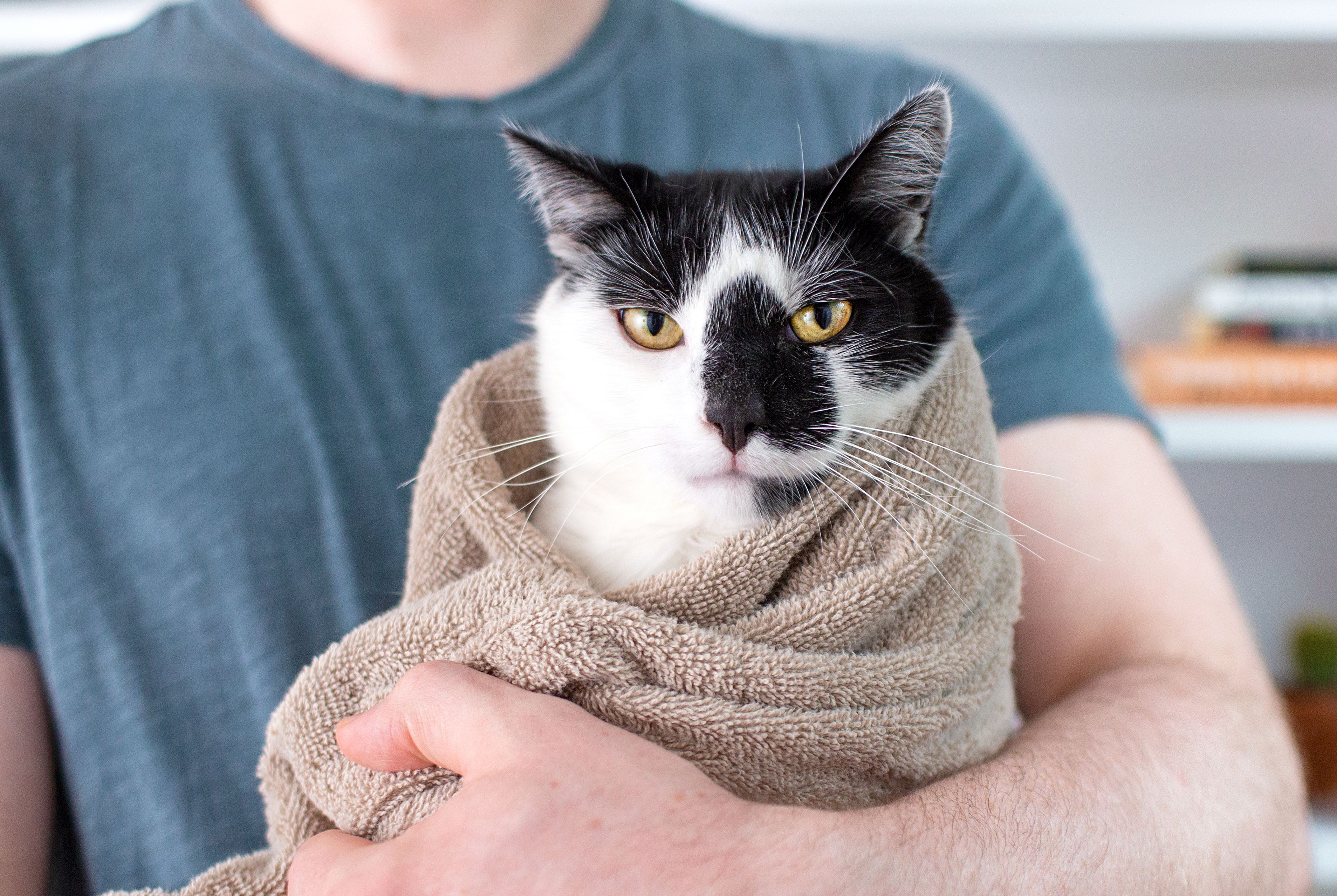
I do not use traditional muzzles on kittens. A thick towel for a gentle “kitty burrito” is safer and helps prevent panic scratches during a quick check.
Optional but genuinely helpful: a small scale
Knowing your kitten’s current weight can speed up poison control or urgent vet guidance. Even a basic kitchen scale can help if your kitten will sit still for a moment.
Emergency stabilization items
1) A small carrier-ready blanket
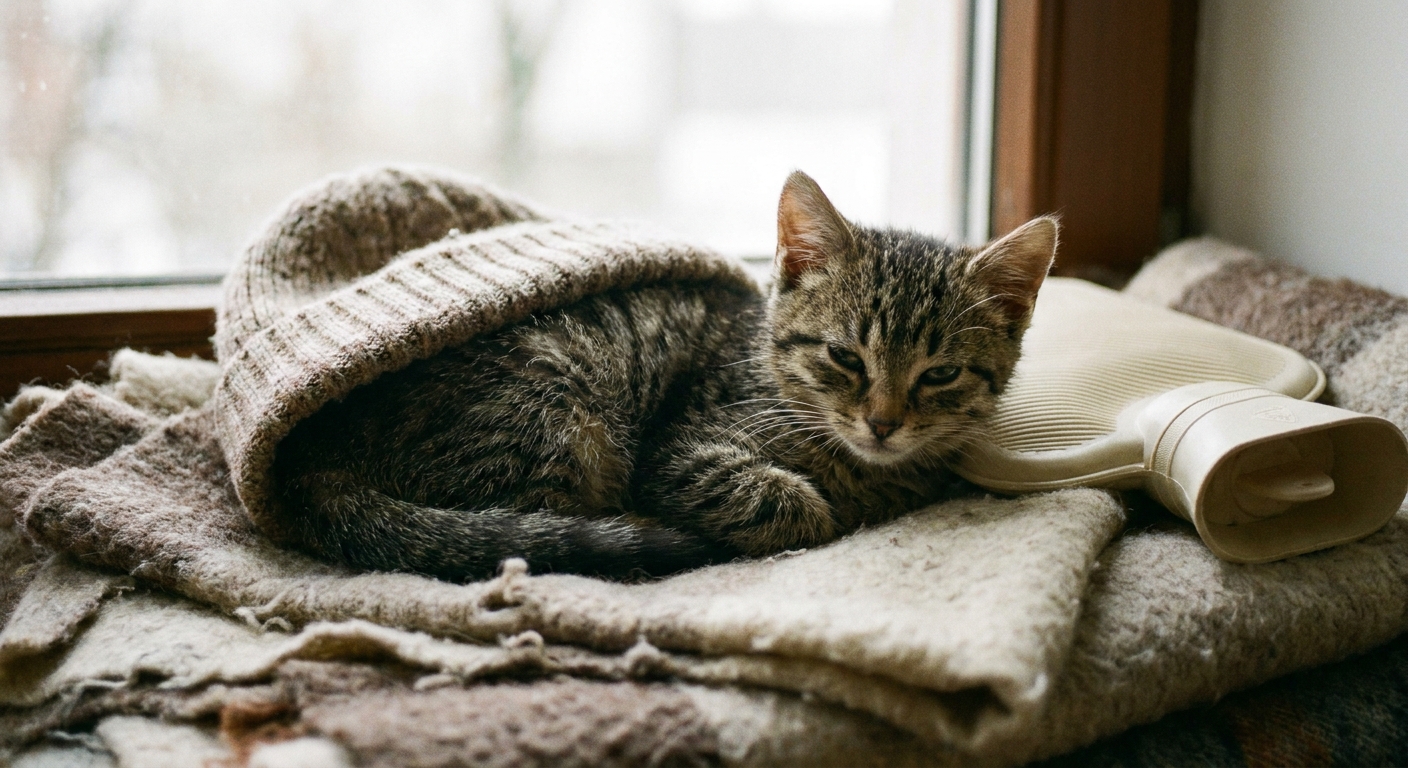
Kittens crash hard when they are sick or injured. They can become hypothermic quickly, especially if they are wet, very young, or not eating. A soft blanket helps with warmth and reduces sliding in the carrier.
2) Instant heat source, used carefully
Add a microwavable heat disc or chemical hand warmers. If you use them, wrap in a towel and keep it near, not directly against, your kitten’s skin. Overheating and burns can happen quickly.
Chewing safety: Never place chemical warmers loose in the carrier. Keep them wrapped and secured where your kitten cannot bite them.
3) Saline eye rinse
A plain sterile saline is great for flushing dust or litter from eyes while you arrange a vet visit.
4) A cone alternative
A kitten-sized e-collar is hard to fit, but licking can ruin healing fast. Options:
- Soft recovery collar (inflatable doughnut style, kitten size)
- Baby onesie (for body wounds, supervised)
If your kitten has a wound and cannot stop licking, that is often a same-day vet situation.
5) Emergency contact card
Print and tape this inside the lid:
- Your primary vet number
- Nearest emergency clinic number and address
- Animal poison control hotline (keep the paid hotline info handy)
- Microchip number (if applicable)
Medications: what I do and do not keep
For kittens, I keep the medication section very small. Many human and dog meds are dangerous for cats, and kittens are extra sensitive because of their size.
Safe to keep (with vet guidance)
- Veterinarian-prescribed medications labeled for your kitten, stored properly.
- Electrolyte solution recommended by your vet (only if they have told you when and how to use it).
What to skip unless your vet instructs you
- Any human pain reliever (acetaminophen, ibuprofen, naproxen): toxic to cats.
- Topical antibiotic ointments: avoid unless your vet recommends a cat-safe product and you can reliably prevent licking.
- Essential oils: many are toxic to cats. Avoid diffusers and aerosolized products, and check with your vet before using any scented oils or oil-based products around kittens.
- Hydrogen peroxide: can damage tissue and is not a safe “make them vomit” plan.
If poisoning is suspected, do not experiment at home. Call your vet or an emergency clinic immediately.
How to store your kit
My favorite setup is a small, hard-sided box with a snap lid plus a zip pouch inside for the tiny stuff (thermometer, tweezers, tick tool).
- Keep it in one consistent spot and tell everyone in the home.
- Add a headlamp so you are not trying to hold a phone flashlight while wrapping gauze.
- Check expiration dates every 6 months.
- Restock after every use immediately, even if it was just two gauze pads.
Quick how-to: common kitten mishaps
These are the situations I see most in fosters and first-time kitten homes. If your kitten is collapsing, struggling to breathe, bleeding heavily, or cannot stand, skip the checklist and go to emergency care.
Minor cut or scrape
- Contain gently with a towel wrap.
- Flush with sterile saline to remove debris.
- Pat dry with gauze, do not rub.
- Cover with a non-stick pad and light wrap if the location allows.
- Prevent licking with a soft collar or supervised onesie.
See a vet the same day if the wound is deep, gaping, from a bite, or on the face, paw pad, or near the eye.
Bleeding nail or torn claw
- Apply gentle pressure with gauze for several minutes.
- If you have it, use styptic powder sparingly. Keep it away from eyes and mouth.
- Keep them calm and limit jumping.
If the nail is partially detached, bleeding will not stop, or your kitten is limping hard, head to the vet.
Bleeding that looks serious
- Use a clean gauze pad (or a clean cloth if that is what you have).
- Hold steady pressure for 5 to 10 minutes without peeking.
- Add layers if blood soaks through. Do not remove the original pad if it is stuck.
- Go in if bleeding does not slow quickly.
I do not use tourniquets on kittens unless a veterinarian specifically tells me to.
Something stuck in the eye
- Do not pull at anything embedded.
- Flush with sterile saline, letting it run from inner corner outward.
- Prevent rubbing and call your vet.
Eye issues worsen quickly in kittens. When in doubt, treat it as urgent.
Suspected poisoning or chewing a string
- Remove access to the substance or object.
- Do not induce vomiting unless a veterinarian tells you to.
- Call immediately with details: what, how much, when, and your kitten’s weight.
If your kitten swallowed string, ribbon, thread, or tinsel, do not pull it if you see it. Keep them calm and go in.
Budget-friendly kit: what to buy first
If you are building your kit slowly, prioritize the items that solve the most common problems.
- Must-have first: nitrile gloves, sterile gauze pads, non-stick pads, saline, vet wrap, blunt scissors, digital thermometer, towel.
- Next layer: oral syringe (no needle), tick tool or fine-tipped tweezers, paper tape, flashlight, pee pads.
- Nice extras: soft recovery collar, microwavable heat disc, spare small blanket for the carrier, small scale.
When to skip the kit and go now
I know it is tempting to “just see how they do,” especially at night. For kittens, I use a low threshold for professional help. Go to an emergency vet if you see any of these:
- Open-mouth breathing, wheezing, or severe coughing
- Repeated vomiting or diarrhea, or any blood
- Suspected toxin exposure
- Collapse, extreme weakness, unresponsiveness
- Seizure activity
- Cannot urinate, or crying in the litter box
- Major trauma (fall, car incident, dog attack)
- Bleeding that does not stop with steady pressure
- Very pale gums, blue-tinged gums, or cold body temperature
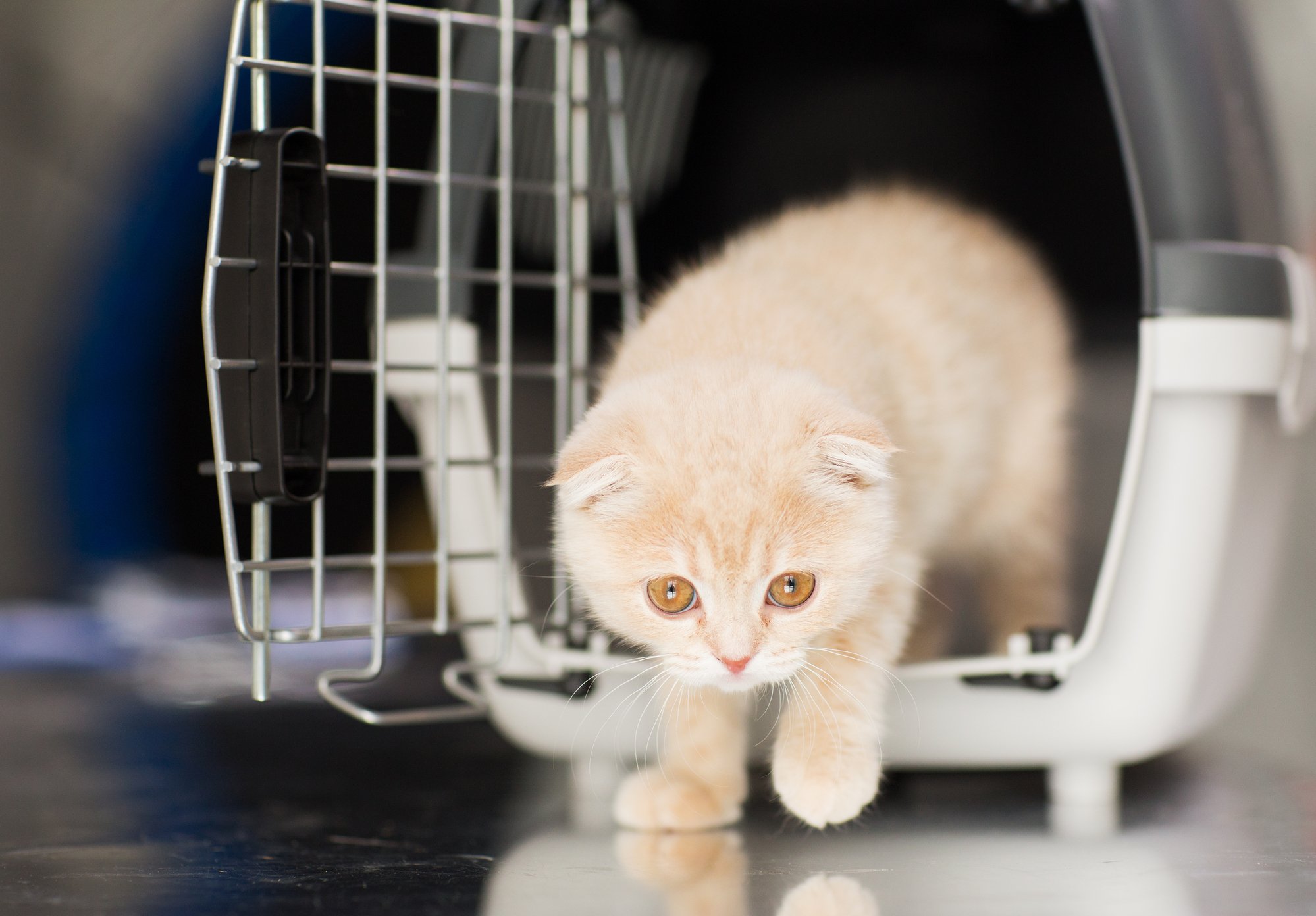
If you are transporting a kitten who may be injured, keep them warm, keep the carrier dark and quiet, and drive carefully.
Mini checklist to tape inside your kit
- Vet and emergency clinic numbers
- Gloves
- Saline (wound and eye)
- Gauze pads and non-stick pads
- Rolled gauze and vet wrap
- Paper tape
- Blunt scissors
- Digital thermometer
- Towel and small blanket
- Flashlight
- Tweezers and tick tool
- Oral syringe (no needle)
And one last truth I have learned the hard way: the best first aid “tool” is a calm plan. Build your kit once, store it consistently, and you will be amazed how much easier those stressful moments feel.