If you just spotted a flea sprinting across your kitten’s belly, take a breath. Parasites are common in young kittens, especially rescues, and most cases are very fixable. The key is using age-appropriate products and not reaching for whatever flea treatment you used on an adult cat. Kittens are tiny, their livers are still maturing, and the wrong product can make a little problem turn into an emergency.
This guide walks you through safe, step-by-step options for fleas, ticks, and worms, including what you can do at home and when you need your vet right away.
First, a safety rule that saves lives
Never use dog parasite products on cats or kittens. Many contain ingredients (like permethrin) that are dangerous to cats. Also avoid essential oil remedies and flea collars marketed for “all pets” unless your veterinarian confirms they are kitten-safe and age-appropriate.
Before you apply any medication, you need three numbers:
- Age in weeks
- Weight in pounds or kilograms
- What parasite you are treating (fleas, ticks, roundworms, tapeworms, etc.)
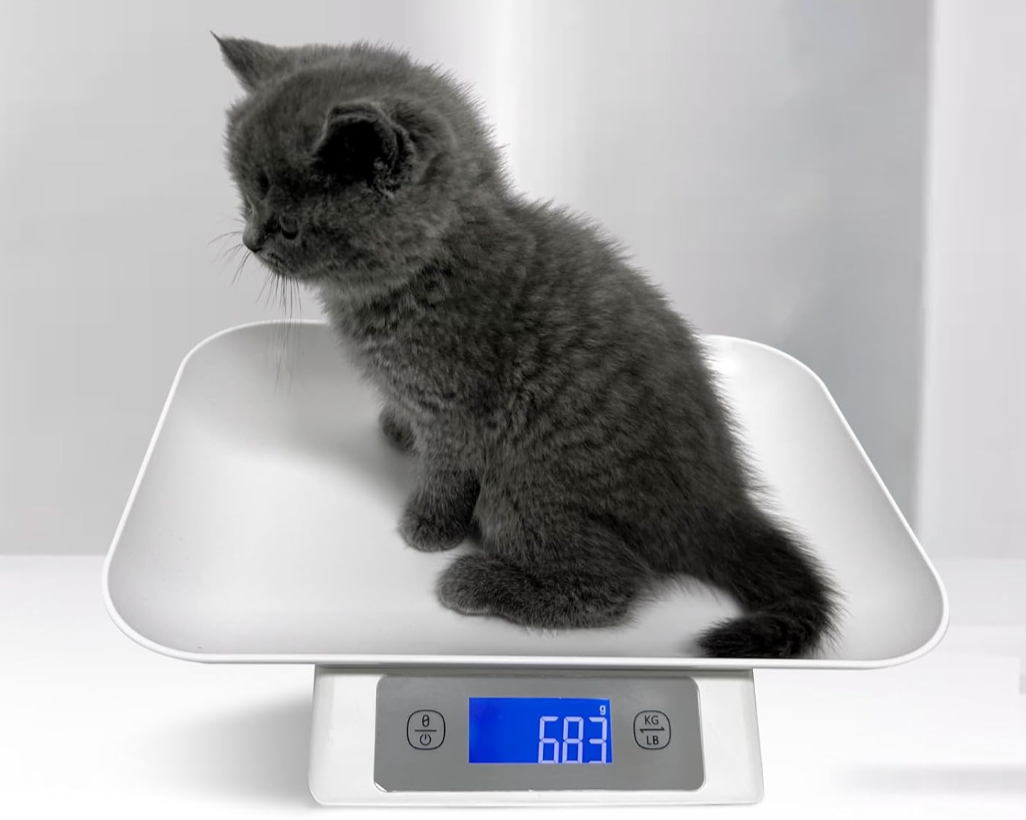
If you do not know your kitten’s exact weight, weigh yourself holding the kitten in a carrier, then subtract your weight alone. Better yet, use a kitchen scale for very young kittens.
What’s safe when?
Parasite products are labeled by minimum age and minimum weight. Those cutoffs are not suggestions. If your kitten is under the label limit, use the non-medication options below (like combing and bathing) and call your vet for a plan.
| Kitten age | What you can safely focus on first | What to avoid |
|---|---|---|
| 0 to 4 weeks | Flea combing daily, warm towels, vet guidance if weak or pale | Most topical flea meds, flea shampoos, most tick preventives, essential oils |
| 4 to 8 weeks | Flea combing, careful bathing if needed, discuss kitten-approved flea prevention and deworming with your vet | Random OTC flea products, dog products, harsh baths too often |
| 8+ weeks | Many vet-approved preventatives become options based on weight; routine deworming and fecal testing | Assuming “8 weeks” means all products are safe, ignoring weight limits |
My foster rule: if your kitten is small enough to fit in one hand, act like they are medically fragile. Gentle physical removal plus a vet plan is the safest path.
Fleas: safe treatment
Fleas are the most common parasite I see in foster litters. They are not just itchy. In young kittens, heavy flea loads can cause anemia fast. Very small kittens with lots of fleas sometimes need veterinary support, so do not wait if your kitten seems weak or looks pale.
Step 1: Check for flea dirt and urgency
Part your kitten’s fur at the neck, belly, and base of tail. Look for:
- Live fleas (quick, dark, sesame-seed sized)
- Flea dirt (black pepper specks)
- Pale gums, weakness, cold paws (can be signs of anemia, shock, or hypothermia, and are urgent)
To confirm flea dirt: place specks on a damp paper towel. If they smear reddish-brown, it is digested blood.
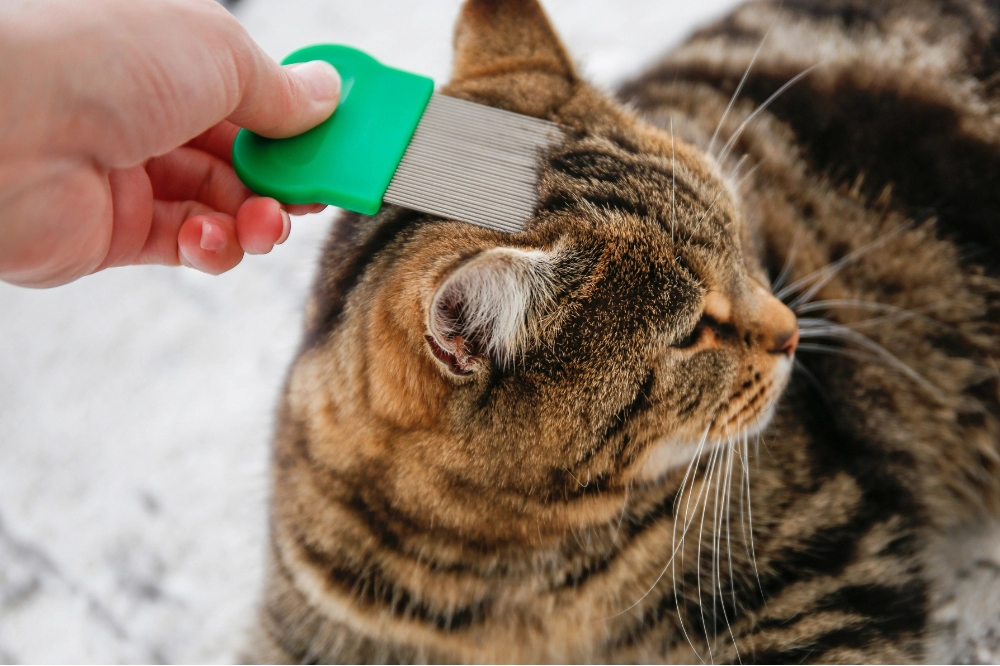
Step 2: Use a flea comb the right way
For kittens under typical medication ages, a flea comb is your best friend.
- Put your kitten on a towel in good light.
- Comb slowly, especially around the neck and tail base.
- Dip the comb into a cup of warm water with a tiny drop of dish soap to trap fleas.
- Repeat once or twice daily during an outbreak.
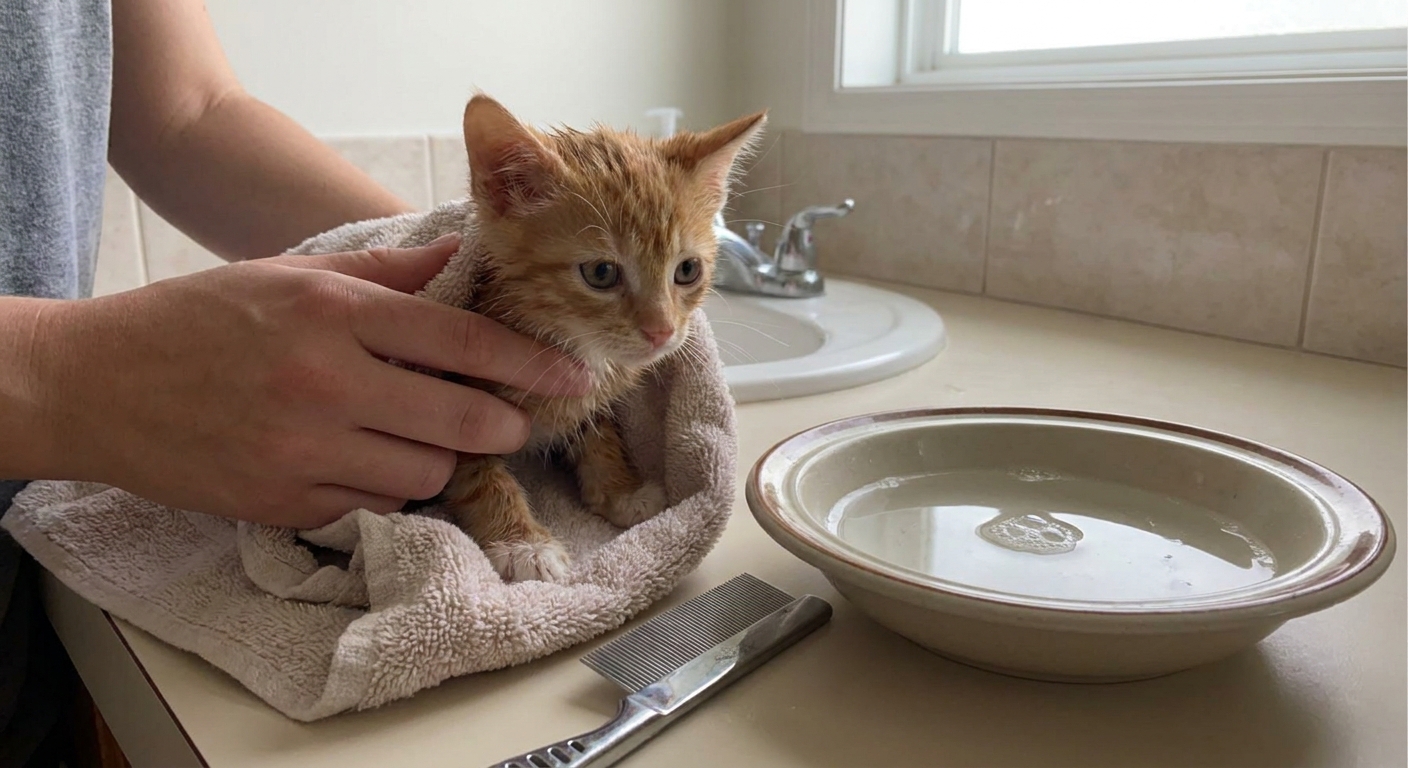
Step 3: If you need a bath, keep it gentle
A bath can help when fleas are swarming, but it must be done carefully to avoid chilling your kitten.
- Use warm water, not hot.
- Choose a kitten-safe cleanser recommended by your veterinarian. In many shelters, mild unscented dish soap is used for emergency flea removal, but ask your vet if you have a very young or medically fragile kitten.
- Avoid medicated flea shampoos (including pyrethrins and similar ingredients) in young kittens unless your veterinarian specifically directs you.
- Make a “soap ring” around the neck first (a little lather) so fleas do not rush to the face.
- Rinse thoroughly, then towel-dry fast.
- Keep kitten warm afterward with a dry towel and a warm room. Avoid hair dryers unless your kitten is used to them and you can keep it low and not frightening.
Do not bathe repeatedly as your main strategy. Frequent baths dry skin and stress kittens. Comb daily and fix the environment instead.
Step 4: Treat the environment
With fleas, a small fraction of the population is on your kitten. Most eggs and larvae are in your home, which is why fleas can seem to “come back” overnight.
- Wash bedding on hot and dry on high heat.
- Vacuum rugs and cracks daily for 7 to 10 days (then every few days for a month). Empty the canister outside.
- If your kitten is confined to one “kitten room,” start there. Small zones are easier to win.
- Avoid flea sprays, powders, and foggers around kittens unless the label clearly states they are safe for use in that way and your veterinarian agrees. Many insecticides are risky when misused, especially in small, poorly ventilated spaces.
If there are adult cats or dogs in the home, they must be on a species-appropriate preventive too, or they will keep re-seeding fleas.
Step 5: Choose a kitten-appropriate preventive with your vet
The safest long-term fix is a preventive that matches your kitten’s age and weight. Many effective products exist, but the “best” one depends on your kitten’s size, household pets, and whether ticks are also a risk where you live.
Bring this to your vet visit:
- Your kitten’s current weight
- Whether you saw fleas, flea dirt, or tapeworm segments
- Whether you have other pets in the home
- Any past reactions to medications (if known)
Once you are past the immediate flea problem, ticks and intestinal parasites are the other two common issues to address, especially for outdoor-found kittens and new rescues.
Ticks: safe removal
Ticks are less common than fleas in my fosters, but they do show up, especially if kittens came from outdoors or a wooded area. The goal is to remove the tick promptly and intact.
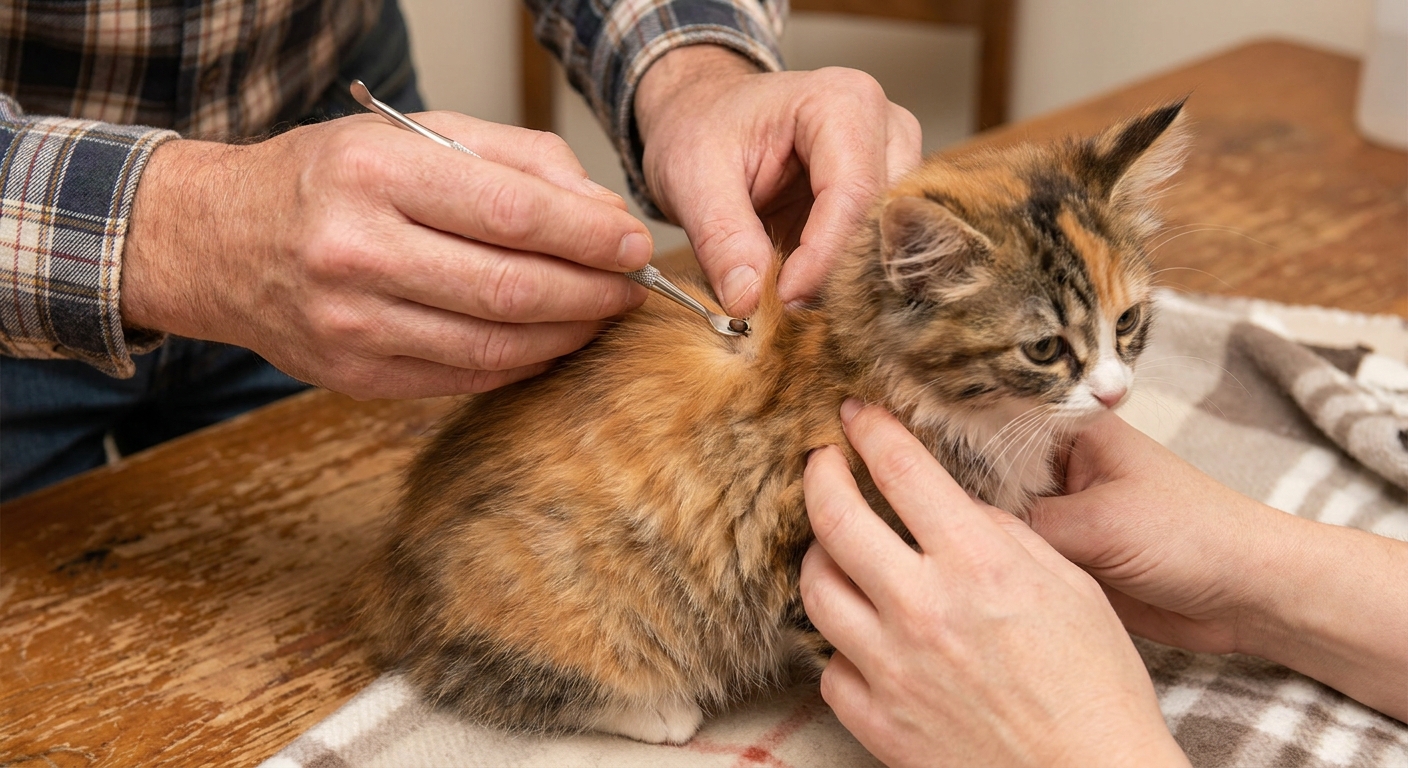
Safe tick removal steps
- Wear gloves if possible.
- Use fine-tipped tweezers or a tick tool.
- Grasp the tick as close to the skin as possible, at the head.
- Pull upward with steady, even pressure. If you are using a tick tool, follow the tool’s directions.
- Clean the bite area with a pet-safe antiseptic recommended by your vet.
- Save the tick in a sealed container in case your vet wants to identify it.
Do not do these tick myths
- Do not burn it off.
- Do not smother it with petroleum jelly, oils, or alcohol while it is attached.
- Do not yank or squeeze the tick’s body, which can push irritants into the bite.
When to call the vet after a tick
Contact your veterinarian if your kitten seems tired, feverish, limps, stops eating, or if the bite site becomes swollen or oozes. Also call if you cannot remove the tick completely.
Worms: normal vs urgent
Most rescue kittens should be assumed to have intestinal parasites until proven otherwise. That is not because anyone did anything wrong. Kittens can get worms from their mother, from fleas, or from the environment.
Common parasites and how they spread
- Roundworms: very common, often passed from mom.
- Hookworms: can cause anemia and diarrhea, especially risky for tiny kittens.
- Tapeworms: commonly linked to swallowing fleas. You may see rice-like segments near the tail or on bedding.
- Coccidia or giardia (not worms, but common parasites): can cause diarrhea and dehydration risk.
Signs your kitten may have parasites
- Potbelly with poor weight gain
- Diarrhea or mucus in stool
- Vomiting (sometimes with worms visible)
- Dull coat
- Scooting or irritated rear end
- Rice-like segments on fur or bedding (tapeworm)
Safe deworming: why the vet’s plan matters
Dewormers are not one-size-fits-all. Different medications target different parasites, and kittens need correct dosing by weight. Many shelters and clinics follow a routine deworming schedule for roundworms and hookworms in early kittenhood, often starting very young and repeating at regular intervals. Your veterinarian will tailor timing and medication to your kitten’s age, weight, health, and stool test results.
Here is what I recommend for pet parents:
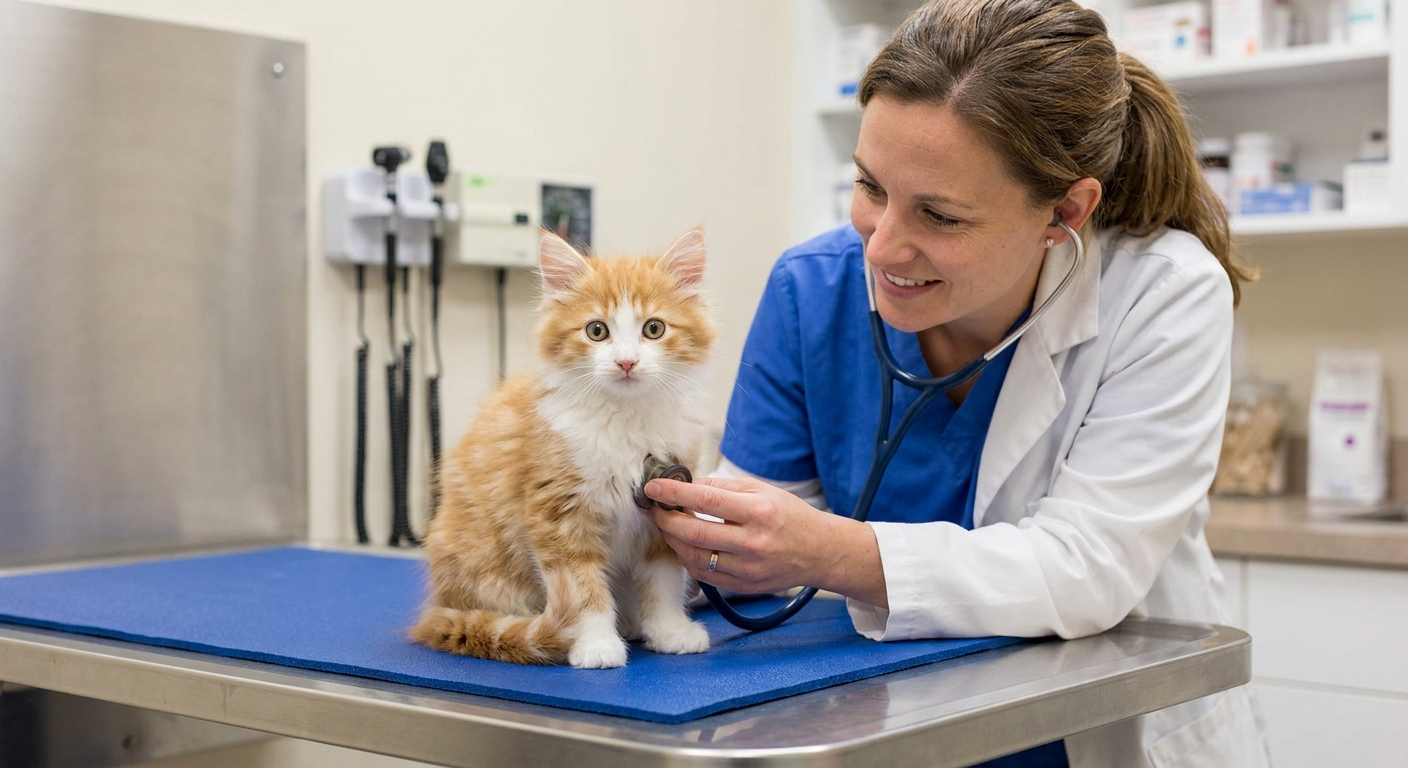
- Schedule a vet visit soon after adoption.
- Bring a fresh stool sample if you can (your clinic can tell you how to collect it).
- Follow through on repeat doses. Many parasites require a second treatment to catch newly hatched worms.
Skip home remedies for worms. Garlic, pumpkin-only “cleanses,” and herbal blends can delay real treatment and can be unsafe for kittens.
Can fleas cause worms?
Yes. Tapeworms are the classic example. A kitten bites at itchy flea spots, swallows a flea, and that flea can carry tapeworm larvae.
If you see tapeworm segments, you usually need two moves:
- Treat fleas in the kitten and the environment
- Use a vet-recommended tapeworm medication (not all dewormers treat tapeworm)
What not to use
I know the pet store aisle can feel like a wall of colorful promises. For young kittens, these are the big “no” categories unless your veterinarian specifically directs otherwise:
- Dog flea and tick products of any kind
- Over-the-counter spot-ons not labeled for kittens at your kitten’s exact weight and age
- Essential oils (tea tree, peppermint, cedar, and many others can be toxic to cats)
- Flea collars on very young kittens (risk of exposure and incorrect dosing, plus strangulation risk if ill-fitting)
- Multiple parasite products stacked together without vet guidance (for example, a topical plus a collar plus a spray)
- Home insecticide sprays, powders, and foggers used around kittens or on bedding without explicit label directions and veterinary guidance
Emergency signs
Young kittens can go downhill quickly. Seek veterinary care urgently if you notice:
- Pale or white gums, weakness, rapid breathing (possible anemia or poor circulation)
- Dehydration (sticky gums, sunken eyes, skin that stays “tented”)
- Continuous vomiting or severe diarrhea
- Blood in stool
- Shaking, drooling, stumbling, tremors after any parasite product (possible toxicity)
- Ticks clustered or a tick you cannot fully remove
Prevention that works
Prevention is a lot easier than playing parasite whack-a-mole. Here is my low-stress routine for new kitten homes:
1) Vet-approved monthly protection when old enough
Once your kitten meets age and weight minimums, ask your vet for a product that covers what you need (fleas only, fleas plus ticks, and whether it also covers certain worms).
2) Keep the kitten zone easy to clean
- Use washable blankets instead of plush beds at first.
- Vacuum around the pen or safe room frequently.
- Wash bedding weekly during kittenhood, or more often if you are treating fleas.
3) Protect every pet in the household
If your adult cat or dog has fleas, your kitten will too. Treat all pets with species-appropriate preventives, and keep cats away from dog products.
4) Do a fecal test even if things look fine
Some parasites are sneaky. A simple fecal test can catch them before your kitten loses weight or gets dehydrated.
FAQ
Can I use a flea shampoo on a kitten?
Many flea shampoos are too harsh for young kittens and some are not safe. For active infestations in tiny kittens, I prefer combing and a carefully managed bath only when necessary, then getting a vet-recommended preventive as soon as age and weight allow.
My kitten is indoors. Do we really need prevention?
Indoor kittens can still get fleas from other pets, visitors, or even a hitchhiking flea brought in on clothing. If you have other animals or live in a flea-prone region, prevention is often worth it. Your vet can help you weigh the risk.
What do tapeworm segments look like?
Often like small grains of rice on the fur near the rear end or on bedding. Sometimes they look like sesame seeds when dried.
How soon after fleas should I deworm?
If you see tapeworm segments, call your vet promptly, because flea control alone will not clear tapeworm. For routine kitten deworming, many vets start early and repeat treatments on a schedule based on age, weight, and stool test results.
My kitten seems itchy but I do not see fleas. What now?
Comb anyway and look for flea dirt. Also check for dry skin, ear debris, or signs of mites. If itching is persistent, your vet can examine skin and ears and recommend safe treatment options for kittens.
A calm next step
If you are overwhelmed, focus on this simple order: remove fleas you can see (comb and safe bath if needed), clean the environment, and get an age and weight-appropriate plan from your vet for prevention and deworming. That three-part combo is what turns a stressful parasite flare-up into a short chapter you barely remember later.
And if your kitten is tiny, weak, or pale, skip the internet rabbit hole and call your vet right now. Little bodies have less wiggle room, and getting help quickly is the kindest thing you can do.