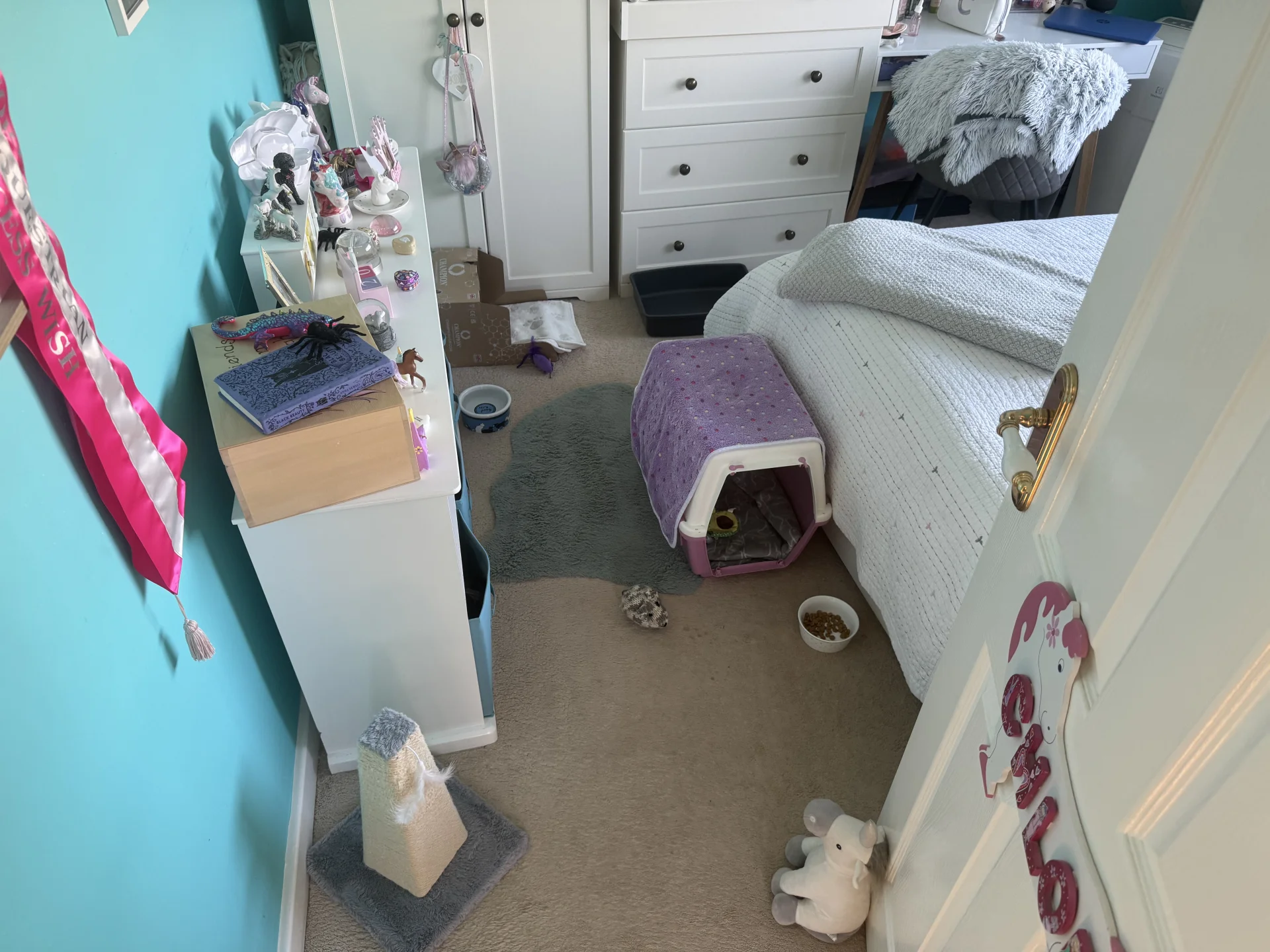
Your kitten’s first week in a new home is a lot like the first day of school, but louder and with more hiding. A dedicated “safe room” gives them a small, predictable space to decompress, learn your routine, and start building confidence before they tackle the rest of the house.
I’ve brought home dozens of fosters over the years, and the kittens who start in a well-set-up safe room usually settle faster, eat sooner, and have fewer litter box “oops” along the way. Let’s set yours up step by step.
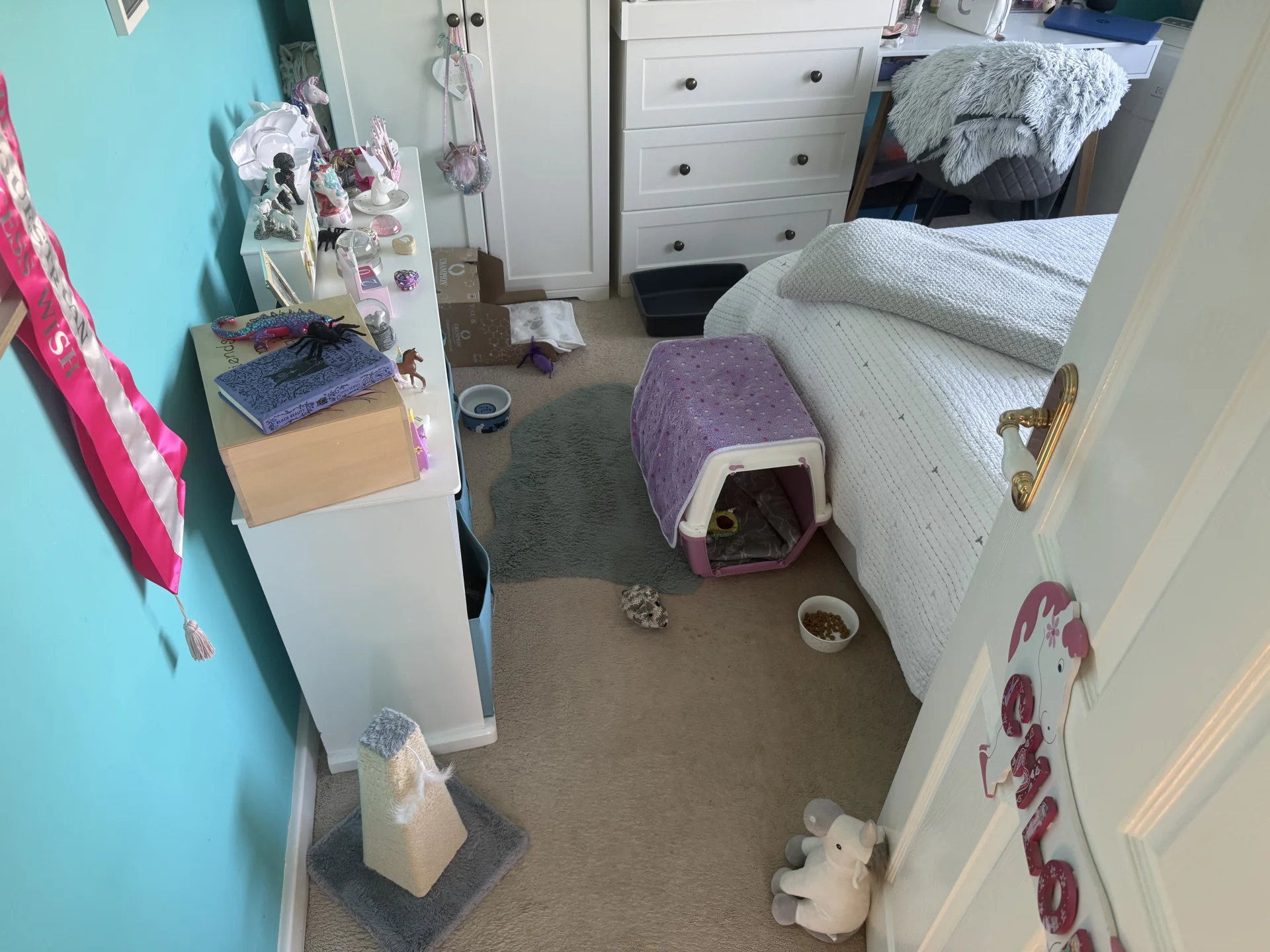
Pick the right room
Choose a quiet, easy-to-clean room where your kitten can stay for a few days to about a week, and longer for shy kittens, big homes, or homes with other pets. Smaller is better at first.
Great safe room options
- Bathroom: Easy to sanitize, fewer hiding hazards, usually quiet.
- Spare bedroom: Works well if you can block under-bed access at first.
- Office or laundry room: Fine if it is calm and you can control cords and chemicals.
Avoid these spaces
- Kitchen: Too many hazards, food smells, and traffic.
- Garage or basement: Temperature swings, toxins, hiding spots you cannot reach.
- Kid playroom: Too loud and unpredictable for day one.
Do a 10-minute kitten-proof sweep
Before you bring your kitten in, sit on the floor and look around like a curious little troublemaker. If you can reach it with your hand, your kitten can probably reach it too.
Quick kitten-proof checklist
- Block tiny gaps: Behind the toilet, under cabinets, behind appliances, inside reclining chairs. Use rolled towels, cardboard, or storage bins.
- Remove strings and chewables: Hair ties, ribbon, yarn, dangling blind cords, shoelaces.
- Hide chemicals: Cleaners, detergent pods, medications, essential oils, nail polish remover.
- Secure cords: Bundle and cover where possible. Unplug what you do not need.
- Eliminate window risks: Keep windows closed or securely screened. Avoid leaving any window partially open where a kitten could squeeze through or get stuck, especially top-down openings.
- Check plants: Remove any plant you are not 100 percent sure is cat-safe. (Lilies are especially dangerous.)
- Set the room temperature: Kittens prefer it a bit warm. Avoid direct blasts from vents.
If you have other pets, plan your traffic flow now. The safe room door should close fully, and a towel at the base can prevent “nose-to-nose under the door” if that escalates tension.
Gather your supplies (keep it simple)
You do not need a fancy nursery. You need the basics placed in a way that makes sense to a kitten.
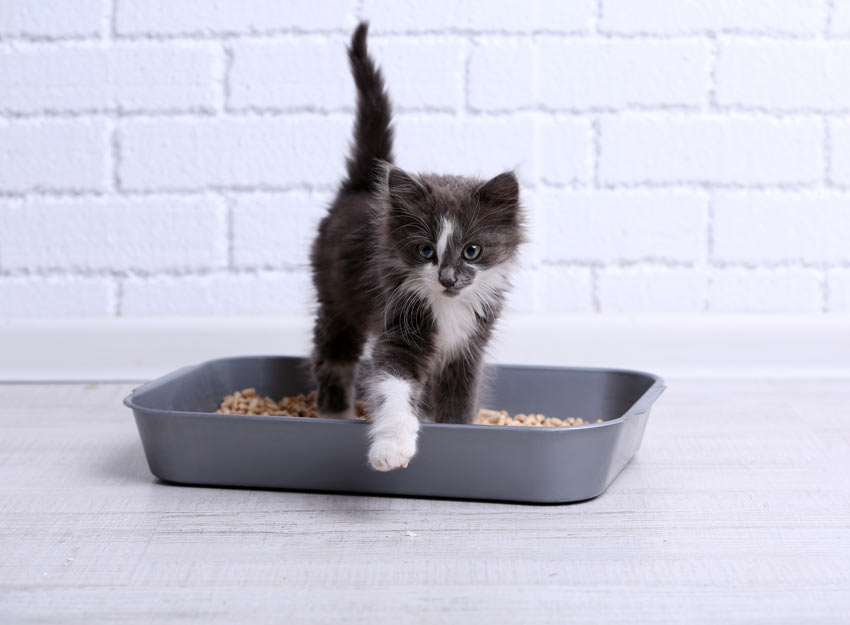
- Litter box (low-sided for tiny kittens)
- Litter (unscented is easiest on sensitive noses)
- Food bowls (shallow is better for little faces)
- Water bowl (wide and stable) or a pet fountain if you already use one
- Cozy bed or a cardboard box lined with a blanket
- Covered hide (box or covered cat bed)
- Scratching option (small cardboard scratcher or scratching post)
- 2 to 4 toys (wand toy for supervised play, plus a couple of small solo toys)
- Carrier (leave it out as a “den” once your kitten is calm)
Age note: If your kitten is very young (roughly under 3 to 4 months) or tends to mouth litter, ask your rescue or vet about the safest litter type. Many people start young kittens on non-clumping litter to reduce ingestion risks.

Set up the layout: the calm triangle
The goal is to separate three areas: litter, food and water, and sleeping and hiding. Cats naturally prefer not to eat next to the bathroom, and kittens learn fastest when the room “makes sense.”
1) Litter box placement
- Put the litter box in a quiet corner, away from the door if possible.
- Choose a spot with easy access so your kitten does not have to squeeze past scary objects.
- For very young or tiny kittens (the kind who still look like they could nap in your palm), use a low-entry box so they can climb in confidently.
- Start with about 1 to 2 inches of litter and adjust from there. Many kittens prefer a stable, not-too-deep layer for early confidence.
Pro foster tip: If you are unsure, place the box where you would want to go to the bathroom if you were nervous and new: private, not in the middle of the action.
2) Food and water placement
- Place food and water on the opposite side of the room from the litter box.
- If space allows, keep water a little separate from food. Some cats drink more when the water is not right next to the bowl of food.
- Use a washable mat under bowls to catch spills and make cleaning easy.
If your kitten is not eating the first several hours, that can be normal. Offer the same food the rescue or breeder used, keep the room quiet, and let curiosity do its work.
3) Bedding and hiding zone
- Create a cozy sleeping spot away from the litter box and not directly in front of the door.
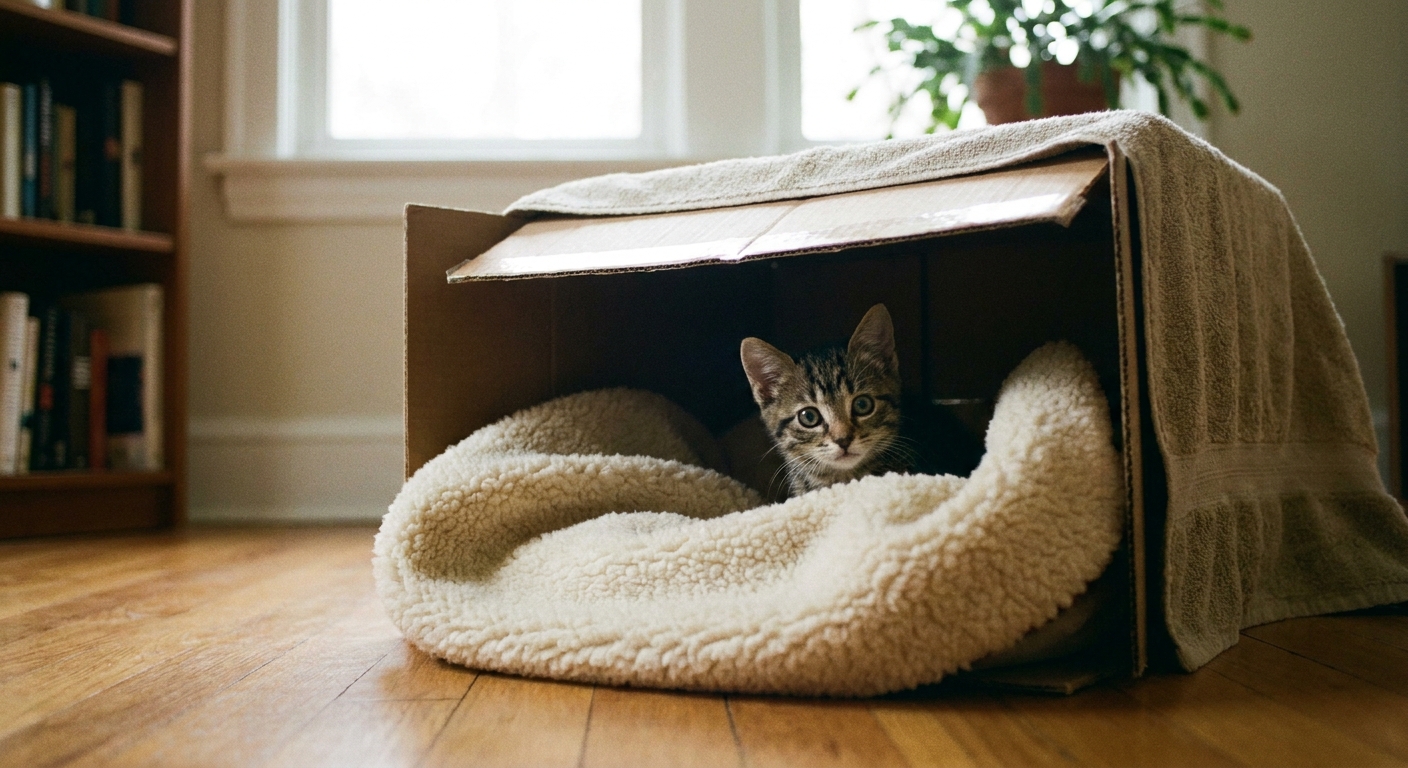
- Give at least two “safe” options: one open bed and one covered den (like a box on its side).
- If your kitten is very shy, drape a towel over part of the den so it feels more sheltered.
Add confidence boosters
Kittens feel safer when they can do normal kitten things. The safe room should gently invite good habits.
Scratching station
- Place a cardboard scratcher or short scratching post near the sleeping area. Many kittens stretch and scratch right after waking.
- If your kitten scratches the wrong surface, calmly move them to the scratcher and reinforce with a soft voice or a tiny treat.
Vertical space
- A sturdy stool, a low shelf, or a small cat tree gives your kitten a “lookout.”
- Keep it low and stable for the first week to prevent tumbles.
Toys that are safe for week one
- Supervised: Wand toys, teaser toys, anything with string.
- Solo: Small plush toys, crinkle balls, lightweight plastic spring toys sized too large to swallow.
- Avoid: Loose string, rubber bands, tiny hard balls that can be swallowed, anything that sheds pieces.
For most kittens, two short play sessions per day (about 5 to 10 minutes) in the safe room goes a long way toward building trust and better sleep at night.
Day 1 routine
- Bring your kitten straight to the safe room in their carrier. Close the door.
- Open the carrier door and sit on the floor quietly. Let them come out on their own timeline.
- Show the essentials: gently place them in the litter box once, then set them near the water bowl. No forcing, just a calm introduction.
- Keep it dim and quiet for the first few hours. Think soft lighting, low voices, and no sudden traffic.
- Offer a small meal once they have sniffed around a bit.
If your kitten stays in the carrier or hides for a while, that is not a failure. That is them coping. Your job is to make the room feel predictable and safe.
Nighttime rule: Before lights out, do a quick safety check. No unattended string toys, no dangling cords, and nothing your kitten could chew or swallow while you sleep.
Litter box placement examples
If you like a concrete plan, here are three layouts that work in most homes.
| Room type | Litter box | Food and water | Bed and hiding |
|---|---|---|---|
| Bathroom | Far corner away from the door | Opposite side, bowls on a mat | Next to a wall, den beside bed |
| Spare bedroom | Corner not blocked by furniture | Across the room, away from litter and under-bed zone | Along the wall, with a low perch nearby |
| Office | Quiet corner away from rolling chair area | Stable spot not near electronics or cords | Near your seating spot, so they associate you with calm |
If you have other pets
A safe room also doubles as a low-stress introduction zone. Even friendly resident pets can overwhelm a new kitten on day one.
- Start with separation: Let your kitten settle in the safe room with the door closed.
- Do scent swapping: Rub a clean cloth on each pet’s cheeks and swap the cloths, or trade bedding for short periods.
- Feed on opposite sides of the door: This can help build a calm association without face-to-face pressure.
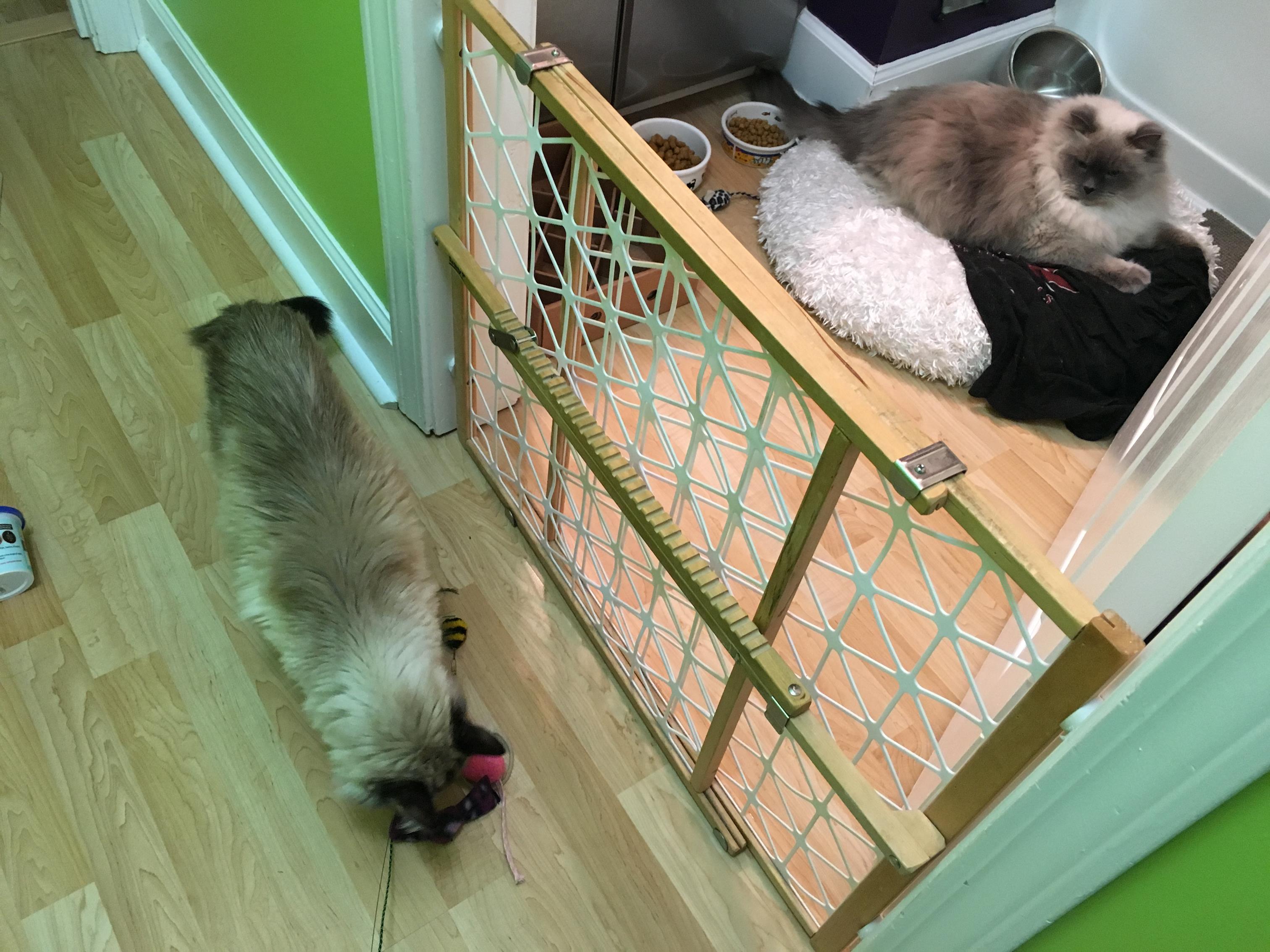
- Go slow on visuals: Brief, supervised peeks through a baby gate or cracked door only when everyone is calm.
- Protect the kitten’s “no thanks”: Your kitten should always have a retreat option they can reach easily.
First-week schedule
Every kitten has their own timeline, but this is a typical first week pattern I see with fosters and new adopters.
Days 1 to 2
- Expect hiding, cautious exploring, and small meals.
- Keep visitors to a minimum. One calm person is plenty.
- Scoop the litter box at least once a day to keep it inviting.
Days 3 to 5
- More play, more appetite, and the start of routine.
- Begin gentle handling in short sessions: a few petting strokes, brief lifts only if they are comfortable.
- If they are using the litter box reliably, you can start supervised exploration outside the room for a few minutes.
Days 6 to 7
- Many kittens are ready for longer exploration windows.
- Continue using the safe room as home base for meals and naps while they learn the rest of the house.
Common mistakes
Mistake: Food too close to the litter box
Fix: Move bowls to the opposite side of the room. Even a few extra feet helps.
Mistake: Letting the kitten have the whole house immediately
Fix: Start small. More space can actually feel less safe, and it increases accident risk.
Mistake: One hiding spot that you cannot access
Fix: Block under-bed access at first and offer a box or covered bed instead. You want hides you can gently reach if needed.
Mistake: Too many toys left out
Fix: Keep it minimal. Rotate toys to keep interest high and reduce hazards, especially anything with string.
When to expand their space
Your kitten is usually ready to explore more of the home when these are true:
- They are eating and drinking normally.
- They are using the litter box consistently.
- They will approach you for play or pets, even if they are still a bit cautious.
- They recover quickly after a noise or surprise.
Start with one additional room at a time, supervised. Keep the safe room set up for at least the first couple of weeks so they always have a familiar retreat.
When to call the vet
Kittens can go downhill fast, especially when they are very young. If something feels off, trust your gut and call your vet or an emergency clinic.
- Not eating for 24 hours, or a young kitten eating much less than usual
- Repeated vomiting or diarrhea, or any blood in stool or vomit
- Lethargy, weakness, or hiding plus not engaging at all
- Signs of dehydration (dry gums, sticky saliva, sunken look to the eyes)
- Straining in the litter box, crying while trying to pee, or no urine output
- Sneezing, eye discharge, or labored breathing that worsens or comes with low appetite
FAQ
Should I sleep in the safe room with my kitten?
You do not have to. Some kittens benefit from company, but plenty do great with a bedtime routine and a quiet room. If you choose to sleep nearby, keep the environment calm and do not overwhelm them with constant attention.
Can I put the litter box in the closet?
Only if the closet door can stay open, ventilation is good, and your kitten can enter easily. Many closets feel cramped and can trap odor, which may make the box less appealing. A corner in the open room is often better.
What if my kitten cries at the door?
First, check the basics: food, water, clean litter, and comfort. Then try a short play session and a calm sit-together time. Some kittens cry because they want attention, and some because they are overstimulated by sounds outside the door. A white noise machine outside the room can help, and sticking to a predictable routine helps even more.
Do I need a separate safe room for each kitten if I adopted two?
If the kittens are already bonded and came from the same litter, they usually do best together in one safe room. If they are unfamiliar with each other, start separately and do slow introductions.
What is the most budget-friendly safe room setup?
A low-sided litter pan, unscented litter, two simple bowls, a cardboard box with a soft towel, and a cardboard scratcher covers the essentials. For toys, a couple of lightweight balls and supervised play with a wand toy is plenty.
A gentle final note
Your kitten does not need perfection. They need consistency, safety, and a calm human who keeps showing up. Set up the room, keep the routine boring in the best way, and you will be amazed how quickly that tiny ball of nerves turns into a confident little housemate.