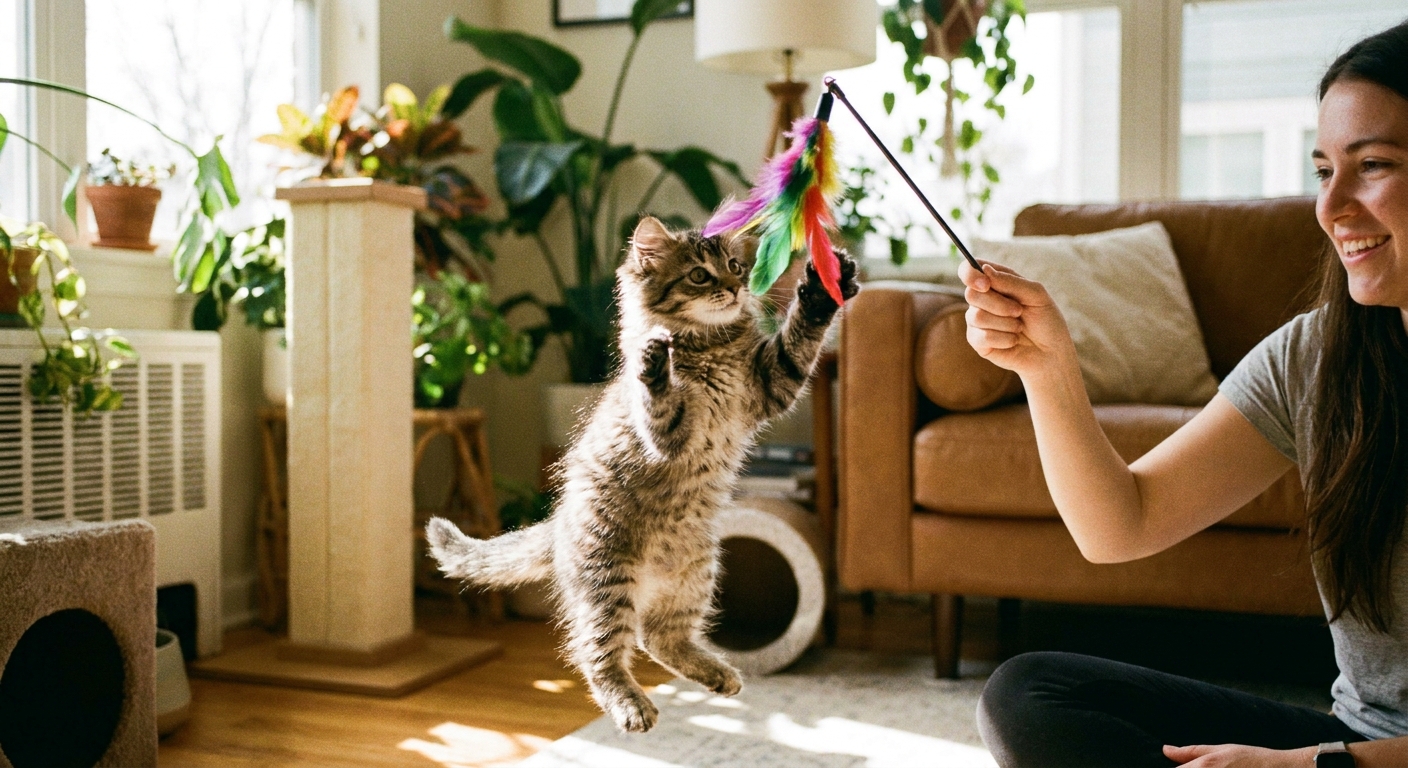
The first time I brought home a foster litter, I thought my apartment was pretty safe. Then I watched a six-week-old kitten scale a curtain like a tiny mountain climber, wedge behind the fridge, and attempt to taste-test a phone charger all in one afternoon. Kittens are curious, fast, and determined, and kitten-proofing is really just removing opportunities for trouble.
This checklist is how I prep rooms at Kitten Sprout, our small foster setup, before a new kitten arrives. You do not need to buy everything. You just need to get ahead of the most common hazards: cords, chemicals, small swallowable objects, fall risks, and secret squeeze-through spaces.

Before you start: do a kitten-eye scan
Get down on the floor and look around like a kitten. If it dangles, rolls, crinkles, fits in a mouth, or leads to a dark hole behind something heavy, assume it is interesting.
Your quick starter kit
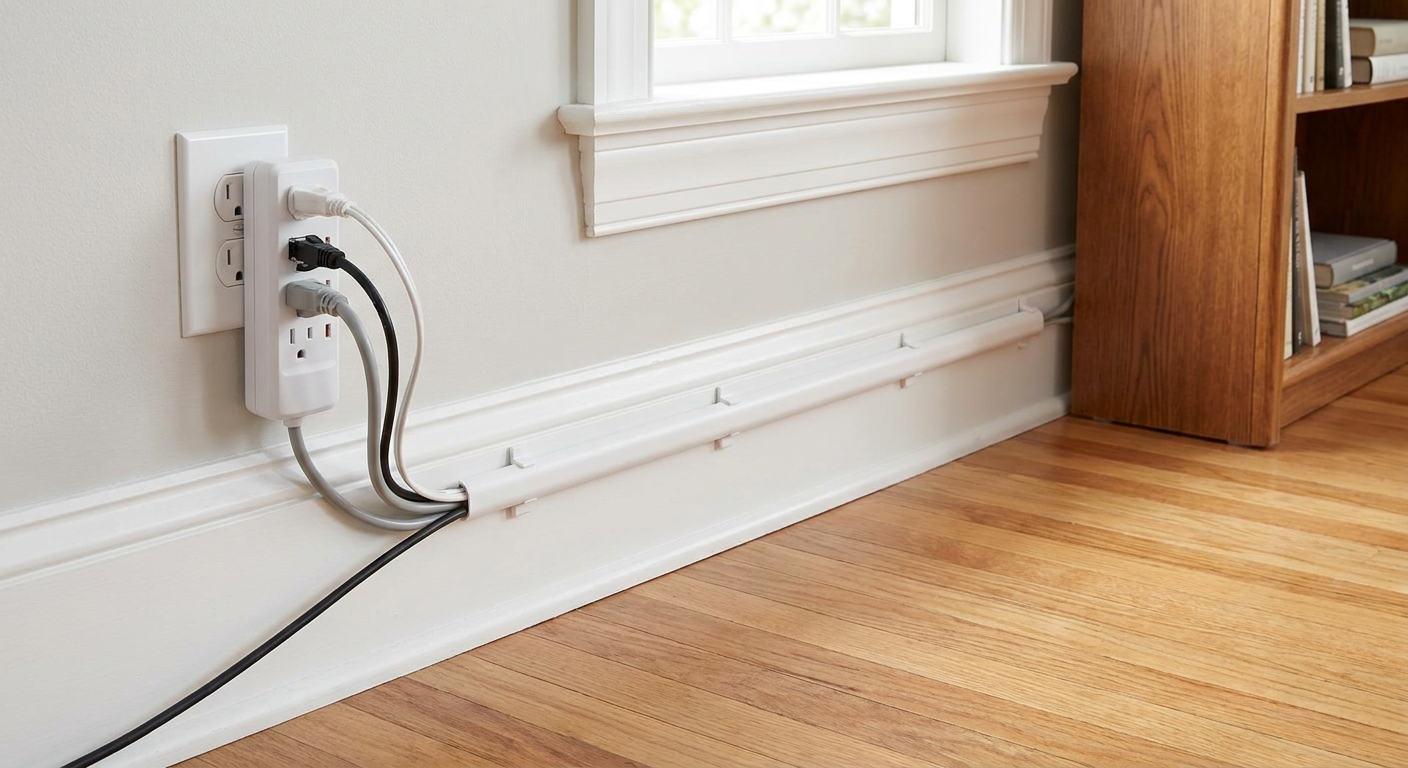
- Cord management: cord covers (split tubing), cable clips, outlet covers, and a power strip box
- Blocking gaps: foam pipe insulation, cardboard, storage bins, under-bed blockers, and draft stoppers
- Securing doors: simple baby latches for cabinets, sliding door bars, and door stoppers
- Cleanup tools: lint roller, handheld vacuum, and a small covered trash can
Rule of thumb: if you cannot supervise it, either remove it, block access to it, or make it boring (like hiding cords).
Living room and family room
This is usually where kittens spend the most time with people, which is great for bonding and also where most chewing and climbing happens.
Checklist
- Secure loose cords: Wrap TV, lamp, and charger cords in a cord protector and route them behind furniture. Unplug and store chargers when not in use.
- Cover power strips: Use a power strip box so little paws cannot flip switches or chew plugs.
- Anchor tall furniture: Stabilize bookcases and cat trees so they do not wobble if a kitten launches up the side.
- Remove tiny swallowables: Pick up hair ties, rubber bands, push pins, coins, small toy parts, earplugs, and pen caps.
- Make blinds and curtains safer: Tie up blind cords high and out of reach. If your kitten is a curtain climber, use washable panels and redirect early.
- Relocate risky plants: Move plants to a closed room or truly unreachable spot. Common offenders include lilies (a true emergency), pothos, philodendron, and sago palm. If you are unsure, check the ASPCA Toxic and Non-Toxic Plants list.
- Block heat sources: Use a secure screen for fireplaces. Keep space heaters out of kitten zones, choose models with tip-over shutoff, and never leave them unattended.
Kitchen and dining area
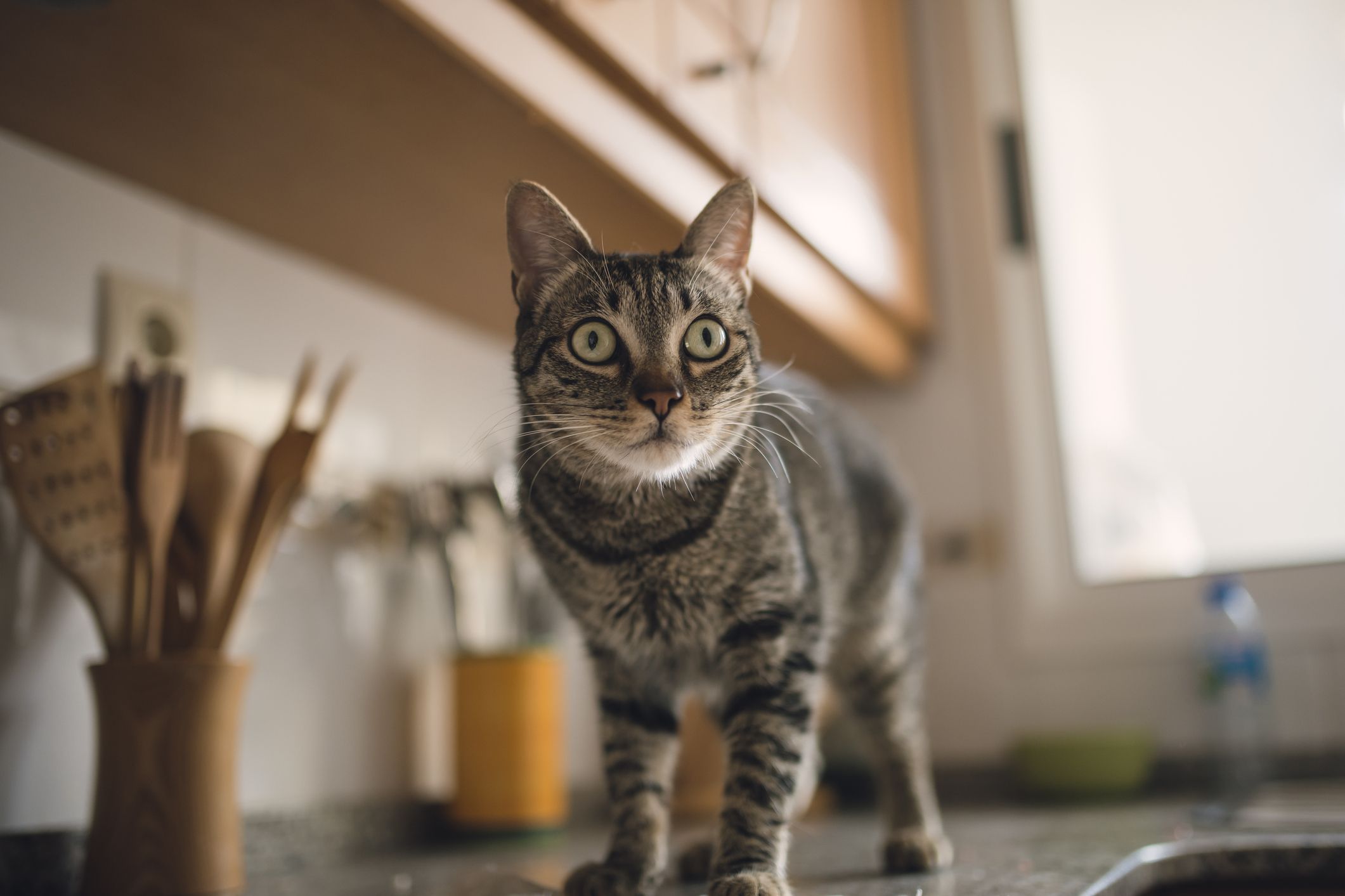
Kitchens are basically a theme park of smells, crumbs, and dangerous cabinets. I always assume a kitten will try to explore every lower door at least once.
Checklist
- Latch chemical cabinets: Add childproof latches to any cabinet holding cleaners, dishwasher pods, bleach, oven spray, and pest products.
- Use a lidded trash can: Choose a heavy, covered can. Food wrappers, chicken bones, and stringy packaging are big risks.
- Build safer stove habits: Use knob covers if you have curious jumpers. If your kitten has kitchen access, check the oven before preheating.
- Keep appliances closed: Close the dishwasher and any cabinets you use as storage caves. Kittens love hiding in dark spots.
- Keep toxic foods out of reach: Put away onions, garlic, chocolate, grapes, raisins, alcohol, xylitol gum, and yeast dough.
- Control tangles and chewables: Put away twine, rubber bands, bread bag ties, sponges, and dish gloves.
- Stow sharp tools and dangling cords: Store blender blades, skewers, and knives safely. Keep toaster or kettle cords off the counter edge.
Extra foster tip: Put a shallow mat under feeding areas and sweep daily. Kittens will sample whatever they find, including mystery crumbs.

Bathroom
Bathrooms are sneaky-dangerous because everything smells interesting and many products are concentrated chemicals.
Checklist
- Close the toilet lid: Prevent falls, trapped kittens, and toilet-water drinking.
- Lock up meds and skincare: Store pain relievers, vitamins, retinoids, essential oils, and creams behind a latched cabinet.
- Control razors and floss: Treat floss like string. Toss it immediately into a covered bin.
- Put hair tools away: Let hot tools cool, then store them with cords tucked away.
- Secure cleaning products: Keep toilet cleaners, bleach tablets, and sprays inaccessible.
- Remove open water hazards: Do not leave a bathtub full of water. Empty buckets and mop water promptly, especially with tiny kittens.
Bedroom
Bedrooms feel cozy, but they are full of chewables and under-bed hideouts. If your kitten will sleep with you, your first week is basically learning what they can reach at 3 a.m.
Checklist
- Clear the nightstand: Put away pills, earplugs, jewelry, lip balm, and anything stringy.
- Manage phone chargers: Hide cords and do not leave a charger draped over the bed edge.
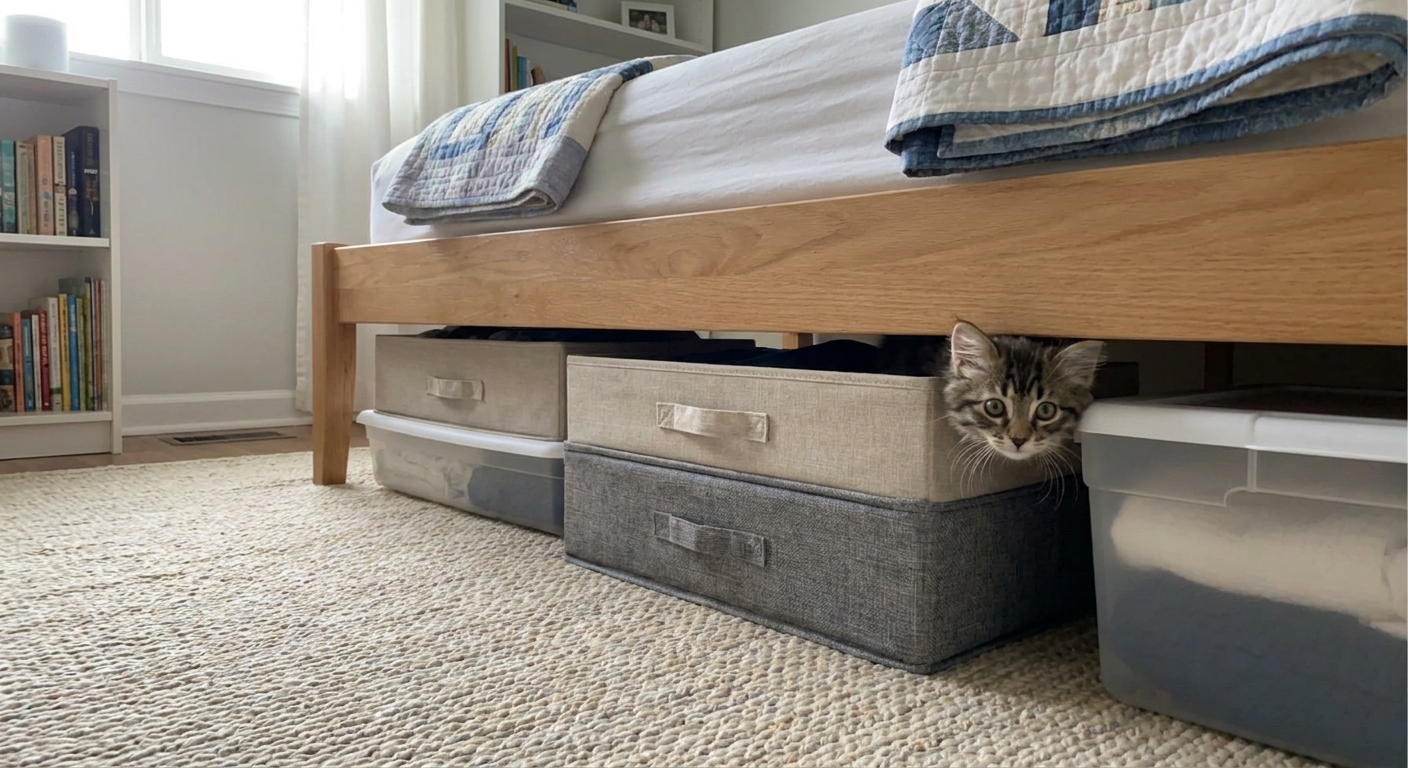
- Block or tidy under the bed: Either block it fully or keep it clean and hazard-free. Under-bed storage bins work well.
- Improve window safety: Make sure screens are secure, but remember many standard screens can be pushed out. Use properly installed pet window guards if you want windows open.
- Pick up floor clutter: Store socks, ribbons, and hair ties. They become prey fast.
Laundry room
This is one of my highest-alert zones. Warm machines and dark spaces are irresistible.
Checklist
- Keep doors closed: Close the laundry room door, plus the washer and dryer doors.
- Check before every load: Look inside the washer and dryer every single time before starting.
- Store detergents safely: Keep detergent pods, stain removers, and bleach products high up and latched. Pods are especially dangerous if bitten.
- Pick up strings and elastics: Clean lint traps and remove loose thread, yarn, and elastic.
Home office and electronics
If you have a desk setup, you probably have a cord jungle. Kittens love moving snakes.
Checklist
- Bundle and cover cords: Use a cable sleeve or split tubing for your main bundles.
- Mount power strips: Raise strips off the floor by mounting them under the desk when possible.
- Put away earbuds and small parts: Store headphone cords and keep tiny silicone tips out of reach.
- Close or organize drawers: Secure paper clips, staples, SD cards, and thumbtacks.
- Avoid essential oils in kitten spaces: Many oils are toxic to cats. Diffusers can leave residue that settles on surfaces and fur, and cats can ingest it while grooming.
Quick safety note: If your kitten chews a live cord, it can cause mouth burns and electrical injury. Call your vet right away, even if the damage looks minor.
Stairs, balconies, and high places
Kittens are brave and still learning physics. They can jump farther than you think, and also misjudge landings.
Checklist
- Block balcony and deck gaps: Cover railings and gaps with secure pet netting or plexiglass panels designed for pet safety.
- Treat window screens as a backup: Many standard screens can be pushed out. Use properly installed window guards, or keep windows shut.
- Cover stair rail gaps: If a kitten can fit through, they will try. Use temporary barriers until they are bigger and steadier.
- Limit banister perches: Discourage access until coordination improves.
- Move heavy, fragile decor: Take top-heavy vases and breakables away from edges.
If your kitten is a climber: Offer an approved climbing option like a sturdy cat tree or wall-mounted shelves installed into studs, and reward using those instead of the risky stuff.
Closets, storage areas, and tight spaces
Kittens can squeeze into shockingly small spots, then panic because they cannot find the way out. I see this most with gaps behind appliances, under recliners, and inside couches.
Checklist
- Block behind and under appliances: Close off refrigerator and stove gaps with foam blockers or tightly fitted boards.
- Recliners and sofa beds: Keep kittens away from the mechanism area. Always check before opening or closing, and close off the room when you cannot supervise.
- Keep closets shut: Especially if you store mothballs, shoelaces, craft supplies, or cleaning products.
- Keep garages and workshops off-limits: Antifreeze, paint, and sharp tools are too risky.
Plants, poisons, and nice smells
I am going to be blunt because this is where emergencies happen: cats are sensitive to many common household products. When in doubt, keep it out of reach or out of the home.
High-priority hazards to remove or lock up
- Lilies: extremely dangerous to cats, even small exposures
- Common toxic plants: pothos, philodendron, sago palm, and many spring bulb flowers
- Essential oils: especially tea tree, eucalyptus, peppermint, cinnamon, clove, and citrus oils
- Rodent or insect bait: risk is highest if pets eat bait directly, or eat poisoned rodents or insects
- Human meds: pain relievers, antidepressants, ADHD meds, cold medicines
- Nicotine products: including nicotine pouches and e-liquids
If you suspect your kitten chewed or swallowed something toxic, call your veterinarian or a pet poison hotline right away. Do not wait for symptoms.
Safe setup: one kitten base camp
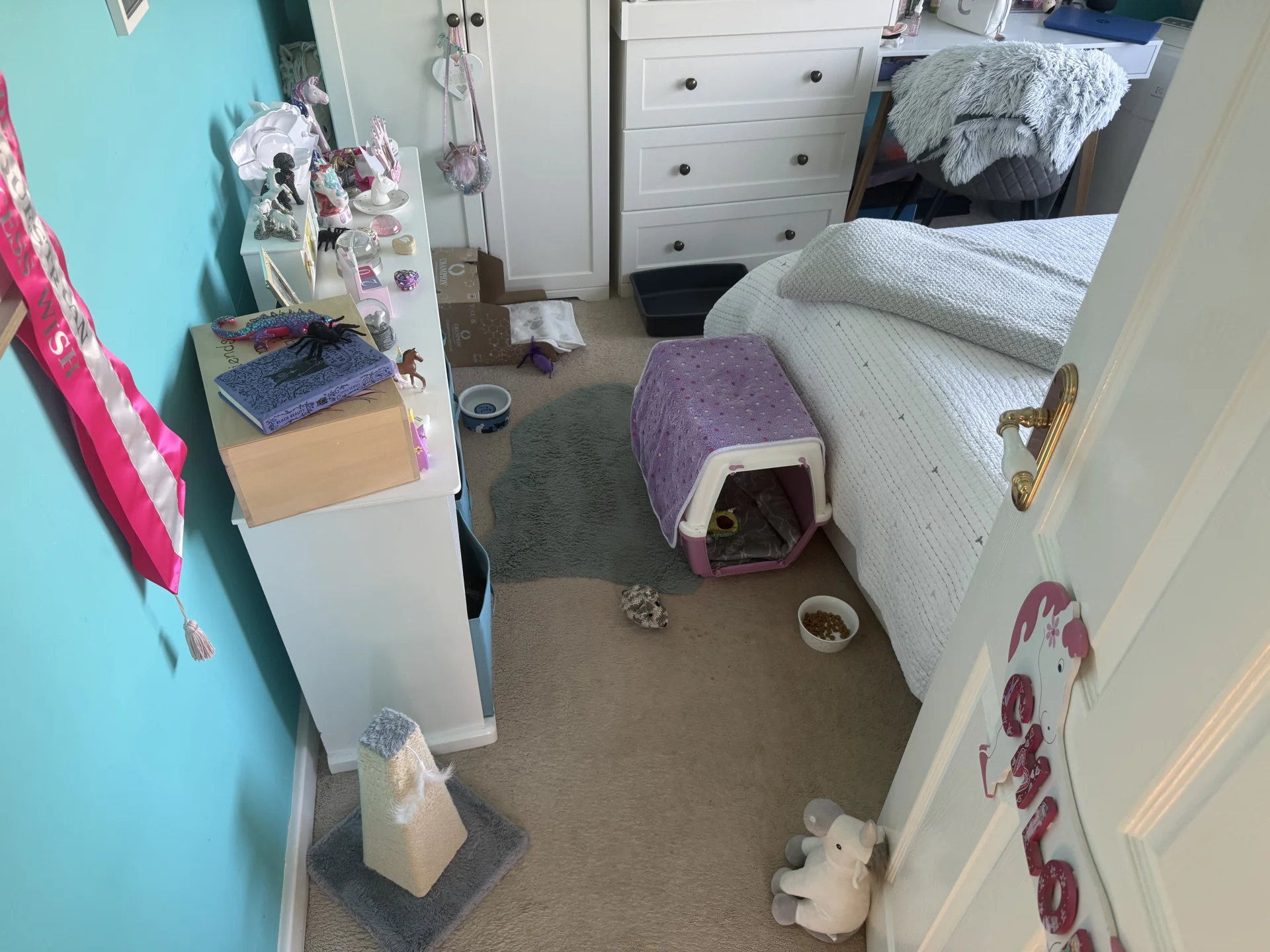
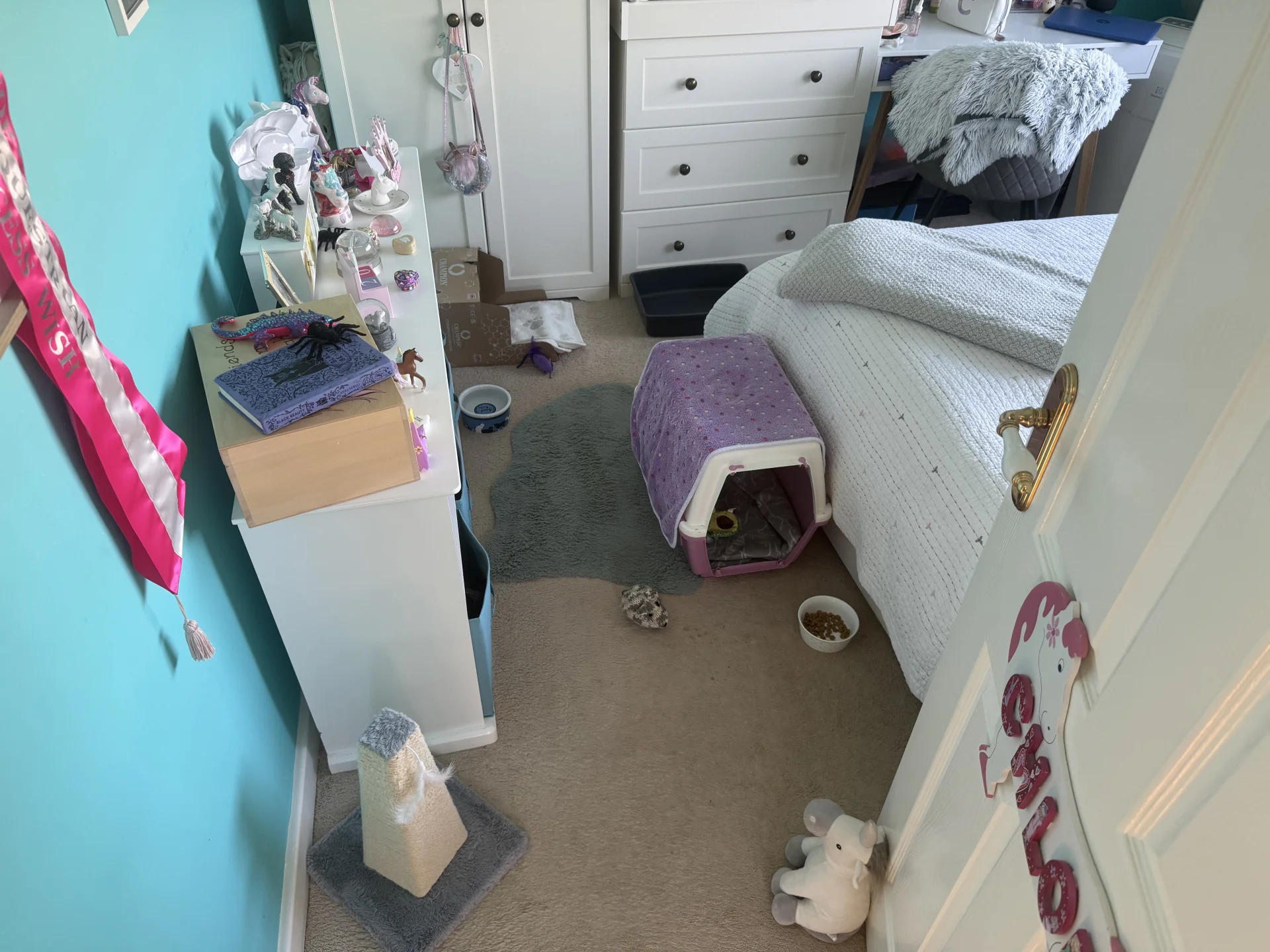
If kitten-proofing the whole house feels like a lot, start with one room and expand access slowly. For fosters and new kittens, I love a base camp because it prevents hiding, builds confidence, and makes litter training easier.
What to include
- Litter box (low entry for young kittens), unscented litter
- Food and water set away from the litter box
- A hiding spot you control (covered bed or carrier with a blanket)
- Scratching options (horizontal and vertical if you can)
- A few safe toys (wand toys for supervised play only, plus small plush toys without strings)
- Soft bedding that is easy to wash
My favorite low-stress approach: Keep the kitten in base camp for the first day or two, then open one extra room at a time after you have kitten-proofed it.
Master checklist
Whole-home basics
- Pick up small items from floors and low tables
- Secure, cover, or hide cords and power strips
- Lock up cleaners, medications, and pest products
- Use lidded trash cans
- Remove or relocate toxic plants
- Secure windows with screens plus guards, and block balcony hazards
- Block dangerous gaps behind appliances and furniture
- Keep laundry machines closed and check inside before starting
Fast before-bed sweep
- Put away string toys, ribbons, hair ties, yarn, and floss
- Pick up any dropped pills or vitamins
- Close toilet lids
- Unplug and store dangling chargers
- Scan the floor for crumbs, plastic, or sharp bits
Emergency note: String and ribbon can cause a dangerous intestinal blockage. If you see string hanging from your kitten’s mouth or rear end, do not pull it. Call your vet immediately.
FAQ
Do I really need to cover every cord?
You do not need to cover every cord if your kitten never shows interest, but assume they will at least experiment. Prioritize exposed charging cables, cords that dangle, and cords near sleeping areas. Many kittens outgrow cord chewing, but some do not.
What gaps are most likely to trap a kitten?
The big three I see are behind the refrigerator, under recliners, and inside box springs or couches with torn lining. If you cannot easily reach your kitten with your arm, block that space.
Are natural cleaners and essential oils safe around kittens?
Natural does not automatically mean cat-safe. Many essential oils are harmful, especially when diffused or applied where a cat can groom it off their coat. Use pet-safe cleaning products, store them securely, and keep oils out of kitten spaces.
When can I let my kitten roam freely?
Usually after you have watched them in each room and handled the main hazards. I open up the house gradually over 1 to 2 weeks, depending on the kitten’s confidence and chaos level.
My last foster reminder
Kitten-proofing is not about creating a perfect bubble. It is about lowering risk while your kitten learns what is and is not part of their world. Do the big stuff first, then adjust based on what your kitten actually tries to get into. They will tell you.