Why the right kitten bed matters
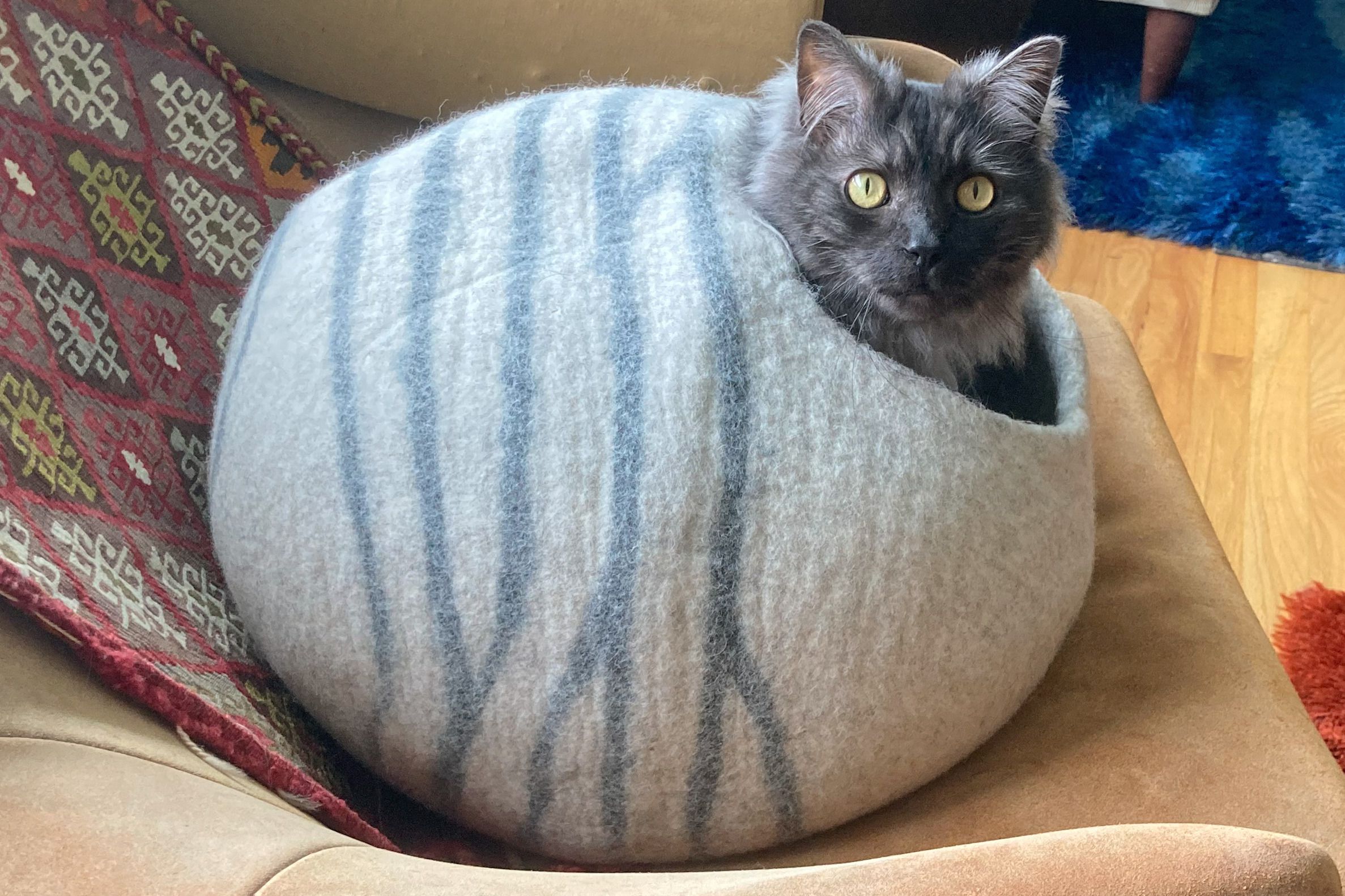
Kittens do not just nap a lot. They nap hard. In those early weeks, sleep is when their bodies grow, their brains file away new experiences, and their overall health is supported during a big transition.
A good bed does three things at once:
- Warmth: especially important for young kittens and recent rescues.
- Security: a place that feels like a safe den so they are less likely to hide under furniture.
- Boundaries: a predictable nap spot that makes it easier to keep them off your pillows and couch corners.
The “best” bed depends on your kitten’s age, confidence level, household temperature, and whether you have other pets. Let’s compare the most popular styles and when each one truly shines.
Quick comparison
| Bed type | Best for | Biggest perk | Watch-outs |
|---|---|---|---|
| Cave bed | Shy or easily startled kittens, drafty rooms | Den-like security and warmth retention | Can trap heat, some kittens chew or scratch the cover |
| Heated pad (pet-safe) | Very young kittens, seniors, cold climates, post-spay comfort | Steady gentle warmth | Must be pet-specific, needs supervision and correct placement |
| Donut cuddler | Most kittens, social kittens, kittens who like contact sleeping | Bolstered rim supports snuggling and head-resting | Some flatten quickly, long fibers can catch on claws if poorly made |
Donut cuddlers
If you are only buying one bed to start, a donut cuddler is usually my pick. The raised rim mimics the pressure of littermates, which helps many kittens settle faster. I have watched whole foster litters faceplant into a donut bed like it is their full-time job.
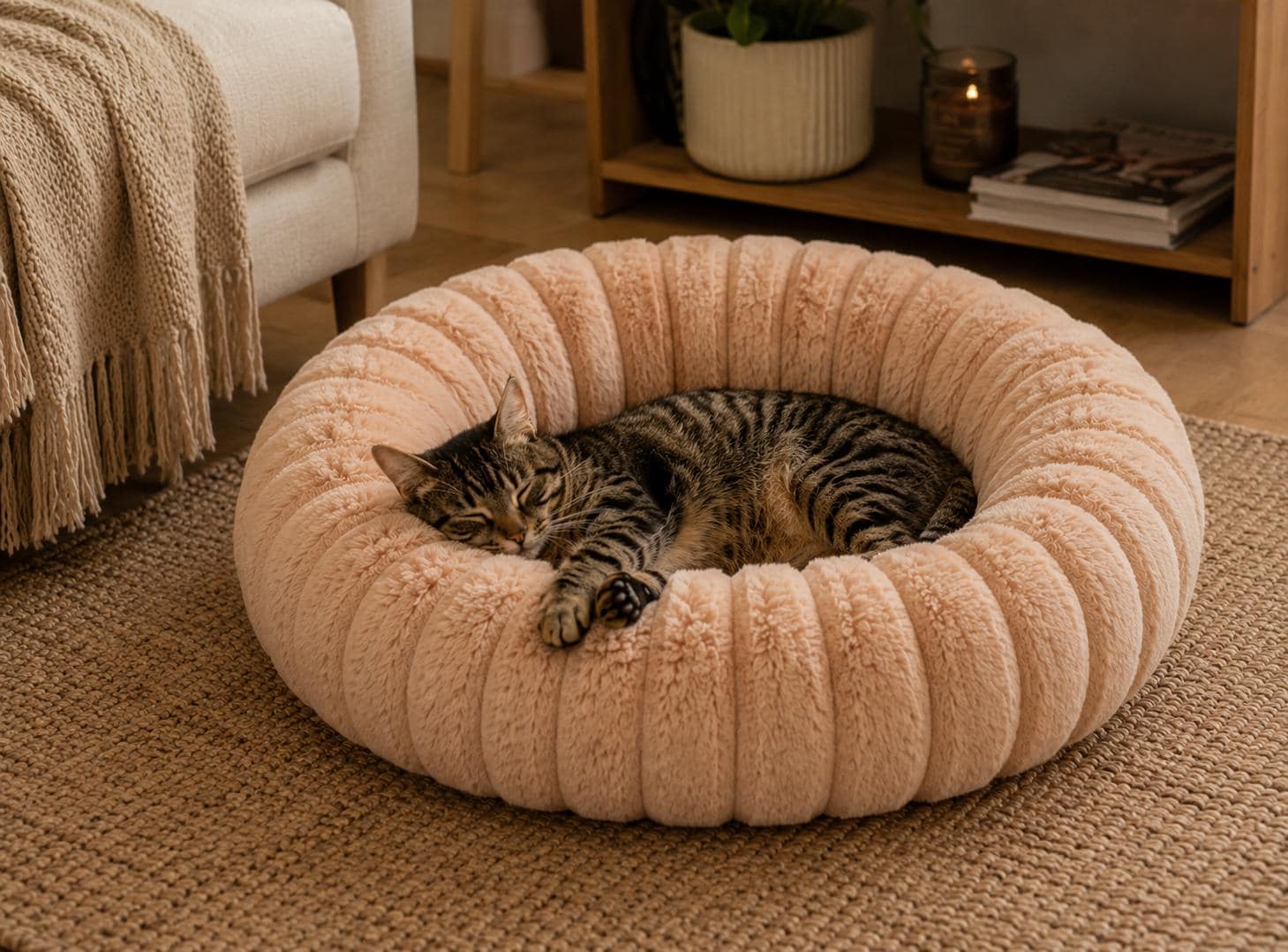
What to look for
- Low entry point: kittens are clumsy. A front edge they can step over matters.
- Supportive rim: it should bounce back when you press it, not collapse flat. Avoid wispy fill that clumps after one wash.
- Non-slip bottom: especially on tile or hardwood.
- Washable: either fully machine washable or at least has a removable cover.
- Gentle materials: if your kitten is itchy or sensitive, skip scratchy fabrics and strong dyes. Soft, tightly woven plush tends to be easier on skin and claws.
Who it is best for
- Confident kittens who already nap out in the open
- Kittens who like to sprawl or switch positions
- Households where the bed needs to move room to room
Common issues and fixes
- “My kitten sleeps next to it, not in it.” Try placing a tiny fleece blanket inside, or rub the bed with a clean cloth that has your kitten’s scent.
- “It went pancake-flat after washing.” Tumble dry on low with dryer balls if the label allows, and consider a higher-density fill next time.
Cave beds
Cave beds are basically a ready-made “safe space.” They can reduce stress in new arrivals who are still figuring out the household sounds, footsteps, and routine. If your kitten bolts under the couch every time someone coughs, a cave bed gives them a place to retreat that you can access easily.
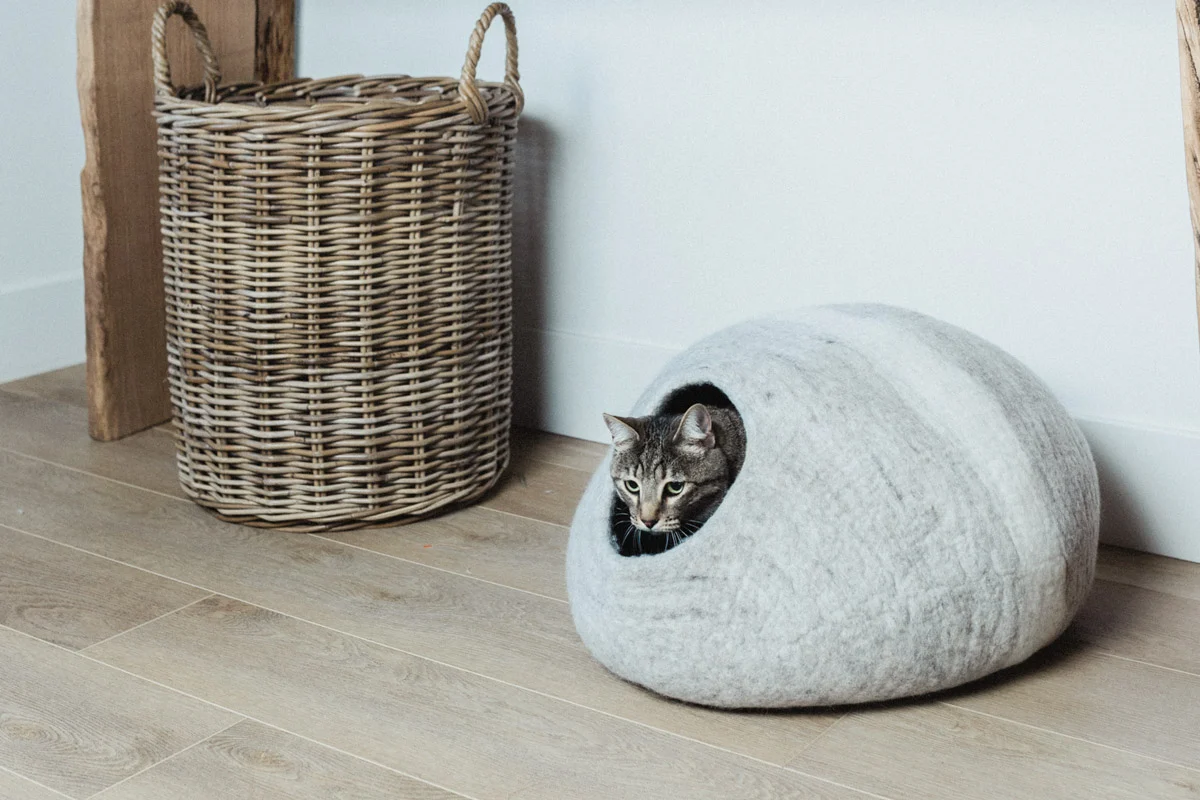
What to look for
- Structure that holds its shape: the opening should not collapse on the kitten’s back.
- Breathable materials: plush is fine, but avoid anything that feels plasticky inside.
- Wide enough opening: you want easy in and out, not a squeeze.
- Easy cleaning: caves get funky fast if a kitten has a litter mishap or brings in wet food paws.
Who it is best for
- Shy kittens and recent rescues
- Busy homes with kids, dogs, or lots of foot traffic
- Drafty spaces where a regular bed feels chilly
Watch-outs
- Chewers: if your kitten gnaws fabric, monitor closely and remove beds with loose threads or foam exposed.
- Over-hiding: a cave bed should be comfort, not avoidance. If your kitten never comes out to eat, play, or use the litter box, reduce noise and traffic and offer a quieter setup. If it continues, talk to your vet.
Heated pads
Heat is powerful for kittens, and also where I am the most cautious. If you choose a heated option, use a pet-specific heated pad, not a human heating pad. Pet-safe warmers are designed for long, low-level heat, and some models are pressure-activated so they warm more when your cat is on them.
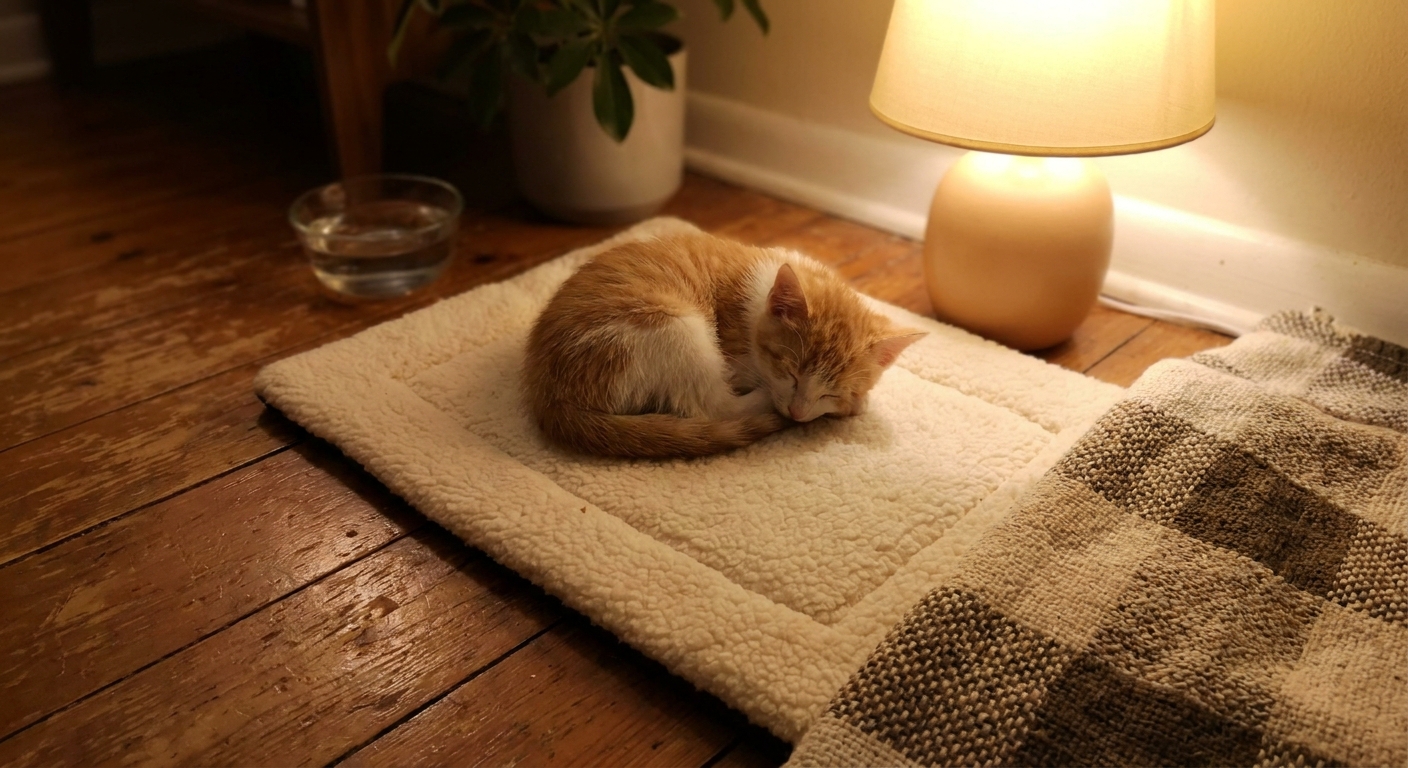
When heat helps most
- Neonates and very young kittens: tiny kittens, especially under about 4 weeks, cannot regulate body temperature well. Kittens under 8 weeks can still chill easily in drafty homes.
- Chilly homes: winter apartments, basements, older houses with drafts
- After spay or neuter: gentle warmth can be comforting during recovery if your vet approves
Heated pad safety checklist
- Confirm it is made for pets and intended for cats.
- Pick the safest design you can: thermostatically controlled is ideal. Avoid “high” heat options for kittens.
- Use a cover: a fleece sleeve or towel barrier prevents direct contact and helps distribute warmth.
- Give an off zone: set the pad under only half the bed so your kitten can scoot away if they get too warm.
- Check temperature with your hand: it should feel pleasantly warm, never hot.
- Manage cords: conceal cords, discourage chewing, and avoid running cords through doorways.
- Supervise at first: monitor the first few naps to make sure your kitten chooses it appropriately and is not digging at seams.
- Only for kittens who can move off the heat: if a kitten is weak, sedated, or not fully awake, skip heat unless your vet gives specific instructions.
- Microwavable warmers need supervision: they can develop hot spots and are not something I leave with a kitten unattended.
Skip heat if you see
- Panting, restlessness, or moving away repeatedly
- Redness on the belly or ears that feels unusually warm
- A kitten who cannot easily move off the warm area
Panting can be a heat issue, but it can also be pain, stress, or a respiratory problem. If panting persists or your kitten seems unwell, call your veterinarian.
If you are fostering truly tiny kittens, always follow your rescue’s protocols or your veterinarian’s guidance. Newborn-level heat support is a whole different setup than a simple pet warming pad.
Picking the right size
Kittens like to feel “hugged,” but they also grow fast. Here is how I size beds in my foster room:
- Measure your kitten curled up: nose to tail base while they are sleeping. Add 2 to 4 inches.
- Choose snug over huge: a too-big bed feels exposed and tends to get ignored.
- Plan for the next growth spurt: if your kitten is 8 to 12 weeks, consider a bed that fits now with a little rim space for later.
If you are between sizes, go slightly larger for donut beds, and slightly smaller for caves. Caves feel safer when they are den-like, not cavern-like.
My week-one setup
For most first-time kitten parents, I like a two-spot approach. It prevents the classic problem where your kitten is cozy in one room and then panics when you move them to another.
- Main hangout room: a donut cuddler near you, but not in the busiest walkway.
- Quiet sleep zone: a cave bed or covered bed in a corner, ideally near the litter box room but not right next to the box
If your home is cold, slide a pet-safe warming pad under half of the donut bed for a few days, then reassess. Many kittens stop needing extra heat once they settle in and your home temperature is steady.
Multi-pet homes
If you have a dog or a confident adult cat, give your kitten at least one bed in a dog-free, escape-friendly spot. Elevated beds on a stable cat tree platform can help, and I like having one “backup” bed in a quiet room where the kitten can decompress.
Placement tips
Kittens choose comfort plus convenience. If the bed is far away from where the action is, your couch will win.
- Put the bed where you already sit: next to the sofa, your desk chair, or the kitchen corner you stand in.
- Offer a high option: a bed on a stable cat tree platform or sturdy ottoman can be more appealing than floor level.
- Make it smell familiar: add a small blanket they have already slept on.
- Reward the bed: when you catch them using it, quietly praise and offer a tiny treat after they wake up.
If they keep choosing your pillow, do not take it personally. Move a donut bed right next to that spot for a week. Once the habit forms, you can slowly relocate the bed to a better location.
Cleaning and hygiene
Kittens are messy. Between formula drips, wet food beards, and the occasional litter box accident, washable is not optional in my house.
Simple cleaning routine
- Weekly: shake out debris, vacuum hair, and launder covers or the whole bed per label directions.
- Spot clean immediately: enzyme cleaner for accidents, then fully dry before returning it.
- Keep a backup: having a second bed or spare cover prevents the “wet bed at bedtime” scramble.
Avoid strong fragrances. Many cats dislike heavily scented detergents, and sensitive kittens can get itchy skin from perfumed products.
Bed safety checklist
- No loose strings, dangling tassels, or easily shredded fabric
- No exposed foam that can be chewed and swallowed
- Stable base that will not slide across slick floors
- Easy entry and exit with no tall walls for tiny kittens
- For heated items: pet-specific, covered, and with an unheated escape area
When to call your vet
- Panting that does not quickly resolve with cooling down and calm
- Lethargy, weakness, or a kitten who cannot easily move away from heat
- Repeated bed peeing or straining in the litter box
- Refusing food or water, especially in a new kitten
FAQ
Do kittens need a bed, or will they sleep anywhere?
They will sleep anywhere, but a designated bed helps them feel secure and makes your home easier to manage. Think of it as a comfort tool and a training tool at the same time.
Is a cave bed too hot?
It can be in warm homes or for long-haired kittens. If your kitten regularly sprawls outside the cave or pants, switch to an open donut bed and keep the cave for cooler days. If panting continues, call your vet.
Can my kitten sleep with me instead?
Many do, and bonding is wonderful. For very young kittens, I still recommend providing a nearby bed option so they learn an independent sleep spot. Also be mindful of safety if you are a deep sleeper or move a lot at night.
What if my kitten pees in the bed?
Clean it with an enzyme cleaner and launder if possible. Then look at the why: bed too close to the litter box, box not clean enough, kitten too small to climb into the box, or a medical issue. If accidents continue or you see straining, contact your veterinarian.
The bottom line
If you want the simplest, most kitten-approved choice, start with a quality donut cuddler. Add a cave bed if your kitten is shy or your home is busy. Consider a pet-safe heated pad when warmth is truly needed, and set it up so your kitten can always move away from the heat.
And if you are standing in the pet aisle feeling overwhelmed, here is my foster-room rule: snug, washable, and safe beats fancy every time. Your kitten will do the rest, usually while snoring.